Tag Archives: Czech nymph

How to Find Thin Skin in the Wild

Tracking fly tying materials requires a bit of sleuthing, given how vendors disguise the original form and function to ensure we buy the small packets offered by fly shops.

Searching for these materials isn’t difficult, but finding the best keywords can be difficult. A good search string quickly produces likely candidates, and invariably one of those leads you to something very close to the original. Investing in a few samples is the best way to determine winners, but there may be dozens of possible options (and colors) and your final choice may take considerably longer.

A synthetic yarn or similar textured material is always harder to find because you can’t “feel” a photograph on a website. The final selection is made more difficult because only touching the material can confirm it has the proper size, nap, or texture. These intangibles are more difficult to describe to a search engine, but AI enhancements and their increased presence in search tools are quickly becoming discerning enough to overcome these shortcomings.

When crafting a search string I typically use terms that reduce the item to form and attributes. Recently I spent some time looking for Thin Skin, used as the wingcase on the Copper John. Starting with terms that describe attributes; “stretchable thin film,” or “flexible paper backed film”, and depending on the volume of items returned, I might add “transparent” or “flexible opaque paper backed film” to narrow the search more. Most of the resultant solution set being a variety of tapes and vinyl wraps used for packaging.

“Stretchy” typically implies a solution set of vinyl, rubber, urethane, PVC, and/or latex – and a thin film of either will be indistinguishable from one another when viewed on a website. Vinyl or PVC may stretch and not snap back to original form, where urethane, rubber, and latex, typically will stretch and recover their original shape.

Poring through the possibilities will often take you into other areas that are not expected, like vinyl window treatment tape for tinting, or reflective coatings for the windows in your home. Many of these may require you buying samples for use in other flies and additional purposes, this being the hidden (costly) silver lining of material discovery.

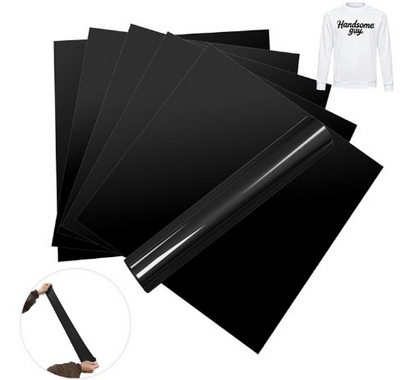
In my case, I found the Thin Skin replacement as a “heat transfer vinyl” for transferring text and pictures to tee shirts and promotional sportswear. Available in 11 additional colors, and offering six 8.5″ X 11″ sheets for eight dollars – or a 12″ X 8′ roll for sixteen bucks. In addition to sheets of single colors, they had metallic colors, rainbow hued psychedelics reminiscent of tie dye, and a few other options,

For the Copper John – six sheets may be a lifetime supply, so I would order the minimum until you’re certain of the candidate material’s lifespan.

Caution: Things that stretch DO NOT like sunlight

Why so cautious? Simple. Things that stretch do not like hot fly boxes or sunlight. Did I find the exact material sold as Thin Skin? Probably not, so you should treat any candidate as an unknown stretchy material that may oxidize in a week … leaving you with a fly box full of copper bodied flies and broken rubber bands.

In this case, an eight dollar investment won’t break you, and six sheets will tie several years worth of flies – giving you ample time to determine if the material can survive a season in your fly box.

Now that you know what industry that it’s in, other vendor’s offerings will emerge giving you additional colors, materials, and price points. I typically will grab a couple of candidates, (especially if the color choices are limited) tying numerous flies with both, and then see how each handles fingers slathered with mosquito repellant and temperatures in excess of eighty degrees.

Amazon sells a small paper cutter for ten dollars, and one of more sheets can be cut at the same time simply by stacking them on the cutter.
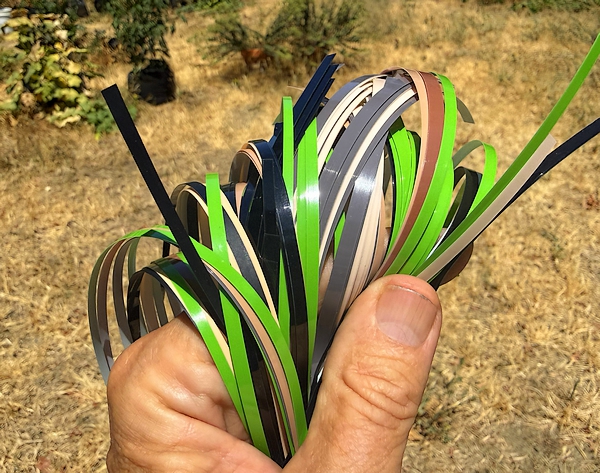
Strips of vinyl heat transfer material cut from sheet form to thin strips for use as a Thin Skin replacement
Vinyl Heat transfer material cut from sheet form to thin strips via paper cutter. The backing will be seperated from the vinyl, and the vinyl used as shellback material for Czech Nymphs

I purchased the assortments of browns, greens, and greys, in addition to the traditional black color. Making 1/4″ strips via paper cutter allowed me to process the material into a more usable form – even for Thin Skin. The backing material is clear plastic and the adhesive stays on the clear plastic, it does not transfer to the flexible vinyl strips once separated, making a clean install as scud and czech nymph shellbacks.

As a side benefit, the colored strips have white on one side and are colored on the other, allowing you a free color to use when white is needed for a local watershed. Depending on the size of the flies tied, each 12″ strip typically will tie six to eight flies.

To separate the backing from the vinyl I stuff a scissor tip into the side of the strip to start the process. None of the vendors seem to feel it necessary to add an easier way to remove the backing, so using scissors or a fingernail appears to be the solution.

In either case, stock up a few sheets to test the material and determine how it survives the flybox. Don’t buy more than a starter pack until you’ve confirmed it lasts at least a couple seasons in the fishing vest.
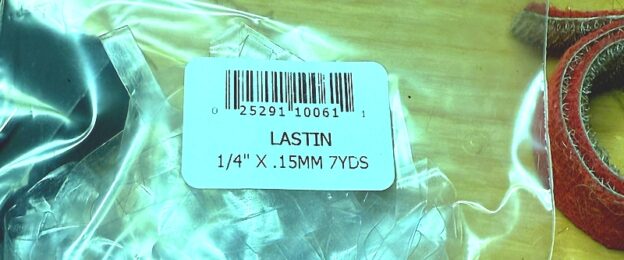
lastin or mobilon tape

That Which Stretches does not like Sunlight

I think every fly tyer learned an important lesson with the advent of the Latex Dental Dam craze of the 80’s. Realistic imitation was “in” and natural latex caddis pupa imitations spilled off the pages of Fly Fisherman magaine and into our fly boxes like maggots fleeing a corpse …

We assumed that the waxy softness of wrapped Latex Dental Dam would make the most wary trout succumb, based on its lifelike look and feel, and suddenly fly shops were selling prepackaged Stonefly nymph latex shapes, Latex insect bodies, Latex hopper bodies complete with legs, and we were about to make wild trout kneel before our collective squishy awesomeness.

… then we opened our fly boxes to restock them the following season, and found all that Latex oxidized into broken bits resembling cooked Chow Mein, and realized we had forgotten one tiny little lesson in Physics.

That Which Stretches does not like Sunlight

Anytime I am contemplating some form of stretchy synthetic in my flies, I remember the painful lesson of latex, and attempt to engineer the material out of the mix, given how little luck I’ve had with elastics.

I have been tinkering with Czech nymphs and their ilk for a bit, and have been slicing the bags the materials came in to make the thin shell backs used on these competition flies. Plastic bags stretch a little, but are not a true elastic material, and I hoped it would last longer than other materials. As the shellback is typically tightly ribbed with wire or monofilament, these flies are less prone to catastrophy than their Latex kin, where the oxidation of the latex eventually unwinds the entire fly body.

“Scud Back” is a material commonly used as the shellback for many of these Czech style nymphs, and I had an idea that I might be able to find the material in bulk form as there are so few transparent elastics used commercially.

Transparent elastic tape is used in the garment industry extensibly, and is used to seal clothing openings, like necks, wrist and anklets, on a wide variety of sports clothing. The transparent color allows it to be sewn into the lining of the aparture without altering the appearance of the outside of the cloth, and is used on nearly every swimsuit, bra, or strapped garment made.

Called “Mobilon Tape” or “Lastin” it is sold in some form by nearly every sewing store, and not suprisingly, for much less than us fly tiers are used to paying. Scud Back is a 1/8″ wide strip of Lastin, available in both clear and dyed colors. 1/4″, 3/8″, and 1/2″ are common sizes of Lastin for garment use, but it can be purchased in 1/8″ wide also. Typically Lastin is available in 0.12mm and 0.15mm thicknesses, just remember that the thinner the material the less likely it will survive hot sun and repeated seasons in your fly box.

Note this is one of the rare times NOT to lay in a lifetime supply. Rather it would prove smarter to replace the material regularly to ensure longevity on your flies. Consider that bras and swimwear see a similar amount of sun and water, it’s likely your flies will last more than a season, but you’ll need to test this due to the uniqueness of your storage method, and your fishing.

I tend to draw the material tight rather than stretch the material over the fly, which reduces the strain on the material and increases its lifespan. My flies are stored indoors in air conditioned splendor, so they are not fried in an overly warm garage, or similar inhospitable space.

Lastin or Mobilon can be dyed, likely with a synthetic dye or acid version, but I am reluctant to weaken the material uneccessarily with colors, hot water, and the mishaps that can occur with increased oxidation. I will dye some later to learn what works best, but that is a low priority.

I have used permanent markers to color the material, but once dry, the color wipes right off.

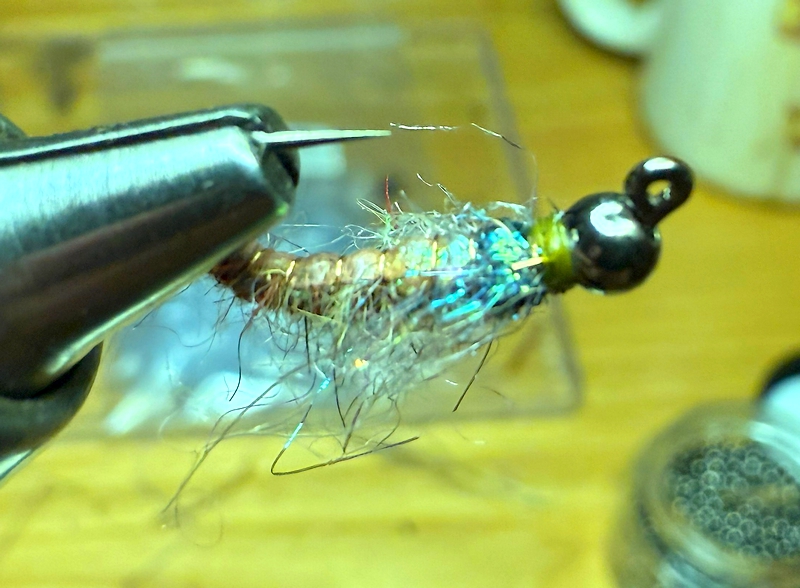
Lastin Shellback shown on a Czech Nymph

Most of my Czech nymphs use the simple transparent shellback, but I am contemplating a Hot Pink or Flo Orange Shad fly for use in the American, tied Czech style, so I might add a packet from Hareline just to be clever …

Scud Back is made by Hareline, and sells for $2-$3 for three feet. Lastin / Mobilon sells at most stores around fifty cents a yard, or about $7-$8 for a ten yard bag. Considering how many flies you can tie with a single 10 yard bag, I think I would opt to buy it one bag at a time, mindful to toss it every couple of seasons to ensure oxidation is minimized.

The smaller 0.12mm thickness is perfect for smaller flies, as it is noticeably more pliable than the 0.15mm standard. Extra pliability comes at a cost, as the thinner material likely has a bit less lifespan before snapping. When applying the material onto the fly simply draw it tight versus stretching it to the attachment point, as this will reduce the strain on the material as it ages/oxidizes.

I recieved both thicknesses from garment sources, so you’ll need to read the advert to determine which they are selling.

Mandala Crafts sells 33 yard spools of 5/32 elastic tape for about $9. This material is advertised as a thermoplastic, but doesn’t mention the Lastin brand. The material is clear compared to the slight opaque of Lastin tape, and the material can be stained with permanent felt pen. While useful, it suggests more than a single type of thermoplastic elastic tape exists, so you’ll need to try a couple to see which you prefer.