Category Archives: Fly Tying

Following my advice was the real mistake

Singlebarbed reader Spencer has trod where only the crazed and obsessed have dared and in traditional fashion I’ve started making excuses while flailing about trying to help.

“ … you mean you actually took my advice? That was your first mistake.”

The issue is simple.  A dye manufacturer boasts of an olive or brown and both are complex colors made of multiple sub-colors. From your watercolor days, brown can be made a thousand different ways (usually by all the colors running together), but most vendors use a combination of reds and blues or orange and purple to get brown.

Spencer dutifully tossed in his really expensive Whiting neck he hasn’t owned up to inexpensive rabbit fur test chunk and wound up with a nice purple for his trouble.

Been there. Spent most of last weekend in the exact same place with RIT dye. If I knew more of what comprised color on the mineral side I might have a definitive answer, right now it’s lumped under “sucks to be you.”

Dyeing destroys a lot of materials during the learning process but over time you can handle certain types of calamities, the rest you dry and do your best to find a use for – the material hasn’t been destroyed, it’s just not the awesome medium olive you’d hoped it would become.

If you can’t get a brown to dye brown , there’s little you can do to fix it – and the only variables are listed below:

1) Heat – make the dye bath hotter or colder from the failed temperature. Some minerals may only dissolve at certain temperatures, so if you dye brown and get bluish purple, it could be the red is activated only by higher temperatures than the blue. Purple means that some red and blue fired, but blue-ish purple suggests more blue than red fired.

2) Over-dye or tint the color back into the acceptable range. It works best for lighter colors as you’re adding additional color to an already dyed material. Dyeing dark purple with yellow will have no effect, but dyeing a light green with some brown and yellow will yield an olive or olive tint.

3) Time – leave the mess in the pot overnight. This should only be done on the darkest colors as even Tan left overnight will yield a brown feather. Perhaps time is required to get the other color(s) to precipitate onto the feathers.

Over-dyeing is also not for the faint of heart, but it’s one of the ways you can get the rarified colors like bronze blue dun or a multi-colored feather.

Last weekend I’d agreed to reproduce some of Cal Bird’s teal colors and had approached the issue with great trepidation – Cal being a trained artist and therefore fully fluent in the manipulation of colors and tints.
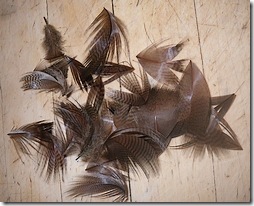
Left overnight RIT Tan yielded Dark BrownI’d dutifully followed the vendor’s color guide and built an olive and a brown from other colors. RIT lacks an olive, and their brown was too dark, so I mixed the custom colors in a proportion that I thought would yield something close…

It didn’t, and I was left scratching my head like friend Spencer.

The dye was largely RIT forest green with about 10% RIT tan, but the green vanished no matter what temperature was used.

I yanked the feathers before they became too dark, but left a pinch ofGreen rinse water them in the pot to test the overnight method. The result is above, a rich dark brown.
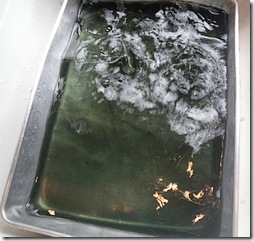
It didn’t matter what I tried, more heat, fixative, or dye yielded a pan full of forest green water and tan feathers. Over-dyeing was the only option, as I’d run out of suggestions from the manufacturer – who insisted I’d get an olive with the two colors mixed.

This drab, cold tan is shown below. It was yanked from the 90% green bath earlier – at the point when it had added all the tan needed to make the base color.
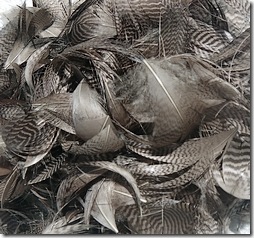
The "Cold" tan fellows yanked earlier

It has a miniscule amount of green in the feathers – just enough to turn the color cold.

I lump quasi-colors, those that I wasn’t expecting, under the destroyed feathers outcome;  the colors are useful and the feathers are undamaged – only the end result is unexpected.

A couple days later I subjected the now dry “cold tan” feathers I’d pulled early, to a bath containing only green and a bit of yellow. I needed only the smallest tint of color added to warm it to the sample color.
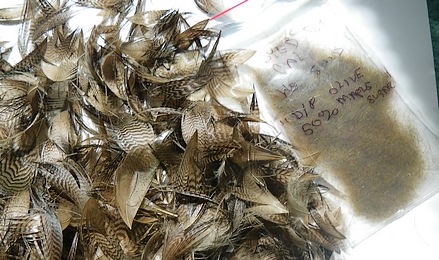
Sample shown with the feathers after the overdye process

The second bath applied what was missing to alter the color into the successful range. Green being equal parts yellow and blue and adding additional yellow – allowed the color to “warm” the feathers without obscuring the tan. There are hints of green in the feather duff at the base of each feather, but this is a brown-olive as dictated by the sample on the right.

Cal’s instructions are shown on the envelope, “olive and maple sugar.”

You can destroy feathers in millions of ways, with only a couple options to salvage the result. Consulting the color often allows you to pull the feathers when the unexpected results – and alters the problem from imbuing a light item with the finished color, to altering the existing color to match a desirable range.

Sorry, Spencer. It’s all part of the craft.

Tags: RIT, Cal Bird, teal, over-dyeing, tint, brown olive, bulk fly tying materials, custom dyed feathers, TINTEX maple sugar, whitefishcantjump.com, feather dyeing
Thirty Six miles of Maybe

Sure I was moving a little fast for my own good, but I was convinced I’d discovered the Holy Grail of Cloisonné (klaus-un-nay), that multifilament braided mylar tinsel we’ve adopted for steelhead flies. It is great stuff, available in silver and gold, never tarnishes and was a fly tier’s dream compared to all the thread-cored mylar tinsels of recent manufacture.

My $39.95 covered a lifetime supply plus postage from Asia.

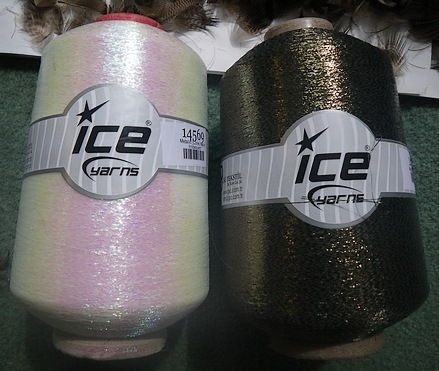
… Oh, it’s a lifetime supply sure enough, only I missed the yarn sizing and wound up with 45000 yards each of Dark Olive and Pearlescent superfine tinsel-thread

Imagination meets Desperation, the one pounder

… that’s eighteen miles of each color.

Now I’ve got to figure something that uses a ^%$# ton of it.

It runs contrary to my ethics to invent a couple dozen patented killers, then claim how much of a favor I’m doing you by selling you some teensy dust mote of the stuff … the fly shops have plowed that ground thoroughly.

But it does represent the last unspeakable variant of fly tying creativity, the collision of Imagination and Desperation. Us “scroungers” have been here many times and can only be thankful it’s not a full Bull Elk hide dripping in my driveway.

It’s too wide and breaks too easily to use as thread, but it would lend itself to being doubled over and used to replace all the other pearlescent components we’ve accumulated over the last couple of years. I could make a spun round tinsel, shellbacks for nymphs, wingcases, Easter basket dressing …

DkOlive_Tinsel

… or I could tie the entire blessed imitation out of the stuff and hope for the best.

It’s dry, doesn’t stink, and can be stashed away from prying feminine eyes eager to pounce on my mistakes (after the obligatory lecture or two).

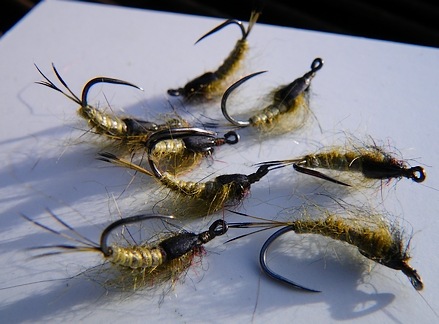
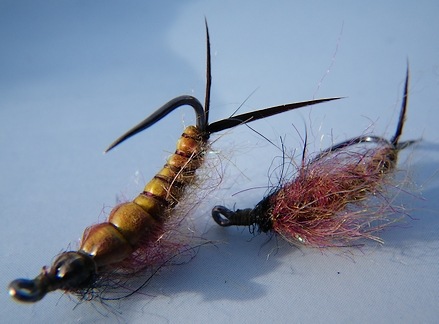
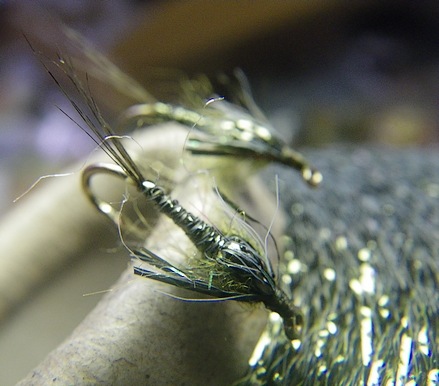
Trout flies come to mind and I managed to burn a foot building the little mayfly nymph above … 149,000 more and I’ll wish I’d bought two cones instead of the single …

I prefer the term unrepentant – society locks up those other fellows.

Tags: mylar thread, bulk fly tying materials, ice yarns, Turkey, mayfly nymph, Cloisonné, tinsel, fly tying

One day the grocery lady will fix you with that steely gaze

Shopping The comment echoed as if it were yesterday. My buddy and I frozen in appreciation of the measured stride of some long-legged vision negotiating the corner crosswalk. We’re doing our best not to stare, yet as the thoroughbred approaches we realize she’s still in high school…

… which didn’t slow us down much, but we knew once she found out we were the same age as “Dad” – her drawn out “..Eeew..” would be the Hiroshima and Nagasaki of Male Ego, and we’d crawl away broken men.

I mentioned to my pal, who was older, “I’m thirty-something and feel like I just got out of High School.” He replied, “So do I, but old is when the lady behind the checkout counter calls you ‘Sir’.”

As it took an impossibly long time to get old, I figured it would be six or seven decades before I’d even flirt with the issue.

He was spot on. She’s got her hand out for your cash while the “MacDaddy” pose crumbles, the held breath exhales sharply – and you realize she’d dismissed you while you pawed carrots in the produce aisle.

(Cut to present day)

Out of a dusty drawer came “Old One-Seventy-Nine” – a Dyna-King Professional (Serial #179) purchased the first year the vice was available. I’d never grown overly comfortable with the big slotted jaw and realized I’d better get around to purchasing a set of midge jaws before they vanished forever.

Naturally, the old jaws wouldn’t come out, so I appealed to Dyna-King for assistance.

Shannon replied: “ the back end of the jaws have possibly been ‘smashed up’ over time from the cam handle, causing them to be snug through the body. If you still are unable to pull them out you can certainly send the vise in and we can take care of it for you.”

Having plenty of experience busting fine engineering with medieval German-esque hand tools, I opted for the safer course of action.

Shannon,

Enclosed you’ll find the stem and jaws of my Dyna-King Professional, Serial # 179. I’ve secured the replacement midge jaws to the vise via rubberband …

The reply came back quickly, “Damn that’s old.”

Cue the sharp exhale of breath, and the inaudible mumble of protest when the bagger offers to push my shopping cart  to the vehicle for me. I’ll just dodder along in her wake …

Tags: Dyna-King Professional, midge jaw replacement, old guy, misspent youth, gene pool, MacDaddy

The Fusion fly: Where we expose our ample hindquarters to scorn and levity

The Author in a moment of repose I’m minding my own business and Reed Curry plants an idea in my head that’s been gnawing at me for months:

“What elements of a natural fly are absolutely essential for the trout brain to use…”

… to recognize food.

Better yet, what elements of a natural (or successful imitation) are essential when it’s moving at eight or ten miles an hour, in concert with millions of oxygen bubbles, scraps of moss and twigs, and the sediment your buddy upstream added?

Does a fish eating stonefly nymphs take your nymph because of its size, or because it’s both big and black? Does the grab you just missed on your Pheasant Tail mean the nymph represents the predominant hatching insect – or was it merely the closest, and the fish was bored of the olive ones ….

Hence the quandary, the simplest of all questions – and there’s no single authority to ask for a definitive answer.

Anglers never look a gift horse in the mouth, we’re free with what little fact we’ve established. Some fellow sees us playing a fish and inquires what they’re eating, and the fact that we’ve caught four on a #14 Pale Morning Dun cannot be denied. If our new found pal knots one on and scratches a fish or two, it’s unanimous, the fish are eating PMD’s …

… but are they?

Caddis are dancing under the overhanging brush, there’s something in the water column headed for the surface, and just above us could be slack water with a spinner fall.

It could be that the PMD’s are emerging upstream and only getting to the surface in the fifty yards we’re camped in – perhaps that caddis has a similar body color, and your mayfly imitation is the next best thing to Nature, accidental like …

… or maybe the outflow from the slack water is bunching the spinners into small rafts of wings and tails and the fish are keyed to anything that looks semi-edible and floats.

… but we’ll never know, as we’re intent on sliding that PMD under that big tree limb where the dimples appear larger.

I love posing the impossible question, and hate being the recipient. Friend Reed has dropped an imponderable in my lap and I can’t tease it loose.

Compounding the problem is my binocular vision, and while I can’t see as a fish can, I’ve got a couple hundred years of succesful flies to inspect for those common fish appealing attributes.

If you bounce some mayfly nymphs off your desk the impression you get may be a hint of color, perhaps a lumpy front and a thin rear. Throwing some caddis nymphs yields less singularity, tubelike and a flash of color. Stonefly nymphs give you BIG, and dark – and well defined legs, but only if the pattern is biot based or contains rubberlegs.

Dry flies are like caddis, very little detail other than “stuff in front” and a hint of color, sometimes hackle – sometimes it’s the body.

We’ve always been enamored of the static view of flies, and matching the frozen natural, something a fish never sees. Instead, fish have to cull food items from the moving litany of leaves, bubbles, and debris that accompany them, and if they’re not right 90% of the time they starve to death.

Looking at the patterns and construction we’ve used to imitate the Big Three food groups, reveals many common elements that reduce the singularities to a manageable number. Mayfly nymphs use the traditional construction of tail, body, and folded wingcase, and then eight or nine million different things for legs.

Caddis stages mostly look wormlike and almost always have a light body and a dark head – unless it’s a cased pattern.

Stonefly nymphs are big, also dark.

Therein is the crux – those few necessary features that distinguish one bug family from another. An enormous leap of faith is required, but we’ve already done that; that fish eat selectively, whether they feed on the most numerous bug, or the insect that requires the fewest calories to capture.

I started off conventional enough, but the experimental flies looked just like the stuff we’ve been using for decades, which shouldn’t be terribly surprising – as I was imitating imitations.

Then the Czech Nymph book threw me for a tailspin, as I’d overlooked the entire attractor paradigm. I started integrating attractor elements with physical design and came out with stunning bugs – that looked like all the other stunning bugs I’d seen …

… and while I patiently waited for the flood waters to subside, towing first one fly then another through stained puddles on the creek bank – I glanced down at the fly box and the Angels sang …

… a medley actually, featuring Eminem and Jay-Z compliments of the boom box rattling the parking lot.

First Law of Fusion : The best elements of flies can be contained on a single fly – and the result serves as multiple insects, rather than a single imitation.

We’ve trod that ground before, employing countless flies that imitate nothing yet resemble everything. Most of the better nondescript flies like the Bird’s Nest, Burlap, Casual Dress, and Adams, all fit this mold.

Second Law of Fusion : Combine two bugs on the same hook.

That … is truly different.

Fused Hare's Ear

Above is a minor variation of the traditional Hare’s Ear, I’ve added some attractor elements; a little flash blended into the body dubbing, and a hint of Claret and Yellow to the front of the thorax…

Fused Hare's Ear, bottom view

Here’s a glimpse of the same fly only a bottom view. We’ve fused the traditional Czech nymph attributes – the caddis “worm” shellback, with the traditional “mayfly” design of the Hare’s Ear. The hint of claret and yellow is revealed to be the traditional multi-color Czech element, part attractor, part tradition.

Czech Nymph bottom view

Here is a smaller size Czech nymph (tied on a traditional Knapek Scud hook), and the underside is revealed to be the venerable Hare’s Ear.

The idea is sound enough – with the complimentary flies needing a shared body color – although the shellback of the Czech-style eliminates even that restriction.

Tugging flies through puddles demonstrated that anything tied on scud wire, competition or otherwise, rides upside down. Allowing me a blank canvas to build the mayfly on top.

… and for the rest, it’s a homework assignment. There’s infinite possible ways to combine two insect groups on a single fly. Giant stoneflies are troublesome as their size restricts fusion to either Crane fly larvae or baitfish on the underside.

Which of you stalwarts is willing to risk public castigation to offer a better fused mousetrap?

Damn you Reed Curry, you’re the stealthy hand that forced inspiration past the normal cranial pathways and into the realm of outright mirth, as if they’re not giggling yet they certainly will be when I debut the Loch Ness dry fly series.

Tags: fusion flies, Knapek scud hooks, crane fly larvae, Hare’s Ear nymph, Reed Curry, The New Scientific Angling, Eminem, Jay-Z, inspirational fly tying, shellback,

Eat The Fly , a balanced and nutritious tour of the important finned food groups

Alex Cerveniak of 40 Rivers to Freedom and the Hatch’s Blog network is creating yet another endeavor documenting all possible fish foods and the flies to represent them.

Entitled, “Eat the Fly” it’s an ambitious undertaking that will contain the common food items and insects available to fish, offset by some of the fly patterns used to represent them.

It’s a hellish undertaking to be sure, but the rest of us have the easy part – admiring the photographs and remarking, “so that’s what a Black Nosed Dace looks like…”

He’s got species, phases, links to additional resources, flies that represent the food depicted, and where possible, seasons and emergence dates, coupled with locale information.

Horny-Head-Chub

Horny Headed Chub, Alex Cerveniak Photo

It’ll take some time before he’s scratched the surface – but there’s a great deal of work (and effort) already available, and he could use an assist on compiling all that information, you may want to drop him a note if you’ve got some compelling photographs of known food items.

Tags: Eatthefly.com, Alex Cerveniak, Hatch’s Blog Network, angling resource, baitfish, aquatic insects

He gives Cyprinids the Fat Lip

Roughfisher Ties one on Friend Roughfisher is adding his expertise to the USCARPPRO ezine, with a monthly column on flies for our favorite Cyprinid. It’s a great fit and a monstrous ezine, 150 pages of technology and insight into all forms of carp fishing – most of which we never knew existed.

Fly fishermen have more than our fair share of snooty types, with the balance either market hunters or fishermen. Cracking the cover on USCARPPRO suggests they have an equal leavening of elite anglers, elitism, and enough precision engineered tackle and angling minutiae to give fly fishermen a run for their money.

We devote four pages to synthetic tailing materials, and they’ve got four pages of hand cast lead weights with finishes that mimic rocks. We’ve got Bimini Twists and esoteric single purpose knots – only they’ve got twice as many, most of which we’ve never encountered.

We’ve got fly patterns in the tens of thousands, and they can match us one for one with boilies, popups, and wafters – all of which sound like Willy Wonka’s Everlasting Gob Stopper – only in Vanilla and Black Licorice.

Which gives them the edge on us as they can eat what they throw.

Best of all is the lack of outstretched arm posturing – there’s no need to exaggerate fish size, as most are unable to lift the bloated behemoth past their knees…

… and they’re smiling. Ruddy faced grins celebrate a worthy quarry, something that’s only occasionally seen in our glossies.

If you thought fly competition hooks were expensive – these fellows pay double for theirs – I couldn’t help but salivate over the shapes and reinforcement – we don’t have nearly the options we once did with X-Strong fly hooks.

I found it an enjoyable departure from our media, an interesting glimpse at a sport taken every bit as seriously as our own – with the added comfort of knowing there’s some poor angler paying more for his rods than I am.

Sure it’s bait fishing, but us fishermen do that.

While you’re there – tell Roughfisher we ain’t on speaking terms until some of that homemade sausage makes it to my side of the Rockies. Fly fishing is fine and all – but withholding eats is unconscionable.

Tags: Roughfisher.com, USCARPPRO ezine, cyprinids, boilies, popups, wafters, bimini twist, Willy Wonka, carp

Sulky Holoshimmer, holographic tinsel by another name

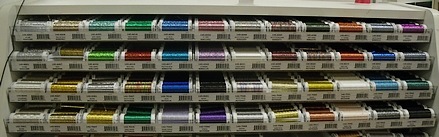
I was reminded last night that I hadn’t been completely forthcoming. The fly shops call it “holographic tinsel” – typically charging between $1.50 and $2 for a small spool.

Joanne’s Craft’s calls it “Sulky Holoshimmer” and rather than the traditional size spool, sells it in the elongated bindle for $3.95 for 250 yards. It’s only available in the fine trout sizes (1/32”) under that label – but a little digging will likely find our medium and large variant.

That’s nearly seven spools of the fly shop size, which cuts your cost down to fifty seven cents per spool (30m).

sulky_holoshimmer

I took the above picture at Joann’s showing 48 different colors. On closer examination I see duplicates, so it appears more than one size is available from the craft store. I was harried – and throwing elbows to keep the mob back, and may have missed this important detail …

Sulky_holoshimmer2

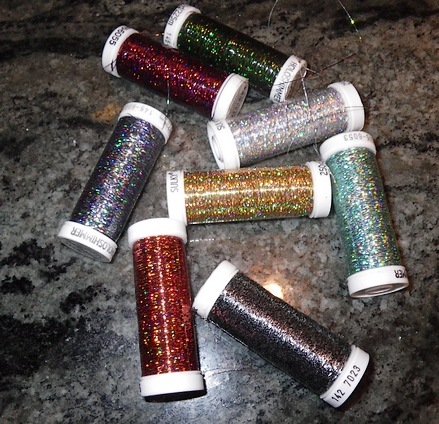
Here’s the life-size view so you can see the pattern and effects. Copper (bottom left), Cranberry, and dark Green (top two) are especially suited for those oddball trout patterns that require a little flash.

I love these spools. The top lifts up exposing a small track that the tag end can be wound around – once the top is pressed down your the tag end is completely secure. Consider saving these spools once the tinsel is exhausted – I’d decant other tinsels or chenille onto them so you don’t tarnish the old metal style (with rubberbands)  – and you can avoid the unfettered “mylar explosion” of the newer tinsels.

In this economy we’re making war on the two dollar item …

Tags: Holographic Tinsel, Sulky Holoshimmer, fly tying materials, bulk fly tying materials, war on two dollar items, fly tying

In light of this startling evidence, is the machine tied fly a myth?

The Daily Flypaper blog posted a fascinating video of the 1.3 million dollar fly tying system from Intuitive Surgical…

… which is a bit misleading, it’s actually an Intuitive Surgical robot showing off what it can do. ISRG has been the darling of Wall Street for a number of years, considered best of breed for computer controlled robotic surgery.

via The Daily Flypaper Blog

While the possibilities are endless, I wouldn’t expect the cost of routine surgeries to suddenly become cheap, perhaps scheduling them may involve menus and a drive thru, but operating amphitheaters remain in short supply. Us humans have shown remarkable resistance to technology especially if it’s holding a sharp knife – akin to the revulsion we felt in handing over our credit card information in the early days of the Internet.

1.3 million is about the same as pre- and post-Med tuition, excluding cadavers and books.

Naturally, watching the video had me wondering – as the work is intricate to be sure, but we’ve always insisted those bubble-packed flies from Japan were machine made, and if machinery intricate enough to create them is of recent invention – what made all those flies during the 50’s and 60’s?

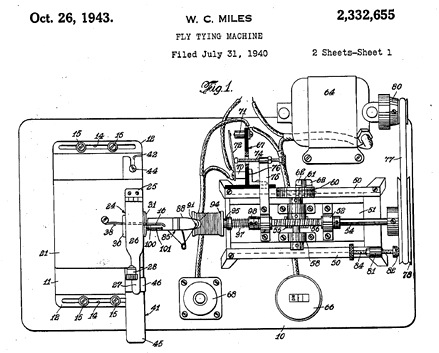
Fly tying machine, circa 1943

Therein lies the mystery as I can find nothing other than a patent application for 1943. History buffs will recognize that it couldn’t have been used by the Japanese until 1946, but may have played an important role in reconstructing Japanese industry.

Is it possible we’ve been misled all these years?

All those big ring-eyed hooks, buttonhole twist cotton thread and a Scarlet Ibis gleaming at us from the capable hands of a human? Makes you wonder what he thought our fish were thinking.

Anyone know what these rumored machines looked like or have an account of automated post war fly machinery?

Tags: Intuitive Surgical, ISRG, fly tying machine, machine tied fly, myth, patent application, Royal Coachman, Wall Street darling, youtube

She’s back – scourged clean and emerald green

An impressionist has the attention span of a small child. The fact that I tried it their way for more than six minutes gives me the license to bend all the rules. Curved hooks and razor points, and why should Caddis be the only beneficiary?

As a purely fact finding exercise I’ve extended the Czech style to all the major food groups, using a leavening of black and copper in the colorful attractor role. The effect is quite good, as shown below.

Little Stinking goes International

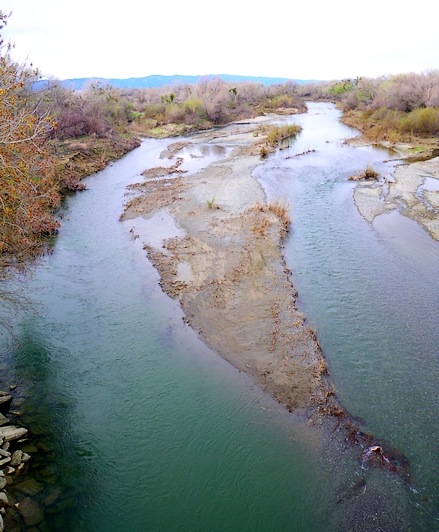
I’ve got my muse back. She’s deep green and completely rebuilt from dam to sewer pipe, and her 2010 christening befits flies that have never graced anything save imagination – as there’s no sign of life in her adorable semi-cleansed bosom.

February 2010, The Homecoming

Drained dry in August 2009, reborn under the damp umbrella of four weeks of steady rain, no fish of any kind visible – and requiring us to start the horrid transition from flaccid winter form to the lean – hard – Whippet of Spring …

… miles of water and no telling what we’ll step in.

We’ve cracked out the stretchable elastic and felt pens, and dangled plenty of Czech samples in the creek, and everything Czech rides upside down. We’ll counter with our colorful stuff tied to ride proper, as it’ll have to account for the magnetic interference of submerged farm machinery.

Little Stinking Buttercup

We’ve got lemon yellow’s and orange-orange’s, all infused with massive amounts of the basic attractor blends, featuring claret and golden yellow- with black highlights and copper flash.

In short, while we don’t expect to see a fish, we’ll be the best dressed – most equipped, panting fat guy on the watershed this weekend. NFL athletes drag tires to get in shape – I’ll be dragging the entire fly tying desk hoping to lose the spare tire …

Tags: Little Stinking, brownlining, the rebirth of a stream, Czech nymphs, mayflies,

You can use the extra on your underwear

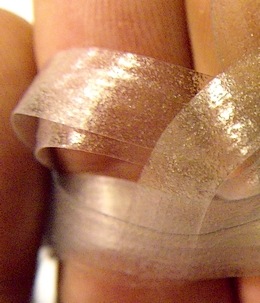
Satin Finish 2 mil elastic Singlebarbed readerTwoRod” has pointed us all towards saving a few bucks. His comment about 1/4” clear elastic as a substitute for the commercial “Super Shrimp Foil / Scud Back” products is the best replacement I’ve seen yet.

I went to eBay to see whether it can be purchased cheaper than the retail link Tworod included – and there’s a couple of truckloads available from a vendor (eBay store link) in New York.

Six bucks for 50 yards (auction link) with a satin finish. It appears tougher and much longer lived than the commercial products I’ve tried – and may last multiple seasons. The satin finish takes permanent felt pen quite well, allowing you to fiddle with colors and patterns with minimal fuss.

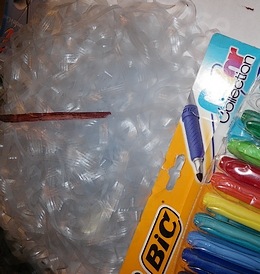
100 yards is a couple of lifetimes supply

I picked up a 100 yards of the material hoping I wouldn’t have to purchase it every season like the finer tippets.

Even that may have been a little ambitious as the resulting pile is about the size of half a loaf of bread.

I’ll string a hank on a tree limb to gauge its resistance to sunlight degradation, then hope I can impart some of that zeal to some fishing buddies to relieve me of a goodly chunk.

50 yards is plenty, and if prone to significant oxidation you’ll wish you bought half that. The eBay flavor is closer to 3/8” or 1/2” in width – slice it down the middle and it’ll make two strips of the appropriate width.

Tags: Czech nymphs, Scud Back, Super Shrimp Foil, fly tying materials, fly fishing, oxidation, clear elastic strip, eBay