Author Archives: KBarton10

The Ekich Rotary Bobbin

Seeing a new wrinkle in any of our traditional regalia has always piqued my interest. Cameron Mortenson at the Fiberglass Manifesto (via Moldy Chum) sent me a little tidbit figuring it would whet the creative juices.

The idea of a $100 fly tying bobbin would have had us gagging a couple of years ago, but once fly rods broke the $1000 barrier the lines between reality and fantasy became blurred – and almost anything is acceptable.

Billed as a rotary bobbin, with constant force spring and ability to retract thread as well as dispense it – an interesting idea, and something we don’t currently enjoy with our aging fleet of Matarelli bobbins and the countless imitations that Frank’s bobbins have spawned …

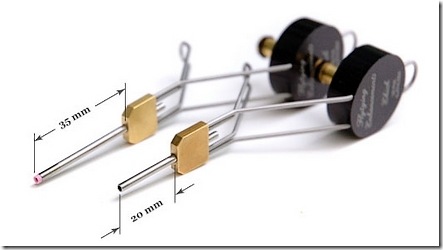
The Ekich Bobbin

The Ekich bobbin is available in Trout (20mm) and Steelhead (35mm) sizes, stainless steel or ceramic lined.

It appears the spring must be discharged periodically. My interpretation of the user guide suggests the spool needs to be reseated slightly to discharge the thread tension after usage.

Pulling the thread rotates the spool in a clockwise direction storing energy in the spring/clutch mechanism. The spring dispenses 60 cm (24″) of thread. At this point, it is fully wound and there is a noticeable increase in thread tension. The spring needs to be reset by lifting the spool just enough to disengage the drive pin. This reset is also required prior to thread cutting. The amount of thread left outside the tube during the resetting process will remain there without being rewound.

Cutting that small tang off the faceplate appears it may eliminate the need to discharge the spring, but it would also remove the ability to respool the line.

I love gadgets. Unfortunately, revolutionary change is elusive – and fly tying and its aged tools seem to be an excellent candidate for modernization, yet our quaint and curmudgeonly pastime resists change quite effectively.

It’s an interesting concept, worthy of the couple minute read ..

Tags: The Fiberglass Manifesto, Ekich rotary bobbin, fly tying tools, fly tying, Matarelli bobbin,

Things that dispense noisily that Bears won’t eat

It’s one of many angling axioms, how the outdoors-fishing ritual guarantees some unnatural food tucked away in a vest, or cooler, and daylighted with great trepidation knowing the catcalls and scorn that will greet luxury items from those roughing it.

A couple days worth of whiskers and yesterday’s underwear is about as close to Jim Bridger and Dan’l Boone as they’re willing to go, and reverence for the wilderness experience won’t slow them while they help themselves to your Big City larder and that bottle of fine brandy.

It ain't food unless it goes BLORT

Hardened urbanites prefer speed over flavor, evidenced by the growth of drive thru eateries. It may be time to fuse technology and  outdoor cuisine and give the traditional campfire fare a similar expedient makeover.

The threat of bears and lack of refrigeration eliminates “real” food from our repertoire, but Modern Science has provided us with Freeze Dried, desiccated powders we can recombine with creek water, and aerosol-extrusion whose tasty flatulence can now change camp life forever…

I call it “Blort” cuisine. Things that dispense noisily that bears won’t eat.

I’ve always found the Batter Blaster indispensable on my expeditions – and have christened it “Culinary Duct Tape.”

Any lip from “Mr. Roughing It” on the far side of the campfire and you give him a three second burst … flat tire? The Batter Blaster will seal the puncture and inflate the tire in seconds.

Shat onto a hopper hook, it makes a resilient foam body that can be shaped with a pocket knife into a dizzying assortment of terrestrials.

It’s chum for coarse fish, “silly string” for the kids, and any resemblance to actual pancakes is accidental.

Tags: outdoor culinary adventure, don’t try this at home, duct tape, roughing it,

Sierra Club weighs in on the California Water legislation

While the California legislature and the Governator play the superlatives game; beaming smiles and back pats – sheathing their weapons temporarily while gushing meaningless platitudes about how hard it was to come to consensus, requiring real cleverness to disguise their pet projects and ritual looting of the state’s treasury…

… the opposition has had time to read the resulting legislation, and as expected, are displeased.

The Director of the Sierra Club mourns openly via the Huffington Post

And much of the water that is delivered, at a cost of billions of dollars and after being stored in snow and ice, is used to grow alfalfa in the desert or allowed to drip out of leaky urban plumbing systems. Huge quantities are recklessly contaminated with various pesticides and toxic wastes, inadequately treated at still billions in further expense, and then delivered to consumers who are understandably anxious about its quality — leading them to purchase bottled water (the manufacture of which wastes a gallon of water for every quart produced).

“Huge quantities of contaminated water” assures brownlining will enjoy a robust future, largely due to my intensive lobbying among members of both parties. I suppose I’ve got my “30 pieces of Silver” but the farming community still holds all the cards.

Tags: Huffington post, Governator, California Legislature, Sierra Club, california water wars, brownlining, coarse fish, toxic waste

Singlebarbed adds measure of doubt to legal proceedings

Fonda does Jury My streak of 33 years without being called to Jury Duty, is over.

I’ve received sage council from the folks at work; how I can spot a guilty fellow a mile away, it being an innate skill … Carry a copy of “Mein Kampf” under my elbow, and mumble a lot to no one in particular …

… start the dissertation with, “I’ve been diagnosed with Swine Flu” and snarkle noisily as I wipe nose on shirt sleeve … It all seems a bit childish as once His Honor finds out I’m a fly fisherman – that should be indictment enough.

Izaak Walton insisted we were the introspective intellectual, yet Herman Melville quashed that notion with his vengeful and bitter Captain Ahab. Hemingway attempted to make us “wise old men” – but was undone by a couple of “slasher” movies and the resurgence of the Somali fisher-privateers.

Having guided an innordinate number of lawyers and judges in my youth, those precious fly selection skills may serve me well. I’ll just glad-hand the Judge on my way to the podium, mention that “Titty bar” I saw him at on the Trinity, and I’ll be off the panel and back at work within the hour.

Excuses are akin to fly selection; many will work only some work better than others.

Tags: fly fishermen, rogues, knaves, jury duty, Herman Melville, Izaak Walton, Somali pirates

Part 1 – Singlebarbed teaches the fundamentals of fly beauty, and insists you’re catching fishermen mostly

Fly tying is six weeks thinking of nothing but the fish, tying small stuff to smaller stuff, the shock and awe that all insects don’t suck blood or whine in your ear, the majesty of the first fish caught on your own fly, and the amazing riot of colors and animal parts coveted and purchased …

… and then it’s forty years of attempting to make your flies resemble someone else’s – validation not so much duped fish as successful copy of a book photo, or an appreciative comment from a fellow angler.

You start tying flies for fish – and wind up tying flies for fishermen.

It’s not a conscious decision, but aesthetics and beauty are as insidious in fly tying as they are in life.

The industry has always embraced beginners with great fervor, as they’re the source of a great deal of revenue. They need everything and a canny shop owner loves to host a class as it guarantees commerce. Fly fishing clubs love them as well. It’s a great way to be “hale fellows well met”, attract “lurkers” that don’t show for banquets and Beef au Jus’, and co-sponsor them with local shops happy to provide a small discount for students.

… and six weeks later you’re mounting that gleaming new vise to a table wishing you had someone to ask the hundred-thousand questions that occurred since your final lesson …

Magazines, books, and Youtube provide inspiration but spawn more questions than answers, and despite the fellow at the fly shop claiming “Cree” is nearly as good as Grizzly, your unimpugnable sources are gone and you’re left to figure it out … alone.

Intermediate and Advanced classes are few and far between, as there’s no agreement on what techniques or flies belong to either, there’s little retail traffic, and finding a master-instructor that has all the answers and is sober is more difficult in a club setting.

When offered they’re usually a three-part chain; beginner, intermediate, and advanced – and often filled with recent graduates of the beginner class, who’d be better served if they tied 5 or 6 thousand flies before stepping up the complexity.

If you’ve made it past the beginner class and resolved to master fly tying, knowing full well that further precision is largely vanity as the “well chewed fly” and its effectiveness has debunked taut, tight, and pretty…

… I’ve got nine steps for you to master if you want to catch fishermen.

The “Why” of it all

Refining your tying for the critical gaze of other fishermen will make your flies sturdier. All the painful lessons you’re about to learn are lost on fish, fish are stupid, lack artistic sense, and eat cigarette butts.

If you smoked you’d know this.

“Refinement” is a fancy word for discipline. Holding instincts in check and enduring someone else’s artificial sense of style, proportions, and method.

Beginning tiers lament the movement of materials on completed flies, loose tinsels, flopped over tails, and precarious hackle – and are heavy-handed with thread on all subsequent attempts. Reaching inside that glossy plate to give the author’s fly a twist will yield movement too, but it won’t unravel or fall apart – and yours might.

The difference between 30 years of fly tying and a recent initiate is about 8-9 fish. Even the best flies disintegrate and replacement is required.

In its day the flat tinsel body humbled most tiers. It’s not used as much presently but the lesson learned holds true for all wound body materials, doubly so if they’re shiny.

Dubbing bodies allows a tyer to add a little more or take a little off, but yarns and chenille don’t share that quality. They’re a constant diameter that shows every lump and foible of the materials underneath, and completely unforgiving.

Mastery of these materials is simple if you get to watch someone else do it. For chenille, downsize it one size and tie it in at the front and double wrap the body.

A double wrapped body of small chenille is the same size as a single wrap of medium, yet you can add taper, wrap it tighter, and tie it off with less thread than the larger size.

Flat tinsel and floss are identical. Wrap from the front of the fly backwards to the tail then wrap back up the body to the start. You’ll have a gleaming body absent gaps in the tinsel or “bubbles” – where overlapped tinsel pops out of the turn next to it leaving a small area of underbody and thread showing.

A large area to work with doesn’t make the task easier. Large trout streamers with their 6X long hook actually magnifies the floss or tinsel’s effect on the overall fly – as it’s much more visible. Working with floss requires you to cover your fingers as the sweat of your grip will immediately remove the shine or stain light colors.

Lead wire on nymphs and larger flies dictate the look of rest of the fly. A poor choice in placement or the inability to address the obvious lumps of where it starts and stops, cannot be corrected.

On trout nymphs the lead wire is the thorax – giving you a pronounced lump that ends the body and defines the wingcase. It should be positioned on the fly exactly where the thorax will occur – and the number of turns used should be the exact width of your planned thorax area.

…that’s right, planned. Flies don’t wind up with proper proportions by accident, and tail, body, thorax, and head are all mapped in your mind before thread touches the hook.

On larger flies lead wire may cover most of the shank, or it may be larger diameter, and no amount of thread or glue will keep it from rotating. Bind it as best you can and use the tail and body materials to plug the gap between shank and the rearmost end of the lead.

The mistake most make is not leaving enough room for the forward transition at the eye of the hook. All your materials will be spiraling off the lead coils and secured on the much thinner hook shank. Dubbing can be used to hide many sins, but wound materials like ribbing and chenille will always have trouble on that transition.

Positioning the thorax too close to the eye of the hook will yield a crowded eye – and worse – if a couple of turns of hackle need to be wound in that area to complete the fly. If the tie off area is still abrupt in definition hackle will flair outward away from the body due to the bulge – rather than close as it’s intended.

Lead placement dictates everything – including the hackle shape.

If it’s not dry fly hackle then it’s tied in by the tip and folded, then wound.

… and there’s some very good reasons for that unshakable rule …

Hackle is the most fragile component of any fly, dry or wet. The thin tip gripped by your pliers limits the amount of pressure you can use when hackle is wound around the hook shank. Tying in the tip means the stem gets thicker with every turn and you can apply more force when it’s wound palmer up the body – or used as a collar on nymphs and steelhead flies.

… and at the eye – where it’s tied off, the stem is thickest yet, perhaps enough to withstand being barked on a rock on a low backcast or torn off a tree limb on a misguided forward stroke.

The real value is the effect. Hackle fibers get longer as you move towards the butt of the feather. When winding collars with a folded hackle each turn is longer than the last. Longer fibers obscure the shorter fibers of earlier turns – giving the appearance that all the hackle is a perfect cone of exactly the same length.

It’s beauty were after, remember. Sound science is merely an accidental nicety in our quest to catch fishermen.

“Folding” a hackle is the act of tying it in my the tip and running a right angled object (like your scissors) up the stem to break the fiber’s back and make them slant backwards towards the rear of the fly. This process is shown in all the best fly tying books and is instantly recognizable on the fly itself.

Tying in your hackle by the butts and winding a nymph or steelhead fly’s collar will require you to wrap thread backward onto the hackle to get it to lay down, resulting in a ungainly head that’s got hackle color peeking through – and is prone to damage.

Putting it all together

We started with the least important beautification tips, working our way to the most important. Putting items 9, 8, and 7, together – let’s see how we can use them on a standard #6 Silver Hilton.

Silver Hilton 1: Lead Placement and Downsize
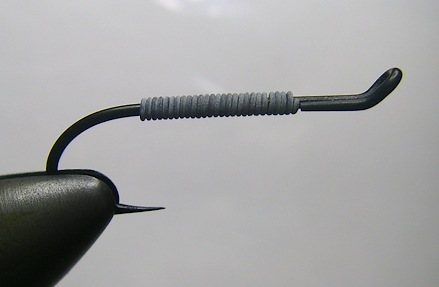
Silver Hilton

Do I use 10 turns of 2 amp lead wire or 20 turns of 1 amp?

Downsize: I opted for the smaller size as I could cover the body completely – guaranteeing the lead is uniform over the entire fly. No lumps or transitions to worry about and I squeezed in 5 extra turns of the smaller wire, making it heavier.

Silver Hilton 2: Gap fill
Silver Hilton 2

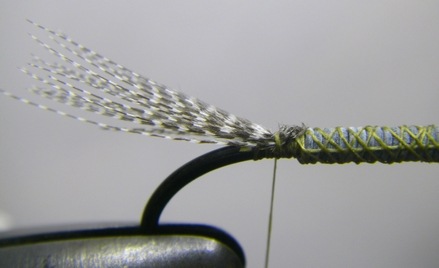
Lead is secured with three runs of 6/0 Olive thread (chosen so you can see it). It’s not going to prevent a vigorous twist between thumb and forefinger – but neither will 50 runs of thread. Thread is always your enemy, use what’s needed and nothing more.

Gap Fill: The teal tail is tied onto the hook shank leaving a transition I’ll address with subsequent materials. The balance of the tail material is trimmed at the rear of the lead, about a 1/4” of tie down/transition remains.

Silver Hilton 3: Gap Fill
Silver Hilton 3

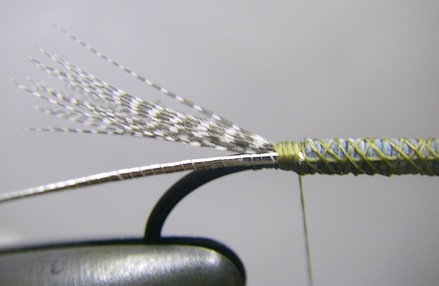
Gap Fill: The oval silver tinsel follows the tail, tied in exactly the same spot and trimmed identically. The “gap” is slowly closing so the transition will be imperceptible on the body material.

Silver Hilton 4: Downsize and Double wrap
Silver Hilton 4

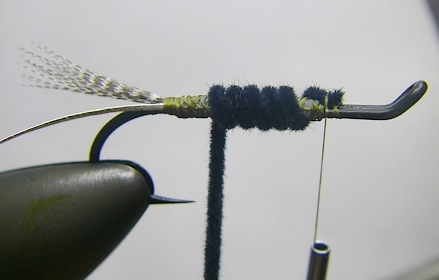
Downsize & Double Wrap: Rather than medium chenille I’m using fine velvet chenille. Regular chenille is just as good but I prefer the finer grained Vernille (velvet chenille) to regular rayon. It’s tied in front so I can make a double pass of the fly body; the first offers bulk, and the second will be drawn tightly over the first to give a smooth gap-free look.

Silver Hilton 5: Double wrap
Silver Hilton 5

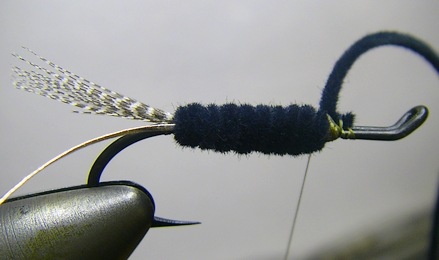
Double Wrap: A nice plush body with a hint of taper, the result of gap fill and the second “finish” wrap of chenille. The second allows me to fill gaps and address contour, resulting in a “fisherman catching” look – and structural integrity.

Silver Hilton 6: Double wrap
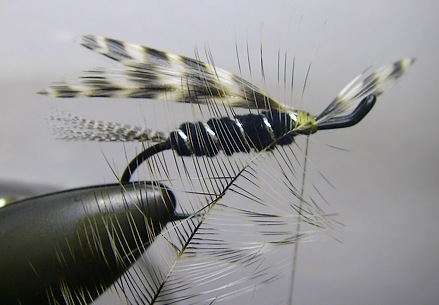
Silver Hilton 6

Because of the fly body being a double wrap of chenille, note how the oval tinsel stays on top of the body versus digging into the material and being lost from view. The extra density of two layers means all subsequent materials will not vanish into the “grain” of the wound chenille.

Likely both fish and fishermen can appreciate that …

Silver Hilton 7: Tied in at the tip and folded
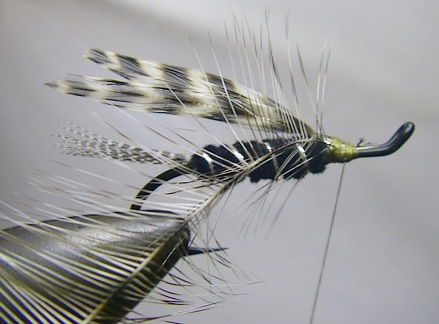
Silver Hilton 7

The hackle has been tied in at the tip and folded. I’ve drawn the right angle of my scissors towards me breaking the spine of each fiber and in so doing they’ll point back toward the tail of the fly naturally.

Silver Hilton 8: Folded hackle
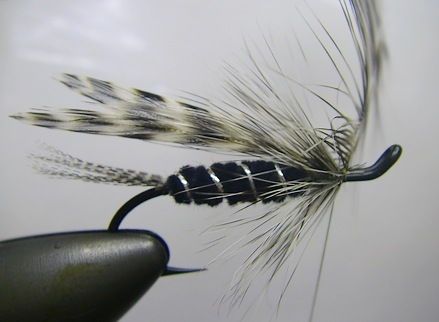
Silver Hilton 8

Folded Hackle: The hackling is complete. Note how the hackle lays back over the fly naturally without being coaxed by 65 wraps of thread. In fact, where’d all that thread go?

Because I can “crank down” on the hackle after the first couple of turns, I’ve laid it exactly where I wanted it – covering the thread tie in area we saw in the previous picture. I’m about to start my whip finish and only two turns of thread are visible.

Silver Hilton 9: The final “fisherman catching Sumbitch”
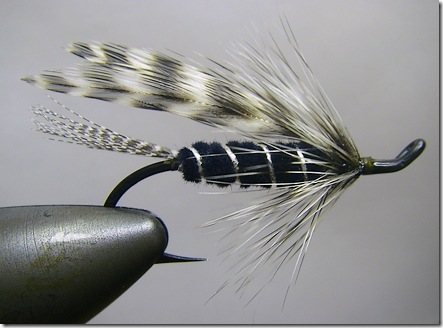
Silver Hilton Final

The completed fly.

Tiny head. No gaps or foibles noticeable – and the eye is clean of cement and feather dander. It is a fisherman catching SOB, and your buddies will compliment you with great sincerity while palming all of them off your bench.

Small things that seem trivial, yet added together can make a huge difference in the way your flies look, last – and how they’re perceived by others. It’s of little consequence when running the fly through a riffle as only fish are a true test of what looks tasty and what doesn’t.

In the meantime, if you’ve just finished your six lessons of beginner class and are feeling your oats, you may want to commit these simple steps to memory.

Next Week: Three more pearls of wisdom as defined by hisself and his questionable wit…

Tags: Silver Hilton, lead wire, tapered fly body, folded hackle, Vernille, velvet chenille, Mustad 36890, teal flank, oval silver tinsel, beginner fly tying class, intermediate fly tying, advanced fly tying, flies that catch fishermen
Panama Canal sees first Atlantic Salmon run

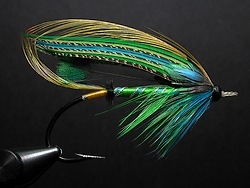
Green Blue Another mass escape from a British Columbia fish farm unleashes 40,000 Atlantic Salmon into the Pacific Northwest.

… funny how Salmon of any species avoid the “invasive” label, despite their home waters some 3000 miles distant.

In traditional fashion, the farmed fish industry has responded with “no worries, it won’t happen again, sorry ..” – while the environmental crowd is forming a lynch mob.

I’ll take the middle road and find some untrammeled piece of beach on the Panama Canal and be the sudden beneficiary of a massive surge of tired, lost fish…

“However we do know that some survive because small numbers have returned to some rivers,” said Backman. “There is potential for some to survive.”

… they’ll be damn tired of anchovies by then – and my Green Highlander’s and Jock Scott’s will look awful damn tasty.

Tags: farmed fish escape, Atlantic Salmon release, Marine Harvest Canada, green highlander, jock scott,

My binges at the Yarn aisle are still intact, just less successful

My yarn fetish hasn’t slowed any I’ve just become demure and sensitive to catcalls from the fellows keeping a manly distance from the yarn aisle and fidgeting under the weight of Madam’s purse. My progress through the store monitored closely by a stern female proprietor who always assumes I’m shoplifting.

Can’t blame her much, she’s never seen a fellow fondle a blend of silk, mohair and polyamide with such sexual tension…

I do my best to set them at ease, shifting the subject quickly to how I plan on dismembering some hand dyed woven masterpiece into lint – and all the fish I’m liable to catch in the doing …

… which is why Grandma presses her phone number into my armload of gaily colored skeins – testosterone is in damned short supply and even a portly scowling fisherman makes for a stirring presentation.

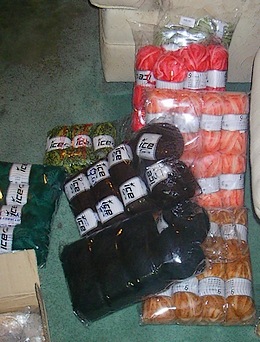
The Yarn reject pile, growing larger by the minute Most of the latest batches have found their way to the reject pile. Lured by color and texture and undone by a hidden weave or indestructible fiber that prevents reduction into fur.
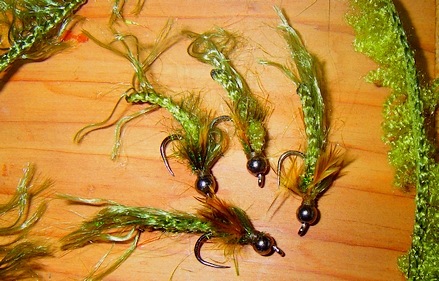
I’m still searching for a heavy fibrous yarn that I can get in 20-30 colors that can be torn apart for large trout flies and Steelhead.

… and at the same time I’m practicing with fiber reactive and disperse dyes – so that once I find it I can turn it into any color missing from the vendor’s base compliment.

Which usually means Olive, as it’s quite a rarity to see anything other than a Kelly Green or perhaps an Ocher.

Swimming_Damsel

I’ve got a lot of testing underway and damn few fish to assist. The above is a swimming-style damselfly made of a polyamide eyelash yarn which also contains a sponge segment that I’m attempting to incorporate.

You saw something similar on the mayfly nymphs I’d done earlier, only this time I’m opting to get more of those soft swimming fibers onto the fly to offer a marabou-style swimming motion.

I’m tying them on Knapek and Skalka hooks, part of a larger test of all the high priced competition wire that is becoming commonplace. I’ve laid in supplies of Knapek, Grip, Skalka, and Dohiku dry and nymph hooks to test quality of manufacture, consistency, fishing capabilities, and wire (soft or brittle) – as part of a larger article on the subject.

… in the meantime I’m proving myself a poster child for the Fish Can’t Read article on obsessive fly mongering.

Tags: Knapek, Skalka, Grip, Dohiku, competition hooks, obsessive feather collecting, polyamide yarn, Fishcantread.com, Olive is no longer fashionable, fly tying

Meet the Savior of the Brown Water, the Oil Spill Gordon

Thraulodes_Quevedoensis There’s a certain contentment knowing coarse fish will be around to confuse and entertain future generations of fly fishermen. They’ll be speaking with the same awe of “Silver’s”, “Grass”, and “Common’s” that we’ve reserved for Brown, Brook, and Rainbow.
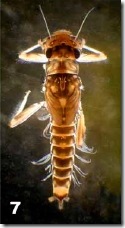
… and while they’ll continue to siphon mud for hints of protein, we’ll still be able to gear up for dusk and the traditional hatch of dry flies…

thraulodes_nymph All those Catskill dries will have long vanished into antiquity, replaced by the Savior of the Tainted Water, the Thraulodes quevedoensis.
Discovered this year in Ecuador, the Thraulodes Mayfly appears to be pollution insensitive and thrives on concrete, human waste, and radiation.

United States protocols assume mayflies collectively are indicators of high water quality, but the Thraulodes quevedoensis signals that the assumption might not be entirely true in the lowland tropics of South America.

Flowers offered his theory on why this species of mayflies is able to tolerate the polluted conditions of the river, which gets sewage directly from the city and agricultural pollutants from farms upstream.

“During the wet season, the river gets torrential rains from the Andes Mountains,” he said. “During the dry season there are shallow spots in the river and algae grows. This can act as a purification system, and I believe this can keep the pollutants below critical level.”

The flies of tomorrow may sound similar, but us brownline types thrive on a hint of humor mixed with a leavening of pure insouciance, evidenced by our lust for the Fan Winged Corn Niblet, the Light Twinkie, and Oil Spill Gordon.

… the Bad News is future generations will be just as pissed, especially when their savior sports a 5.6mm body length … an #18 if they’re lucky …

Tags: Thraulodes Quevedoensis, pollution insensitive mayfly, Equador, Dr. Will Flowers, Catskill dry fly

Twenty Percent less bathing for Californians

They’ve done the “nasty” and as the details emerge we’ll find out whose lobby held firm as others quavered.

The California Legislature signed the hotly debated water legislation late yesterday, and while it doesn’t provide for a peripheral canal, it hasn’t ruled one out either.

The creation of an oversight committee for the Delta, which like all oversight – is defined by how much was contributed to the Governor’s war chest – and dominated by political appointees who show only for the Croissants…

— A new seven-member board to oversee the Sacramento-San Joaquin River Delta. The board would consist of gubernatorial and legislative appointees, along with the head of an existing delta commission. The board could approve a controversial peripheral canal to channel water around the delta.

They’ll ensure that a trickle makes it to San Francisco Bay.

Us citizens, we get to pay for the 11 billion dollars of infrastructure – which will be deployed around 2015 – ensuring it costs twice as much due to inflation and the decline of US currency. The Good News is we get to vote on it, which is the bad news too.

The idea of paying for all that infrastructure by charging those that use it was shot down – as was the removal and watering-down of the penalties for illegal diversion.

… and we get to absorb a 20% cut in our freshwater while paying for the privilege – unless you live in San Francisco or Los Angeles, in which case you’re exempt as you never shower. All the rest of us citizens will be required to reduce our water usage 20% below our current levels.

A 20-percent conservation mandate for urban areas, with credits for cities that have made significant conservation efforts. Agricultural entities will have to follow best practices for water use.

… and the best practice for agricultural has been to irrigate desert, remain profitable, and sell what’s left to Las Vegas or Phoenix.

I sound skeptical and I’ve a right to be. Consensus amongst politicians rarely involves the Greater Good, and votes seem to be acquiring a more sinister note, akin to “everyone who got over on the populace raise your hand.” Ensuring each municipality gets their fare share of a diminished resource.

“I believe this measure is so bulked up with pork that it is going to sink under the weight of its own pork when voters are asked to vote on it next year,” said Assemblyman Chuck DeVore, R-Irvine, who voted against the bond.”

If the details live up to the negotiations, I’d say it’ll have no chance whatsoever. A lot of disgruntled folks that resent having to pay for the bank and automobile bailouts – could easily perceive some pork barrel water project as more of the same.

Me, I’ll ferret details and continue to vote out everyone from that shadowy third political party called, “Incumbent.”

Tags: California water wars, 11 billion water infrastructure bill, pork, big agriculture, peripheral canal, personal opinion

California State Parks, weekday closures commence

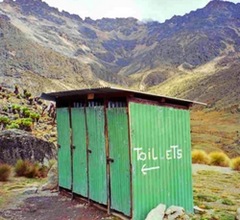
portapotty Closures to California state parks began yesterday in response to Governor Schwarzenegger’s request that the State Parks & Recreation budget save $14.2 million over the coming winter.

In order to avoid full closure, many parks are closing during the weekdays, which spares the larger populace but may inconvenience steelhead anglers that snuck a Monday or Friday off …

Anglers within California would be advised to keep an eye on the Parks & Recreation department’s web site as the only listing of affected parks appears as a daily news item.

Notices have been posted for selected counties. The Mendocino county notice mentions impacts to the Russian River gulch, Navarro, and Van Damme, parks/watersheds.

The service reductions came about through a process wherein each of the State Parks’ District Superintendents designed a plan for specific reductions tailored for each park within their respective district. The plans included all 279 parks within the statewide system.

A lot of Porta-potty removals, reductions in allowed camping spots, and outright weekday closures, just enough to gum up a weekday pilgrimage for chrome.

Tags: California state park closures, California budget deficit, Russian River, Navarra River, Van Damme, Porta-Potty, steelhead fishing