 Government intervention is a popular topic in all circles of late, especially finance. Most have lost faith that governments are capable of managing anything unless some foreign army is landing on a nearby beach, and then we cheer loudly as the feds show in force.
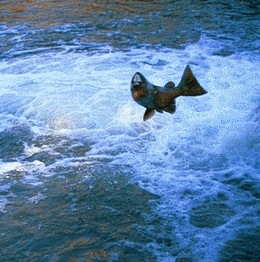
British Columbia is responding to the threat to salmon stocks in a manner that bears close examination, as it may be one of the few examples I’ve seen of forward thinking…
BC has the double issue of a large and entrenched salmon farming industry, which has had a rocky relationship with locals for all the obvious reasons, but it also has some of the few remaining pristine stocks of wild fish, not yet mown under by development and pollution.
To balance the needs of both, the suggestion is the creation of a salmon agency with jurisdiction over all the causal agents that threaten salmon – from logging and global warming, to hatcheries and farmed fish.
The forum recommended B.C. create a water and land agency by 2012 to oversee the cumulative impact on salmon habitat of all resource activities, from traditional sectors such as logging and mining to modern threats such as run-of-the-river hydro projects. Government progress would be subject to independent, open audits.
It’s a “cradle to grave” approach that sounds like a sensible and thoughtful plan – given that threats to wild fish are many and varied. What teeth they’ll have to enforce will determine success, but it’s certainly a holistic approach that could prove better than crapping millions of fry in a dead river and calling it reborn.
Multiple jurisdictions from traditional agencies guarantee painfully slow progress on any issue, often measured in years or decades. I’d think having all of that under an umbrella agency would allow them to respond quickly to issues at a minimum.
With the miserable environmental record of my state as backdrop, I’ll keep my fingers crossed that while Arnold won’t be back, his replacement might have a model to jumpstart our failed salmon management efforts.

 Statistics for California are unavailable, but Florida is a sunny state and a close approximation. There are 1,200,000 women in Florida between the ages of 18 and 29. Roughly 13% of the population bought licenses, of which the greatest single demographic (9%) was male retiree.

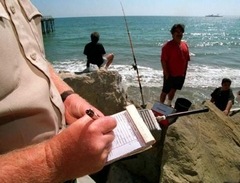 I admit that the license clashes garishly with my Pith helmet and red suspenders – but the lack of fashionista lounging in brown water allows me to skulk from bush to bush without incurring a social faux pas.


 It’s part of my duty statement as a computer geek; avoid eye contact with the customer, inhabit darkened alcoves with blinking lights and strange ritual, and finger all the donuts before selecting the one you’re going to eat …