 I was convinced the story behind bead headed flies and their speedy domination of the sport was due to fly tiers who dreaded completing that gracefully tapered head, that final step which revealed their skill set even to the casual observer.
Weight has always been problematic for fly fishing. The letter of the law allows you to add as much lead as possible so long as it’s covered up, the rest of us especially those without ethics or refined breeding add a big shiny goober-esque bead – elegant in getting the fly down to where fish are, reducing all the discarded split shot us fishermen have been salting the watershed with for the last decade.
We feel bad about the lead / waterfowl thing, but only because of all that wasted flank and oily duck’s arse we can no longer live without. They’ve expired via heavy metal inhalation … accidental versus the double barreled kinetic flavor we had in mind.
Instead the bead phenomenon is considerably larger than all that. The real story is our adoption of the literal and scientific elements of fly fishing being complete. We’ve garnered all the fish killing properties of higher learning, entomology and Latin, and are assured there is no stone left unturned, only a return to the gaily colored attractor flies of yesteryear may provide us with additional challenges.
Ignoring all the mean spirited and literal dialog discussed by the forum crowds; whether a beaded fly is in-fact a fly versus a weighted lure, and the passions that conversation awakens, what we can all agree upon is there is no parallel in nature for a 4mm shiny gold bead, and none of the important aquatic food groups are so equipped.
Certainly it assists sinking the fly quickly, but it also adds the same tinsel flash as the traditional wet flies of the 30’s thru 50’s. Ray Bergman and his cohort may have pitched a horrible scene at the prospect of fishing all that weight, but he was fishing over a couple hundred percent more trout (ditto for wilderness) and probably didn’t need to resort to such gimmickry, as there were ample fish in the shallow water.
Fundamental shifts in angling perception tend to hang around for decades. “Matching the Hatch” dominated the last 40 years, attractors before that, and the trends before those are largely lost to us, but “nobility and butterflies” remain, along with the occasional hoary text and odd references to “yellow flye” whose legendary hatches turned the sky of both Tigress and Euphrates, “as darke as nyght.”
Only dry fly fishing remains reasonably intact, the physics of floating a fish hook being unchanged despite iPad’s and Internet, and the drab colors of emerging insects being the sole constant on any aquatic menu.
Gone are the smallish and somber flies of steelhead fishing; the stonefly nymphs and egg imitations abandoned for big water-moving attractors whose garish purples and strung ostrich herl hackles have redefined the pursuit of migratory fisheries.
Coarse fishing and its rise to prominence may have had a small role in this, but it’s more likely that natural had worn itself thin due to age and numerous shortcomings. Big beaded colorful flies seduces all the common warm water species, and even the uncommon ones we encountered in urban settings, giving us twice the reason to add a boxful to our vest. Inevitably we found the box while searching for a solution for fussy trout, and despite our fearful glance skyward, no lightning bolt spat from the Heavens as proof that a vengeful Schweibert had been awakened from a dusty grave.
The physical gear followed close on the heels of our new appreciation for color. Puce rods feature Day-Glo backing, shiny gold reels, and anglers boldly announcing their presence with authority, with liberal application light refracting gadgets and Miami Vice pastels to assist us in blending into the surrounding underbrush and its shadows.
Our fly tying materials underwent similar change. Opalescent being the dominant new material of the last decade, showing itself in dubbing, tinsel, and sheet – all of which were eagerly incorporated into contemporary patterns of both fresh and salt. “Sparkles” are in, and both packaged dubbing and artificial hair vie to outshine each other with gaudy light refractive qualities, often as their only real attribute.
Us fly fishermen typically fixate on a prophet to attribute our 180 degree about face of conventional wisdom, some new Oracle of angling that we can toast at speaking engagements, delights in upending all we’ve held sacred, and commands those heady comps of the swank remote lodge cartel.
Schweibert had his 15 minutes, as did LaFontaine and sparkle yarn, now it’s the rebirth of the attractor – forged in the steely cauldron of the former Eastern Bloc, and returned to prominence with long rods, rainbow hued Czech nymphs, and the two fly cast, proving that which is ancient can be expensive again …
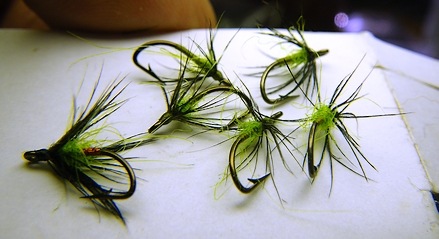
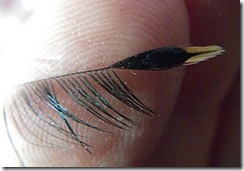
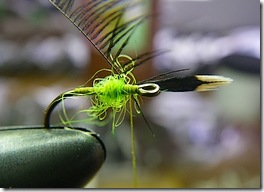
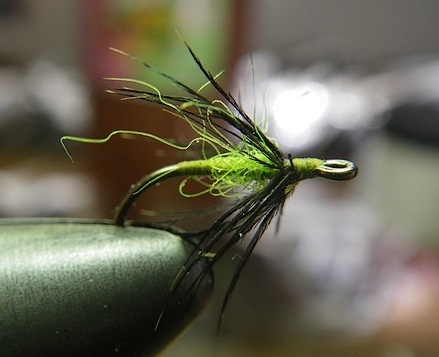

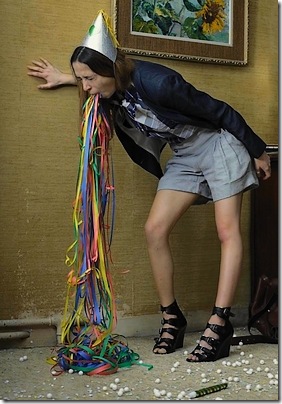 There’s no candy left, or at least none without fingerprints, and you sucked down the Egg Nog without thought to waistline or ill effects.
 Illinois and California are headed for some out-of-the-box thinking, as both states wrestle with a shortfall representing nearly one quarter of their annual budget.
 It all started with five years spent on graveyard shift. Sleeping during the day and working all night appealed to me in some odd fashion, mostly I attributed my ease at being the only fellow in 48 floors of offices was all the time spent afield, as the quintessential antisocial fisherman.