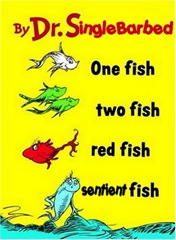
Think of that next time you toss the Sumbitch up onto the bank

Now I'm in for it Evolutionists have surmised Man is the result of a long chain of genetic events whose ancestors lived in water. Divine Theory has always touted the lack of evidence in the fossil record to support that conclusion. Four years ago a paleontologist unearthed a “fish” that had both neck and “hands“, the missing link in human evolution.

Armed with a public school introduction to Evolution, and setting aside the controversy of Divine versus Darwinism, it’s well known many branches of the Evolutionary Tree cast barren fruit. We’re at the top of the food chain for the moment, but any number of maladies could change that in the blink of an eye. Not surprisingly, the next sentient species may already inhabit our waterways.

While not overly worried that “them as inherits” is going to have a grudge,  we’ll be that “idjit ape thing” they find traces of … how we dominated the planet briefly and went “poof” for unknown reasons. I am intrigued by the notion of “which fish it’ll be” and how come we haven’t placed the entire genus off limits – so they get their chance.

It won’t be anything “Salmo”, as humans have turned over every stone trying to find a super-strain, they lost whatever legacy was possible when we started raising them on handfuls of dry dog food. In fact, you can forget all of the current gamefish species – we like ’em, so what we don’t eat we’ll screw up by tinkering with genetic code, possibly in an attempt to produce bigger ones faster, or other noble purpose.

I’m thinking it’ll be a member of the “bullhead” family, an underwater cockroach capable of surviving any known flavor of Armageddon, thrives on Zebra mussels and Rock Snot, immune to Ebola, and can reproduce in pure ammonia.

Think of that the next time you yank one off your line and toss it up on the bank, all you’re doing is selecting for the air breathers … brilliant move, Monkey-Boy.

Technorati Tags: , , , ,

A long line release would be prudent but you’d miss the Big Payday

Big payday for a fisherman We keep hearing how the most dangerous occupation is Alaskan crab fisherman, I browse a lot of fishing news  and I’m starting to wonder about that statistic.
English trawlers have pulled in two WWII torpedoes recently, a third recovered in Australia, and yesterday the fourth was trawled up off of the Spanish coast. The “pucker factor” associated with the sight of that unstable ordinance has to qualify as an Extreme sport somewhere…

The “Mother of All Ordinance” was recovered by a Spanish fisherman, Francisco Simo Orts, a name never uttered in dry fly circles, but worthy of inclusion into someone’s angling hall of fame.

January 17th, 1966 – a mid air collision between a B-52 and KC-130 refueling tanker drops four H-Bombs onto the Spanish fishing village of Palomares. Recovery of the three on dry land proceeds swimmingly, but the fourth falls into the ocean.

The bomb that landed in the sea went missing for 80 days and became the object of an intensive search by the United States, which was afraid the Soviets might try to recover it.

A local fisherman, Francisco Simo Orts, had seen it hit the water and was enlisted to help the U.S. Navy establish the basis for its search operation. When the bomb was finally found, Simo Orts turned up in New York with an attorney, demanding the salvage award he claimed was due him in accordance with maritime law.

The U.S. secretary of defense said the bomb was worth $2 billion. Simo Orts asked for $20 million, or 1 percent of the bomb’s value, again in accordance with the custom of maritime law. The Air Force eventually settled out of court for an undisclosed sum.

Instinct suggests Senor Ort’s fishing was recreational after collecting on the reward.

It’s a source of amusement for me, aside from the threat of thermonuclear devastation, if the nuke had been found by a bird watcher it’s likely they would have returned it for free. Like Senor Orts, someone drops a nuke in my favorite riffle – I’m likely to take it personal.

…and here I am worried about whether my lead split shot will screw up the environment…

Technorati Tags: , , , , ,

Global warming tailored for the fishing audience

Just a tad warmer An informative handbook on the effects of climate change on Scottish fisheries was my latest find, published in August 2006, it discusses the broader issues of climate change for fishermen, not scientists.

Focused on the North Sea and the cod fishery, it still broaches a variety of lesser known effects of climate change on the ocean and neighboring land masses. It’s a mighty good primer if you plan on being assaulted by the topic at your next cocktail party.

The study notes that the North Sea has warmed about half a degree over the last 100 years, and is projected to warm nearly that much every decade thereafter, what’s new is everything else they’ve noticed;

  • On average it’s 2 MPH windier in Scotland (and surrounding ocean)
  • The waves are 6″ taller
  • 20% more rainy days
  • 14% more sunshine in Autumn
  • 2 degrees warmer in air temperatures
  • Longer growing season, both on land and in the ocean
  • Migratory/seasonal species (mostly plankton and algae) are showing earlier than normal
  • Possible migration of some fish northward toward colder water

It’s a scientific study written for the angling crowd, and is an interesting read. Too often we assume “stuff is getting warmer” – when many of these side issues can be as beneficial or devastating as the original problem.

Technorati Tags: , , , ,

Who knew Entomology would take us to the Dark Side of the Farce

I’m perusing yet another entomology tome that discusses the phases aquatic insects endure to finally get their wings, each author insists the “post-lactating-pre-nuptial” phase is overlooked by anglers, and fish knock snot out of flies that imitate it.

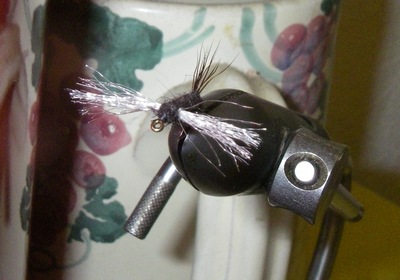
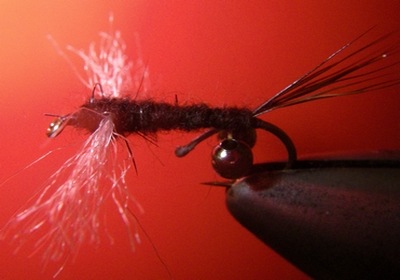
A dark spinner, looks innocent enough and you’ve got plenty in your flybox..

Just another wolf in Sheep's clothing

I got your “phase” right here, buddy. It’s short lived, and crucial.

Entomology Undressed

Technorati Tags: , ,

"Its almost pushing the limit of how much light can be absorbed into one material"

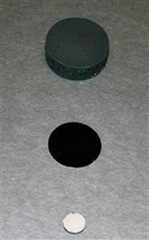
The middle dot is mighty darkNanoscience to the rescue with line flash a thing of the past, and night fishing about to get a boost.
Scientists have leveraged carbon nanotubes to make the blackest black, almost 30 times darker than the current standard.  Light absorption would be a useful tool to cut line flash, it’d be the Stealth Fighter of fly lines.

Black is also the most visible color in deep water, as each wavelength of light is successively filtered out as depth increases; the “hot” colors are the first to go, leaving the darkest colors the most distinct silhouette. At depth, a “blacker” black would actually be more visible than any other color in the spectrum.

I was hoping the Stealth “radar absorbing” paint would be commercially available – now I’m thinking of mixing the two to make the ultimate fishing muscle car, you can’t clock me on radar, and once I kill the lights I’m invisible. Limits my driving to nighttime but that frees days for more fishing.

"Physics" Trip sounds so much better than Fishless Trip

I am the King of the “fishless” fishing trip, even as a raw youth I had the knack. It’s a title coveted, but not by many. While the bulk of the angling community has the good sense to go to work and be productive, I burn calories and daylight tromping through brush watching my breath precede me.

OK, so I wasn't entirely alone Ma’s Christmas fruitcake was burned off earlier this week, and that last indulgence of holiday See’s candy vanished today, but I have little else to show for my ardor other than muddy boot tracks and startled wildlife.
Vacation is drawing to a close and none too soon, as the number of experimental flies created and queued for testing is on the increase, with no fish to confirm whether merit is part of any design.

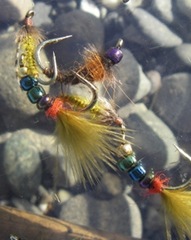
Today I fiddled with glass beads, attempting to determine whether they’d be too fragile for fly usage. These are the small “seed beads” – about $1.99 /thousand at the craft store.

Glass seed bead experimentals I assembled a “leech-like substance” by stringing 4 of them on a hook and adding a tuft of marabou; without protective hackle I figured they would take the brunt of casting, the false cast  dropped too low, and any in-stream collisions, enough of a workout to determine if the glass would survive.

They did, and even unweighted the combination of slim profile and bead weight allowed them to sink about a foot per second.

The river has returned to it’s historic flows and the color has morphed from brown murk to cloudy green, with about 30″ of visibility. That’s enough to get my hopes up, but not enough to make the fish receptive.

They couldn't figure where to cross either

I hiked upriver about 2.5 miles to see what changes had occurred and found plenty. Gravel isn’t a stable bottom and some areas had lost  multiple tons of it, other stretches gained those tons. Fresh deposits would allow your feet to sink 3-4 inches, so it was easy to feel where the missing river bottom had come to rest. It was fairly treacherous as all the river crossings of the past had to be discovered again.

I’ve got a new deep stretch created nearby, nearly 100 yards long and suddenly 3 feet deep – compared to the 6″ depth of two weeks ago. That’s an awful lot of shifting rock streambed, who would’ve thought it would behave like sediment?

I did chance on a fellow fly fisherman walking his dog, he didn’t run screaming at the sight of me, so the “brownliner” angle isn’t as off-putting as once thought. He confessed to fishing for smallmouth on occasion, so I may have found a kindred spirit.

It’s time to think about the technology before Popeil does the thinking for us

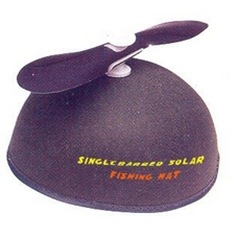
Enough juice to power a Boom Box There’s great potential in thin film solar fabric for fly fishermen as we’re always the last idiot to head for shade. Rather than sell the extra juice back to the Grid, it makes sense to start thinking about what gadget you want to power, as it’s your cranium that’s baking, it should be your call.
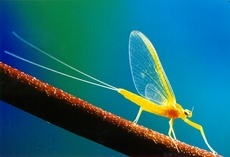
Figure the back of the vest and top of the head would be the likely location for the panels, and in a good day afield you could power some small device for 2-3 hours with what’s collected, so what would it be?

Cell phones are out, as they’re as likely to interrupt the fishing as offer some benefit, and despite the advances of science, we’re still leaving those puppies in the car. Most beneficial may be a lighting system – allowing me to tie on one last fly at the critical hour, and assisting me to find the car again as I tromp my way out of the woods. A distant second may be an electric ice chest – toss your vest in proximity and stop worrying about the mayonnaise…

Wireless power sources could give us “electric hook hones,” unlimited text messaging, a full range side scanning sonar, “hat fans” that cool our fevered brow, and a multitude of electronic gear with questionable value.

The Solar Tent has merit, all we have to do is drop the vest within wireless distance to pull an “all-nighter” flytying session. Stringing Christmas lights on a couple of pine trees would be fun, likely scare hell out of both bears and inquisitive neighbors..

Just shed the taciturn “John Wayne” image for a second, as Dan’l Boone would’ve given his eye teeth for a cold one – what electrical gadget have we always lusted for, but never had?

Technorati Tags: , , , ,

We were all right, but they can detect water better at dusk

Sulpher Mayfly One of those oddball factoids you stumble across quite by accident, “..why does aquatic insect activity peak at dawn and dusk?” I’ve heard many explanations, assuming the lower air temperatures played the largest role in mating behavior.
It appears that low light conditions actually allow the bugs to detect water better – so the egg laying females can put the payload where it belongs.

The Journal of Experimental Biology outlines the issues in a paper, citing temperature, less wind, less predators, but water detection is the primary factor.

Since the rate of dehydration is proportional to the surface-to-volume ratio, small-bodied aquatic insects become easily dehydrated during flight if they cannot find a body of water within 1 h.

That doesn’t give them much time, and also explains why a neighboring creek may have an entirely different population of insects – it’s too far to fly without spinning to earth.

You learn something every day…

Technorati Tags: , , , ,

The fly eating eddy is gone, replaced by a pair of spent lounge chairs

New instream cover, no permits needed, Brownline stream restoration I’ve been watching the gauge all week waiting for the worst of the water to pass, cabin fever got the better of common sense, so I hit the river armed with tackle, instead of a cup of coffee.
I had lots of experimental flies to test and was badly in need of exercise, a wintertime phenomenon that coincides with cold temperatures and driving rain.

Water visibility was 18″ – which is similar enough to normal to make me figure with some colorful flies and blind luck I may be able to set hook on something other than a chocolate Old Fashioned.

The Little Stinking was running at 254 CFS, which is about double it’s normal flow, enough water that I’d have to pick crossings carefully, yet not enough to wear something other than hip boots.

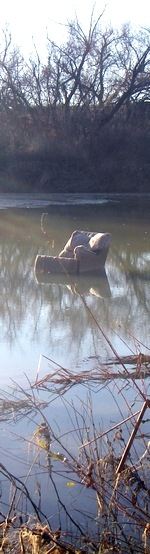
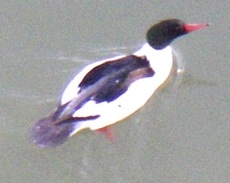
The Bridge Pool has new holding water, a pair of recliners that were heavy enough to find purchase in the gravel beneath, they replaced the sectional sofa that spawned the cursed “fly eating eddy” – so I was pleased at the prospect of new substrate. No fish were visible anywhere but the Merganser Squadron was on high alert, so something must’ve been available.

That was the high point of the adventure, birds, scads of them – and the fishing took it’s cue from the feathered menace, it was “for the birds” as well. I tested some of the new flies checking both visibility and sink rate, wandered upstream to Old Nondescript’s lair, noting the beaver dam had been blown out – but the beaver were intact. They eyeballed me warily while I flung assorted flies at stuff and disappeared quickly when I got too close.

You can see his feet, therefore the water's fishable Nondescript was nowhere to be seen and the watermark on the bank suggested he’d had an additional 3 foot of water through his favorite lie in the last week, likely he was nursing some resentment at his living room suddenly transforming itself into an aquatic interstate, so he left my offerings untouched.

I’ll try it again next week as the flow should have returned to normal. No evidence of any salmon – but with the water off color it’s not likely they’d be visible.