AARP will send your letter soon, enough with the giggles

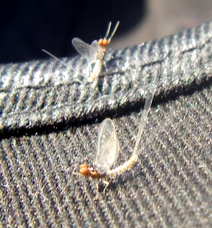
Even the Mayflies were smaller than last monthThe 40’s ended abruptly and the 50’s started with a bang, but I’m still officially an “average” fly fisherman. I’m vague on the source but I read the average fly fisherman was 51 years old – the demographic angling publications target.

I was struggling mightily to keep a midlife crisis at arm’s distance, but my insurance company and AARP pulled the rug out. Nothing like ripping open a missive to find out you’re an old guy.

I sought solace in the muddy bosom of the Little Stinking. She doesn’t discard “Gray Hair’s” like the rest of society, she’s odiferous and loyal.

Nearly a month since my last visit – and the water is lower still. The tomato fields have been in for a couple weeks and other crops are being sown and irrigated. The waterline is down nearly a foot and it doesn’t leave much room for fish.

I had my girlfriend in tow, part of my sinister master plan to build an angler out of raw clay, and the warm weather, low flows, and gravel bottom builds confidence in someone that’s never waded before.

I call it “the Brotherhood of the Muddy Boot” – it’s not quite fishing, more of a sweaty and arduous hiking trip – with the occasional cast for a visible fish.

..and the fish weren’t visible, so we covered a lot of ground without tossing a fly in anger.

Big Yellow Something

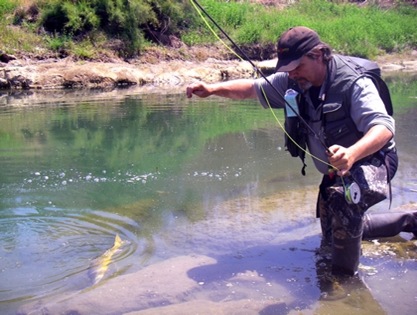
I was explaining the intricacies of watching your line tip when something obligingly ate the fly. It was big, bright, and unknown – an inferior mouth like a carp, a bright yellow lower half and an olive upper. The dorsal was near midpoint on the back – so I knew it was no Pikeminnow.

My “cameraman” obligingly snapped what she could but the fish slipped from my grasp without posing. I’m assuming it may have been a Selenium enhanced super-strain of something – but I’ll have to do more research before informing the authorities.

Technorati Tags: , , ,

$182 court costs and much less painful than a tattoo

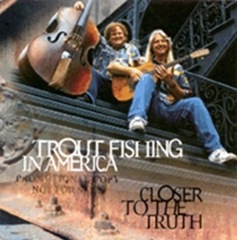
They even have a band of the same name License plates are for showmen – especially now that the good ones are gone. It’s a devotion thing, and sporting a “Trout4lif” plate is Parking Lot Hardcore, serving notice the owner has suffered broken marriages, fishless fishing, failed careers, and squandered inheritance – for the love of the game..

.. just like the rest of us, only he prefers to advertise.

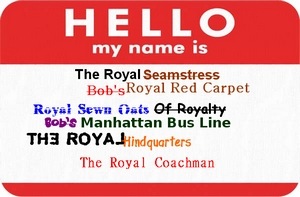
It was the guy ahead of me in line, another Cappuccino radical intent on changing society wholesale – changing his name as the first step to a New World Order.

At the age of 17, Peter Eastman, who grew up in Carpinteria, Calif., decided to change his name to Trout Fishing in America. He was influenced by the Richard Brautigan novel of the same name.

He’s got legal title to “Trout Fishing in America”, leaving the technicians at Mastercard scratching their chin on which is the first, middle, and last name – to etch on the plastic.

As true Outdoorsmen are on the way out, is this the opportunity to revert to Indian names – to celebrate our “few-ness” and gradual extinction?

“Trout Fishing in America” has a certain polish – but “Foul Hooked Carp” adds a touch of mysticism and uncertainty.

Some of the better fish names are left, so “Crappy Largemouth” seems to fit my personae and continual butchery of the King’s English. The guys at Visa will be too busy giggling to log my card, which I’d exploit heroically.

“Tight Lines” will go quickly – some fellow will be turning cartwheels until he realizes there’s no stipend from the salutation.

The choice monikers will go faster than domain names, no sense being late to the party and getting stuck with “Hooked In The Arse By Cheney.”

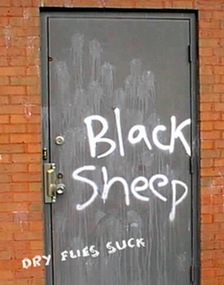
Would that make me the "Black Sheep" of Dry Fly Fishing

Genetics has a lot to do with it F.M. Halford has been called the “father of dry fly fishing” due to the many books he wrote while fishing the River Test in England.

The thatched fishing hut where Halford prepared his flies stands opposite Oakley Farmhouse, near Winchester. In short, if trout fishing has a spiritual home, this stretch of water is it.

The Oakley Farmhouse has recently been listed at 2.6 million pounds (5.1 million US dollars) but before you tap your 401K, know the fishing is no longer part of the property:

You would similarly have to join the syndicate at Mottisfont to fish from Oakley Farmhouse, where your application would have an excellent chance of being accepted.

Your application might stand a chance, I checked my heraldry and am descended of a long line of debtors and pickpockets, it’s not likely they’ll take to my quaint blend of boorish manners and colonial charm …

It is here, too, at the Grosvenor Hotel, that meetings are held of the Houghton Club, the most selective fly-fishing club in the world. Founded in 1822 with 13 members, its membership has ballooned to 25, but little is known about its activities – except that it has a changing area reserved for the Prince of Wales.

I would be very quiet, very polite, and learn of the intricacies of single malt versus blended; after a hellish six seconds – I’d make the mistake of mashing someone’s hand in a friendly grip, backslap his Lordship while he’s drinking and wind up a poacher on my own property.

Technorati Tags: , ,

A Rose by any other name smells like controversy

It does get a little confusing at times I’ve seen much hand wringing and ire over fly names. Idle banter and fly fishing forum chat quickly turn to religious discussions over the ethical way to name your latest creation.

I’m puzzled why ethics should enter into it at all. Fishermen aren’t known as paragons of virtue, and fly fishermen are the worst of the lot.

At the crux of the debate is variations, how adding a green tail to a known pattern isn’t considered a new fly, merely a variant of whatever the tail got pinned on. I’ve no issue with the concept, just surprised how worked up fishermen get over the whole naming thing.

We could use a biblical scheme, laced with “begats” and immaculate conception – but we don’t use an oral history anymore, relying on books and printed media for hints of origin.

“Silver-Arsed Wombat Begat Green-tailed-silver-tipped Wombat begat Reduced-Low Water Wombat-with-egg-Cluster” seems overly tedious and would drive the guy labeling the fly bins crazy.

There’s the “Kentucky Derby” method, using Sires and Dams – but that’s  just as cumbersome.

Personally, I prefer the “Middle Management” naming schema – if the fly is deadly, I take credit for it – and if not, I blame someone else for its shortcomings.

I believe Darwinism holds for fly names as well, a hint of risque or fun is likely to make it more memorable than “that White fly.”

We’re not going to settle the issue here, but I’ve never cared for “tagging” flies with personal names – too many “Tim’s” and “Steve’s” for me to remember, and it lacks any of the flavor and energy that fly fishing represents.

Dave Whitlock started the “tagging” phenomenon back in the 1980’s, everything that came out of his vice was “Dave’s” or “Whit’s” – something or other – a practice that virtually guarantees oblivion. Old flies handed down from dusty tomes have catchy names and “Bob’s” or “Dave’s” isn’t among them.

I’m guessing immortality is the root of the practice, as vanity has no place in angling – especially after you smear insect repellant on your face using the same hand you dipped in the salmon egg jar…

Might as well name the creation whatever you like – and if you’ve just met the guy with his hand out for your flies – mention it’s a “Skunk with a Green Butt” rather than risk “Green Butted Skunk.” If you’ve just caught six fish and he’s caught none – no sense goading the fellow further.

But if you’re determined to inflict a new fly in everyone’s box – show some pizzazz .. I wouldn’t make room for Bob’s Stonefly Nymph on general principles – but I’d tie crap outta them if were called the “Snotty Dilettante” or “Rest-home Orgy.”

Think of the rest of us for once…

Technorati Tags: , ,

Just me and the Geese Whisperer

Bead headed Sharp Stuff prior to donation I spent the last couple of weekends Shad fishing – and like many of my trips, spent more time tying flies and losing them then putting them to good use.

I’m close enough to see them though, and it’s enough to make the predawn outing worthwhile. Seeing some other fellow get some fish is enough boost to know your turn’s coming.

It makes up for the #8 beaded headed monstrosity that caught an updraft earlier. A couple of turns of 7X to close the wound, splash a little pond water to make the surgery antiseptic – and off to the next hole.

Last weekend it was the pram across from me, and today it was the small male someone had left on the bottom dead. Just enough affirmation to continue hurling bead-headed-sharp-stuff into a headwind.

I see a parallel to drinking, about the third “stiff one” you’re bulletproof and invulnerable, and the sight of your quarry lifeless imparts an irrational sense of pending victory, allowing you to pound water for another 50 minutes, despite everyone else leaving in disgust.

I did meet the “Goose Whisperer” – some young lass that belted out an eerie cry from the bank. It’s the “shock and awe” of urban fishing, odd rituals performed at dawn, with only the river as witness.

I was mid-river and distant, and watched as every feathered creature for miles swam up to the lady, surrounding her and clamoring for attention. She was dispensing bread and seemed content to ensure every gosling got its due, including every mallard, teal, and puddle duck within proximity.

I was summoning up the courage to ask her what she’d charge for calling Shad, but thought better of it.

I did manage to foul hook something ponderous. Thinking it was a tree branch I drew the line tight to bust the fly off – when it moved upstream smartly. It ignored my 8 weight and 3X and showed no sign that it knew I was attached. We parted company shortly thereafter, thankfully.

I’ll try again tomorrow. If you hear some bloodcurdling cry from the bank and some moron emptying goldfish flakes into the river – give a wave.

Technorati Tags: , , ,

Dad could earn massive points, but remember the dead pan delivery

Mickey takes one for the team It could be the most sinister fishing excursion ever – what with the kids screaming in delight and your spouse forking over the Bonus Points by the shovel full …

With proper marketing and your ability to deliver with a straight face, it’s instant hero – “Poppa finally sees the light” – and rather than drag the family into the woods for another Mosquito-fest, “we’re going to Disneyworld!”

Just pack the tackle after dark, while Mom and those golden haired waifs can dream of Sugarplums without the cold light of day to interrupt.

The lakes were stocked in the 1960s with more than 70,000 young largemouth bass, which were allowed to grow undisturbed until fishing excursions were begun in 1977, Disney publicists say.

How you extricate yourself for a couple hours is your own look out, you could try the time honored, ” something disagreed with me at Cinderella’s Royal Table” or maybe “Goofy put his thumb in my soup.”

A two hour “catch and release” outing, with guide and boat is $250.00 – that means no evidence to dispose of and you can have the tackle stowed before Ma and the kids get back from breakfast.

It may be the “Perfect Crime” as $250 won’t even raise an eyebrow when Ma gets the credit card bill, she’ll be guilting over all the other expenditures and will assume she spent it.

Pick a guide with “Normal” ears – it won’t help your case any when Goofy or Mickey takes a weighted Clouser upside the head. The bandage alone will arouse your kids suspicions – especially after Goofy has to be dragged to your table for the follow-on breakfast.

I’m betting the Pompadour wouldn’t move if he took a header

You’re aware of the decline in fishermen and license sales, how “them as will inherit” are more likely to play the electronic version than actually venture into the woods.

With state and federal budgets adversely affected, a tourniquet is needed to reverse the trend and restore “Man’s Oldest time-wasting pursuit” back onto it’s ivory pedestal.

A consortium of agencies undertook the development of an “Outdoor Fly Fishing Awareness” campaign, hiring the promoter responsible for the  highly successful “50 State Quarters” program of the US Mint.

Each state is represented by a celebrity citizen carefully chosen to demonstrate the qualities and character needed for the successful angler, whose role and activities in the angling community are near-legend.

Mr. Las Vegas hisself

First to release is the 2008 “Nevada” poster, guaranteed to make them disenfranchised couch potato’s flock to the stream in droves. Nothing like a little “Danke Schoen” to revitalize that waning hunter-gatherer ethic dulled by Domino’s Pizza.

Hell, you knew I was going to follow all them serious posts with something akin to lying outright and completely silly…

Technorati Tags: , , , ,

Part 2 – Virtual Big Box, Orvis resellers and the debut of the cosmetic second

The marketplace for the hardwired angler Where’s them damn bargains you hinted at?

The Orvis resellers on eBay are Adam’s Outlet, a fly shop in Austin Texas, and Redwoodloft, a wholesaler in Virginia. Both companies have essentially the same Orvis inventory, but Adam’s Outlet is a fly shop, with a broad range of tackle and resells Hardy, Cortland, and Scientific Anglers rods.

Redwoodloft markets tackle under both the Redwoodloft and Redlineloft eBay stores.  One deals in the tackle and the other sells all the clothes, in the last month they’ve adopted the Adam’s Outlet model, and Redlineloft appears to market the bulk of their rods.

Too much filler to pass inspection (the only blemish I could find)

They’re the Big Boy’s, combining for nearly 50000 sales of Orvis products, it’s two “mean old dogs” warring over the same turf, adopting each other’s sales pitch and tactics, and evolving their offerings to maximize profit.

Other vendors exist, like Virginia Wholesalers – another largely Orvis reseller. In excess of 10000 sales – and in traditional style with incomplete sizes and disjoint quantities. They’re in a similar mode as Redlineloft – lots of clothing and sundries, rods and fly lines.

The eBay trail is forked and elusive, many vendors buy from other eBay sellers for resale under their own “tent.” It’s a common practice – and one glance at their buyer’s feedback will show where they bought the tackle from and how much they paid for the item.

Peeling the eBay Onion

We need definition and nomenclature to assist in answering the burning question, “exactly what are these rods and what’s my risk in buying one?”

Orvis Factory Second Badging

Badging” is the practice of marking rods with maker’s name, rod attributes, and series information – we’re so used to seeing it we hardly give it a second’s notice.

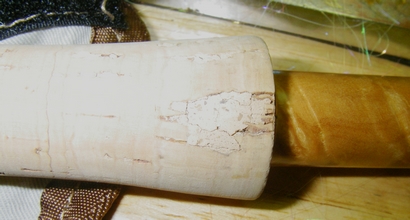
Orvis rods on eBay have three styles of “badging”; “traditional” – identical to the rods in their catalog, with the addition of a small “R” branded on the cork grip. These are likely production overstock without flaw – simply offloaded to make room for next year’s models.

“Incomplete” – the rod specific information on the blank, the presence of the “R” on the cork, and “Orvis Graphite” in place of the normal rod markings. As the badging is different than production it’s likely these are cosmetic seconds, removed from the assembly process once some minute flaw is found.

More recently is the “Orvis Factory Second” label with “R” on the cork, and rod specific information. This could be a response to someone removing the tell-tale “R” off the cork and attempting to pass the rod as a full price purchase.

Both “Incomplete” and “Factory Second” styles lack series information on the blank, nothing identifying the rod as Zero Gravity, T3, Green River, etc.

Orvis Graphite Badging

All of the resellers have different explanations, and the “R” on the cork has been the subject of much conjecture.

Adam’s Outlet insists, THIS ROD IS NEW. THE CORK IS MARKED WITH A SMALL “R” SO THAT IT CANNOT BE RETURNED TO ORVIS FOR A FULL PRICE REFUND. ORVIS WILL REPAIR THE ROD FOR A FEE IF BROKEN.

It’s understandable that Orvis wouldn’t want to extend carte blanche to a rod resold twice, but not mentioning it may be a “factory second” is a tad unworthy. It may or may not actually be a blemished rod, chances are it was sold to them as such.

Then again, Adam’s Outlet has more than one version: THIS ROD IS NEW,WITH ALL FIRST QUALITY PARTS (BLANK AND COMPONENTS). THE ROD HAS NO DEFECT BUT MAY HAVE COMPONENTS DIFFERENT FROM THE CATALOG VERSION. THE CORK IS MARKED WITH A SMALL “R” SO THAT IT CANNOT BE RETURNED TO ORVIS. ORVIS WILL REPAIR THIS ROD FOR A FEE IF BROKEN.

Using different components may be consistent with an “end of production” run of rods, wherein the maker simply builds what blank stock he has left with what fittings are scattered about – yielding a rod different from the catalog glossy.

Redwoodloft (Prior to 5/1/2008)

 Note:  “R” on cork grip indicates rod has been refurbished.

Refurbish may be something different than what I imagine – to me refurbish means the rod has been used and a component needs repair. A rod owner intent on repair wants the rod back, where would Orvis find a stash of “used” rods to refurbish? This may be a semantic issue (see Orvis comment below).

Redlineloft (after 4/1/2008)

CONDITION: As pictured, rod is brand new, never used and in ORVIS rod sleeve (Color of sleeve may be tan or green). First grade cork (marked w/ a small “R” to prevent returns to Orvis – see photo). Orvis will repair this rod for a fee if broken.

James Hathaway of the Orvis Company has the best answer:

“The R stands for “Really Awesome”

Actually, you are correct, it stands for “Refurbished”. They are rods sold at our tent sales and things like that.

“Tent Sales” suggest the occasional “maker’s premise” type sale – held on special occasions and in limited quantities – belying the multiple thousands of rods sold through eBay.

For civilians with less principles, sanding off the “R” on the fully badged rod is child’s play. Orvis’s badging the rods with “Factory Seconds” and vendor greed seems to have partly addressed this problem.

Both Redlineloft and Adam’s Outlet are canny profit motivated vendors, they’ve got a lock on the market and selling a rod for double their money is good, but quadruple is better. Both vendors have adopted identical practices, rather than auction the rods they “fish” for anglers unfamiliar with their method.

How they’re Sold

The rod debuts on eBay as a “Buy It Now” sale, often at $250 – $500 price. The accompanying prose mentions “new PRODUCTION rod” and the MSRP is listed on the advert, showing the purported $600 new – only $350, so buy it now!

On the surface, that’s a $600 rod at nearly half price, and they sell plenty to the unwary. Both parties are happy, great transaction – and the only “foul” is the fellow could have purchased it for half that.

If the rod fails to sell, it shows up as an auction the following week. Starting price for Adam’s Outlet, 99 cents. Redline/Redwood starts it at $99 for the high end, less for the lower end tackle.

Both the “Buy It Now” and auction sales are seven days duration.

A canny consumer notes the rods listed from the vendor as “Buy It Now”, waits a week and bids on the rod he wants via auction.

Both vendors appear to be selling the same models of rod (see below for what’s available), so the best deals are when each has the same rod at auction. Often they’ll replace the recently sold with an identical model, and the two of the folks competing with you just bought one – suddenly your competition is greatly reduced.

It’s not necessary to be so discriminating on the larger lined rods, you can usually get the lines 8-13 with little competition. The market for large rods is much smaller, with AFTMA 9-13 garnering only a few bids each. In many cases you can get a traditional 9ft. 9 weight for the initial bid – $99.

That’s one hell of a bargain for a $600 rod, and it’s a self fulfilling prophecy, the patient angler gets the cookie.

What’s Available From these Lads

I’ve included the Excel ebay_vendor_record.xls spreadsheet of the rods sold by the two vendors, this file lists the models, pieces, line weight, series, opening price, and final sales price for January – March 2008. I’ve included both vendors (on separate pages) so you can see the magnitude of sales.

These statistics are from the feedback logs on eBay, which are pruned each month. Each vendor retains about three months of live log, so you can see what they’ve done recently – I saved these months so the facts aren’t lost with the pruning.

In my mind, the magnitude of sales is formidable – none of the shops I worked at could hold a candle to either vendor, in the best of times.

For completeness, assume 15-20% of the sales were not listed, unless the purchaser left feedback, the sale will not show on the eBay log, so you need to boost the dollar totals to compensate.

Who’s Hurt by all This

That’s the toughest question of all. Certainly the “little guy” gets a nose bleed – he’s stuck with last year’s inventory without the options of the manufacturer – and lives in fear that Sage or Scott may cut off his supply if he unloads them at cost.

The manufacturers solve the near term dilemma of what to do with unsold inventory, but pays dearly in reputation when their retail outlets find out they’ve been misled by a “do as I say, not as I do” posture. The retail chain won’t squawk too much – they’re dependent on product to add legitimacy to their storefront – without Simm’s or Sage products can you call yourself a fly shop?

The manufacturers can take injury if their practice becomes widely known and the reseller supply ample – no one will buy their $700 rods anymore – we’ll all wait 12 months and get it for $150.

You’ve got the tools, the available models, and the method, I’ll let you decide what to do with the knowledge.

Thinking outside the Box

Many are skeptical of the eBay process, assuming the vendors are not as safe as the local fly establishment. The shift from “human” vendors to companies has been largely missed by the casual shopper. There’s still plenty of human foibles and interaction – but the eBay marketplace seems dominated by established retail and wholesale outlets – not someone cleaning their attic like it once was.

Fly shops that adapt well to the e-Marketplace are doing a phenomenal business. Case in point, Leland Outfitter’s of San Francisco – to assist customers in the purchase of new rods and reels, they’ll take your old tackle and auction it for you on eBay. Professional photography and web savvy has given them a market no other fly shop has an inkling of – more importantly, all the used tackle sells smartly. Angler’s profit because their $700 rod is now $500, and Leland sells additional new tackle, a positive outcome for both participants.

Shoppers are still more comfortable doing business with a store – a great opportunity for a small shop with unconventional vision.

Technorati Tags: , , , ,

It’s either why I can’t catch anything – or they can’t dribble

My what big hands you have, GrandmaInstead of bills there’s a fishing mag waiting in my mailbox. I’m cradling it tightly threading my way through cars, chores, and girlfriends, hoping the porcelain throne and it’s locking door will provide me the uninterrupted ability to digest it properly.

Fly fishing magazines are “anti-matter” for the Playboy’s of our youth; the former is read by looking at the pictures, and the latter digested by reading only the articles…

.. at least that’s the story Ma got when she found my stash.

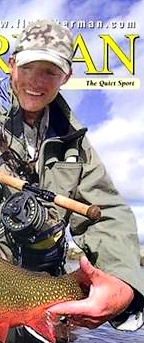
Grab any two covers off the current crop of angling literature and you can’t help wonder why these fellows weren’t first round NBA draftee’s. Most anglers are sturdy enough, of unknown size as they’re usually crouching –  and all possess a singular trait that the NBA scouts have to covet..

… hands bigger than their head.

Is it a freak of nature, or is this the reason I’m only marginally successful? Is the Spey rod craze merely an excuse to get a longer cork handle – so them “cover-guys” can get a comfortable grip for once?

Wouldn’t surprise me one bit – but it’s a tad discouraging, all the “fly tyer” covers have guys with normal hands, so we’re to toil in frustration while “Meat” goes home with the Prom Queen?

Dammit, I thought them days was a chilling and distant memory.

With the multi-million dollar contracts of the NBA, these lads are either philanthropists or they can’t dribble.

It certainly gives me pause – but I’m odd like that.

Technorati Tags: , , ,

Get enough virtual bricks and mortar, and you’ve created both a Big Box retail outlet, and the World’s Largest Fly Shop

Tough times are on us and if it’s not on sale it’s not a priority. Too many folks strapped with burdensome mortgages must make do with less, and the repercussions aren’t limited to the the fly fishing industry, it’s all industries, part of the Recession they whisper about in hushed circles.

We haven’t had one in 20 years or more, for some this will be an eye opener, coupled with the decline in the US greenback and 4.5% inflation and your dollar has to work much harder.

Virtual meets physical Fly fishing is a niche sport, and while rich folks aren’t likely to be affected, the rest of us will tighten our belts – with the obvious luxury of $800 rods and $500 reels, I expect to see the retail landscape get thinned considerable.

There’s multiple reasons for what’s coming, economics is the primary driver – but most fly shops are poorly capitalized and poorly run, compounding their burden. It’s a labor of love for proprietors, not the “last man standing” predacious Capitalism common to larger industries.

The manufacturers won’t help at all, their allegiance will quickly run to the “Big Box” stores in an effort to weather the coming storm, putting additional price pressure on the little fellow down the street.

So who’ll survive? Not a simple answer, but two styles of shop should continue to tread water; the small destination shop that has all the flies for the local waters, and the canny fellow that leverages the Internet to broaden his customer base.

I’m thinking eBay is the biggest winner, and some startling facts are coming to light after spending the last four months researching this “e-tailing” auction behemoth.

“I’m more interested if they have clearance items,” she said.

EBay is the undisputed King of clearance; it sells trash and exceptional items with equal ease. It boasts a friendly intuitive interface and allows unlimited sales without distinguishing between individuals and companies.

Hundreds of small fly shops make use of their auctions, a roughly equal mix of small seasonal destination shops and larger city stores. Most hawk their wares at retail prices, giving them a robust electronic “second market” or lengthening their season, making them independent of their locale.

So where does that new rod go after it doesn’t sell? The same place everything else goes – eBay.  It’s a potpourri of folks downsizing their garage, relatives selling Grandfather’s estate, and “bricks and mortar” stores taking advantage of the ease to market interface – to dampen their toe in e-commerce.

It’s the same story with last year’s tackle, eBay represents an enormous outlet for clothing, sundries, and last year’s graphite rods – it’s the largest fly shop in the world, and many fly fishing manufacturers are assisting in a way that’s not obvious.

New is better, and we’re reminded constantly in the angling periodicals. 65 million modulus was last year – this year it’s 73 million modulus, and if you have an ounce of decency – you’ll buy two…

Clothing and rods change every year – and small retailers can’t keep pace. Destination shops with a 6 month season – can’t unload high priced tackle as easily as urban, year round, stores – who are struggling to sell $800 fly rods in a worsening economy, and have an additional obligation having to stock a “comprehensive” shop. Rods and “big ticket” items make only a small percentage of yearly sales, yet they command a lot of inventory dollars. The rapid evolution of models leaves the “bricks and mortar” vendors struggling with old stock and assimilating the latest “improved” models.
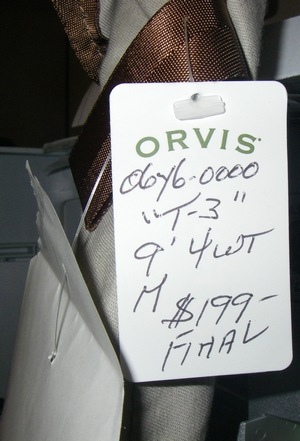
Orvis Cosmetic second and its label While the “little guy” struggles with low-margins and high-prices,  manufacturers dump their leftovers on the wholesale market. Freed of the burden of hundreds of last year’s rods, manufacturers introduce next year’s model, unleashing their advertising juggernaut with little regard for their traditional distribution chain.

It’s the unspoken rule of the rod making community, “.. you will not undercut my pricing, and if you do we’ll cut you off.” It was the constant in my 20 years of fly fishing retailing, little has changed for the small shop today.

A shop’s only price flexibility is when they build their own brand on manufacturer’s blanks.  The occasional demo rod can be sold as it’s been handled, but margins on prebuilt rods are paper thin, making the smaller stores especially vulnerable to the whim and timing of manufacturers.

“Cosmetic Seconds” is a unique practice and not all vendors offer “blemished” rods. In the past it was limited to “warehouse only” sales or special events at the maker’s premises; that’s changed with the electronic marketplace, it now boasts a multitude of sins and advantages, and a canny angler can be both stung, and count coup.

Many eBay vendors boast of such deals, it’s more than rods and tackle, it’s dishes, hunting knives, and car tires. Rods are a microcosm of the larger practice.

A cosmetic second is a rod that’s passed the inspection of the blank, is structurally sound and is wrapped and fitted for sale. Either the final fit incurs a blemish on reel seat or cork, or the finish has a flaw that prevents the rod from passing final inspection.

It could also be a rod produced and not sold, excess inventory at the manufacturer’s facility – and is a real liability in an industry that does not allow drastic price reductions to dispose of leftover models.

I contacted Echo, Scott, Orvis, Winston and Sage, hoping for information that would illuminate this process better – but only Winston and Sage responded. Orvis acknowledged the missive but did not respond.

Sage was characteristically terse, “We do not sell any blemished or second quality blanks or rods.”

Winston elaborated a little: Our policy is that we do not sell “Seconds” or “blemmed” rods. Each person who handles and rod is empowered and expected to stop production of the rod when a problem is found. For example, if a builder notices a blem in the finish of a tip section they will not use that section but rather destroy it and get a different section. At that point they will ferrule the rod out and then send it to the next station. Then the person at that station inspects the rod. If all is good the rod continues through until it ends up in inventory. The goal is for every rod in inventory to be perfect.

Neither vendor distinguished between the “factory second” and excess inventory, nor could I find evidence that they wholesale excess product on eBay.

Surprisingly the Orvis Company of Manchester, Vermont is the largest contributor to the eBay phenomenon. Because of the volume of items and vendors found, it suggests this is a significant source of income – and a method of employing a “big box” style distribution chain without owning it publicly. It allows them to remain above the fray – retaining their “little store in Vermont” image – while undermining vendors that must sell their product at strict retail.  

I’ve researched the feedback logs of a half dozen Orvis resellers, who combined have sold nearly 50,000 Orvis items since January of 2008. The bulk of their sales are the seasonal clothing Orvis sells, but among their totals are more than 2000 Orvis rods, thousands of Orvis fly lines, flies, and all the terminal tackle necessary to equip a couple regiments of hardened fly fishermen.

The rods are selling briskly, averaging 22-25 per week, and I can’t think of any fly shop that does that kind of volume anywhere. In these declining economic times, I’d think some of the existing Orvis dealers would want a shot at this profit cow.
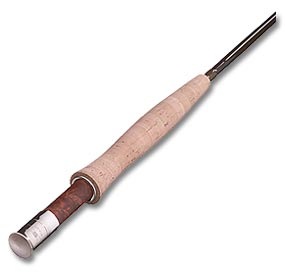
Orvis T3

Last year’s Orvis rod, a discontinued model or cosmetic second, starts it’s eBay life somewhere between $90 and $250 – a tasty bargain for a $600 flyrod. The trout models usually end up selling for about $180 (includes postage), and the larger line size rods (greater than AFTMA #7) sell for slightly less. Current rods sell for a higher premium than older tackle, despite one rod being only 6 months older than the other.

All the Orvis series are available with the exception of the latest rods. The Orvis “Helios” is available from many fly shops with storefronts on eBay, all offer them at traditional retail prices.

“Zero Gravity”, “T3”, “Green River”, “Clearwater” and “Silver Label” rods are available from wholesalers, but despite selling many hundreds of the rods, their selection is incomplete. This suggests “excess inventory” offloaded to jobbers rather than Orvis’s systematic use of a new sales channel.

Scientific Anglers and the venerable Hardy of Alnwick appear to use a similar mechanism, though neither is a mainstream US vendor – Hardy is based in the UK, and Scientific Anglers has all but left the high-end rod market, relying instead on their fly lines for the lion’s share of revenue.

A canny “e-tailer” likely starts the auction near their cost, within 15-20% of what’s paid the manufacturer. They have a steep discount because the manufacturer is motivated, get a break for buying in bulk, and get to charge higher than normal postage, a huge revenue stream for eBay vendors, with many charging $20 or more per delivery.

With little detail other than auction prices, I’ll assume the vendors are paying about $80 for each Orvis high-end series rod, with the price ratcheting downward based on series – and their target demographic, entry and mid level anglers.

eBay empowers the seller with only two tools; the “Buy It Now”, and the traditional auction format. Auctions are typically seven days duration, with  hopeful anglers driving up the price. There’s little consistency other than the final price, as many retailers start their rods at 99 cents, playing havoc with my guesswork.

Pricing for Zero Gravity, T3, and the Trident TLS series typically started at $99, Silver Label around $75, and the Clearwater, Green River, Streamline rods at $20. The implication is the manufacturer is selling the rods to the wholesale vendors to recoup their materials, fittings, and labor, and generating profit – it’s a canny operation, but it’s likely to cost them later.

In my opinion, Orvis has provided a glimpse of what today’s rods cost to make. A pristine rod ($700) may yield around $595 profit, allowing for a simplistic calculation based on a $20 aluminum case and linen rod sock. That’s a 566% profit margin. For a niche industry like ours that’s required – you can’t sell millions of them – there’s not enough millions of us.

It reaffirms my “old guy” sensibilities that no contemporary* rod is worth more than $200, and thanks to the miracle of e-commerce, I can guarantee I pay a lot less than those that do.

Stay tuned for Part 2, wherein we look at the Big Boy’s of Orvis’s eBay vendor community, their auction practices, and how to score a $600 rod for a quarter of the price.

* Contemporary rod is defined as a mass produced rod from synthetic materials, spat onto a sheet of waxed paper, rolled under intense heat and pressure like a Twinkie, then fawned over by fanbois’.

Technorati Tags: , , , , , ,