Category Archives: Fly Tying

Grams worth hundreds, so why does all that fly fishing science end at the tippet?

I’ve oft wondered at all the toil and expense for the rod maker to remove a sixteenth of an ounce and whether all that engineering and measurement made enough difference to matter. Likewise for that disc drag and aircraft grade titanium that the reel maker boasts is so much more sturdy and durable, and whether he too wasn’t simply enamored with differences versus any tangible effect.

The line maker insists that slick or pebbled is the one true finish, and countless scientists struggle to define slick, in hopes of making it more so.

Heavy butted, limp, monofilament or fluorocarbon to transfer the line’s energy to the fly, but there the refinement and science dies, as fly choice is a mixture of semi-educated premise, intuition, and guesswork.

Figure the average outfit has been tuned by forty or fifty scientists, each with their own ideas on action, stiffness, and weight. Many thousands spent on rare earths and minerals to coat and build the ensemble, and when it finally gets to you, you can’t decide whether to use one or two split shot to drag sharp stuff through deep stuff?

I find it just a bit humorous, and why I can’t stifle a giggle when some rod engineer uses terms like “pure” and “essence”.”

As a fly tier I find fault with overtly heavy rigs or flies. Early Spring fishing is largely dominated by weighted, beaded, thick and heavy, all of which yanks at me when I yank at it, and makes fishing a series of flop casts that carry the weight due to energy imparted by my arm, versus imparted by a fly line – or something that bent the blank.

Like all those engineers are likely to tell you, there’s more than a single way to do anything – including sinking a fly.

Profile can act like more weight if it’s catered to in the fly’s design. Wide and fat increases resistance to motion in any direction, especially fast sinking and lifting the rig back to the surface. Extra shot can drive anything to the bottom quickly, but is never much fun to lob for any length of time -considering the wear and tear on knots and especially  lighter tippets.

Recognizing this from past seasons and planning to switch to a lighter line size this year, allows me to preplan some of the flies needed, given that I have the luxury of tying flies that will be lighter, yet sink as quickly as needed due to their slim profile.

Just as important, a slim profile allows me to get them out of the water with alacrity, something quite desirable in a hook set, and may allow the rod to roll cast the rig to the surface to position for the next cast.

Spring being host to all those big dark artificials, stoneflies mostly; many of us will be cracking out big pillow shaped chenille monstrosities, replete with rubber legs and tungsten beads. That’s less of a bother with #5’s and #6’s, but using a #3 or #4 line they’ll be effective only in lobbing flies given both their weight and water resistance.

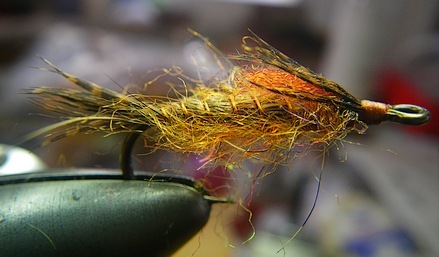
I decided to “channel” some of the old Polly Rosborough Golden stone designs to different colors as his design is a lighter weight than traditional fare, and allows me some additional flexibility while I prepare for a high water Spring – and a light line mainstay.
PRSBRust_Mustard

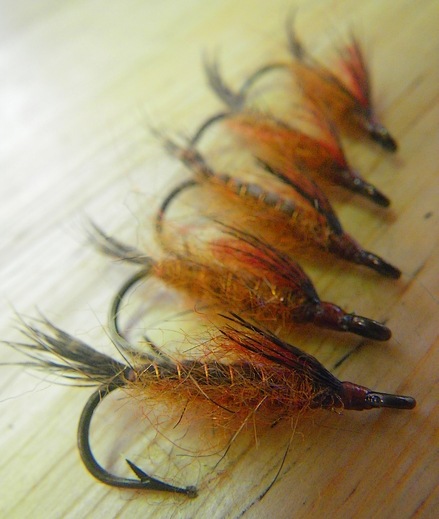
The shank is covered in lead from tail to whip finish, with only a bit of combed fur to impede sinking. It’ll fish where the fish should be without extra beads and split shot, and ensures an enjoyable heave compared to the weighted hamburger the other fellow is throwing.
Polly Rosborough design, colors by me

Thin silhouette is matched by other functional attributes consistent with a heavy nymph. Reinforcing wire on all the feather delicates, three coats of cement on the head, and a blood red tuft of fur making the underwing, adding a hint of attractor to the finished pattern.

Heavy wire is consistent with banging about the rocks, as is the thick spear point – on a fly destined to hook many things, some of which may be desirable.

Few anglers optimize their flies knowing what’ll be throwing it. Favorite patterns also restrict us a bit, given our reluctance to try anything new. On a big meal like a stonefly I’d suggest fish won’t be as selective, allowing us to add that additional dimension, something tailored for the characteristics of the rod.

That’s a lot of scientists insisting a few grams are worth many hundreds of dollars. No reason not to pay attention to the ease of your rig when fished, and the shape and style of its terminal tackle.
Don’t act so surprised, you knew they were going to do it

Them girls bought them all, honest! It’s like turning on the living room light to find your dog frozen into immobility as he rearranges that warm dent on your sofa cushion. It’s that same shocked expression that’ll bring a smile to your face as you kick his butt off the soft and fluffy …

There’ll be shock and amazement aplenty when all those fly tiers realize the folks pimping Whiting saddle hackle to women for hair extensions is their local fly shop.

Naturally, Whiting promised their first priority will always be fly tiers and fly shops – and the faddish teenyboppers that wanna-look-like-Miley-Cyrus can all go without (meaning they can lightfinger Poppa’s stash) .

So the fly shops pump their fist along with their customers, as it’s a boy’s life and “no gurls allowed …” – even though them counter-men adore all that taught flesh giggling their way through the upstairs dander.

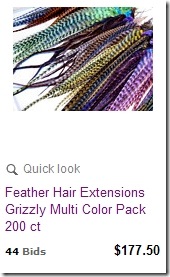
Now that their supply is assured by Whiting, they’re onto eBay by the bucketload, selling dyed Grizzly hair extensions by the fistful. The Whiting shipment received and hustled into the back room where it’s dismembered into little 5 feather packets and sold for $10 – $15 each on ebay…

… giggle …

…while you mean old men have to do without.

grizzhairebay What’s not so smart is most of them are selling under the shop account, and was I the Whiting Hackle Company I might want to be bring a couple of those vendors up short, as I have enough troubles keeping the fly tying market in feathers without some sharp SOB hoarding all the good saddles in the back room – claiming them damn girls bought it all ..
Just click the Nomad Anglers picture above to see what they’re telling their customers …

The only reason I’m not completely incensed is because the selfsame idea crossed both our temporal lobe about five minutes ago, and you’re suddenly wishing you’d paid more attention to my articles on dyeing.

… and for those shops poised to unload onto the marketplace, don’t use words like “Cree” or “Furnace” to describe your hackle, hair dressers don’t use words like that, dummy.

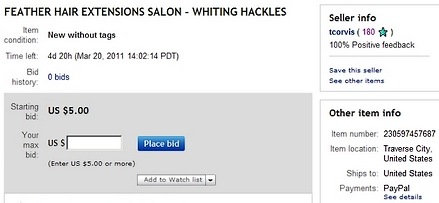
Traverse City Orvis

Nor is it surprising that I’d find Orvis selling hair extensions to the gals. The seller above appears to be the Traverse City, Michigan Orvis store, called “Streamside Orvis.”

With Opening Day just over a month away, I’d accuse these shops of really poor timing at the minimum. Nothing like a shortage of hackle just when the customer base seeks it most.

The Sharp stuff is in the mail

The last of them mean old ladies in the Post Office line have finally sheathed their brooms, irate that I keep hogging all the pretty girls in the Priority mail section. I keep telling them it’s for a good cause, but at that age anything standing between them and a nap is the enemy.

If you sent me a note for scissors, they’re in the mail.

It seems like I may have curried favor with most of the TU chapters between here and the Asian Carp, with a sprinkling of US army servicemen (which I immediately hit up for exotic Afghan flightless birds downed by drones ), and other fishing clubs. I was pleased to send nearly 300 pair to about 24 different organizations.

Figure 10% actually live through the experience without slitting wrist and that’s 30 newly hatched hoarders for next season’s reality show

I’ll continue to hoard all that defective metal and perhaps we can do this again ..

Free Scissors to club fly tying classes, Inquire Within

Sixthfinger Part of selling all those Sixth Finger scissors is the quality control each set recieves prior to shipment. I’ve got a fairly consistent failure rate of nearly 10% on every shipment of scissors I receive.
Which makes for a lot of functional scissors that are destined for my closet.

After checking with the tax man it appears I can give them away to casting clubs for their fly tying classes without incurring harm or obligation to either party. If you know that your club could use some freebie scissors, drop me a note.

It will be our understanding that you’ll not market them as the real product, rather what they are, “free defective samples so you can learn to tie flies for less cash.”

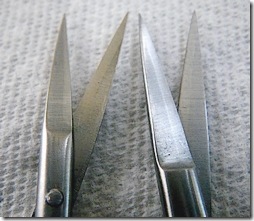
The defects that make these unworthy of sale include; uneven tips, too blunt of tip, uneven blades (width), rough closure, visible defect, or won’t cut at all. Only the last issue renders the scissors unusable, so I’ll remove those from the mix.

The scissors may be a mixture of sizes and metals (some tungsten and some stainless) and all will be usable.

I’ll need your request for quantity on club stationary or what passes for same, and a link to your club website for verification.

My email address is in the “about” page at the top of the screen, just drop me a note to reserve your space in the queue.

Cutips or backhoes, we’ll mine the goodie

It must’ve been the Alaska Gold marathon running all weekend in my living room, companion noise while I hacked, chopped, and ground up most of the fur bearing animals resident to North America.

By Monday evening all the bearings in my grinder sounded oval, but she still gnawed away noisily at anything I wadded into the blade area. I could see the big seam on the inside had filled up nicely with tiny fragments of everything fed it in the last couple of weeks, and while my heroes were emptying sluice boxes and nugget traps, I was busy scraping the mechanism collecting the rarest of all fly tying colors, “Ear Wax Yellow.”

ear_wax_yellow

… like white being the sum of all colors, it’s a relatively indescribable yellow, possibly even a light olive, but once you’ve given it a name you see it in a different light – it being the sum of a thousand buggy colors, and how it takes on any shade your whim imagines useful.

EWY_Nymphs

Add a little brown thread rib and it becomes a darker hue – like a true chameleon using the colors of the environment to make itself less stark or obvious.

The tail may wag this dog

Now that my likeness on your post office wall has been eclipsed by Edward Rist and his takedown of rare and exotic birds, and while my accidental brush with depravity rings hollow – compliments of a couple of gifted song birds and an imaginary affront to Audubon, the only way to reestablish myself as some form of natural history anti-Christ would be find something twice as rare and make flies with it.

Us fly tying degenerates being a vain crowd, proud of our hardscrabble hoarding nature, and determined to accumulate enormous collections of shoeboxes that hide the grisly remnants of odd fauna frozen in death. Unfortunately the competition is becoming fierce, with Jeffrey Daumer and Edward Rist making it tough to one up the competition…

We feel we may have rose to the occasion. It’s much tougher when there’s only one available, but it makes a sturdy and handsome tail …

Beard of the Prophet

… given this week’s callousness, it’s Hell I’m headed for surely, but which remains unknown. Hopefully Salman Rushdie has brushed up on his classics, as we’ve got a couple millennia of small talk coming .

The fly tying equivalent of “Don’t Ask, Don’t Tell”

He looked both ways before passing me the baggy, and being as it’s California I didn’t leave it out in the open for prying eyes, quickly tucking the goods into a breast pocket, before returning to the truck whistling innocently.

I might have been less eager if I’d known more about songbirds and whether you’re even allowed to keep one, let alone how many in possession and which warbler gives the electric chair without the luxury of trial.

Once the evidence was tucked into the freezer I did a little unrefined search to determine that I was now in violation of most fish & game legislation, both federal and state, and in addition to tempting fate with my “salvage” of three dead birds, the next knock on the door is liable to be the National Wildlife Service in full body armor.

Your cats can keep killing birds with no threat of legal reprisal. I don’t think that you can be held responsible, unless you have the feathers in possession. A few feathers in your backyard probably won’t get you into trouble. You, however, can’t legally even pick up a feather that incidentally falls off of a protected songbird. If it isn’t a game species, you probably can’t legally keep it. This is what we have to do. First, we need a federal “special purpose salvage” permit from US Fish and Wildlife. This give us the right to pick up dead migratory birds, as the feds have jurisdiction over migratory birds. Second, we need a state salvage permit as all songbirds are protected. In addition, I must keep detailed records as to what is done with every bird that comes into my possession. That is, is it turned into a study skin, disposed of or released. Finally I have to have a federal permit for any federally listed threatened species and another permit for any bald eagles. That means a separate permit for each specimen. Then there is a state permit for all state listed threatened species. What does this mean if you come into possession of contraband material without the above permits? Basically that you should leave it there, or dispose of it.

Assuming I was gifted the alleged animals, and my sense of utilitarian overcame my traditional adherence to the law, besides the five to life without parole, there’s a right way and wrong way of receiving some dripping lifeform your buddy, or circumstances, presents at your door.

First and foremost the legality of the affair, whether game animal or otherwise is always in question. Second, is the amount of time that transpired before that car bumper intersected the flock of dove, and whether you’re on the fresh or odious side of the bell curve.

If the corpse bounces to a stop at your feet, consider toeing it into a bush, given that there is still plenty of livestock on the creature, none of which will be leaving until the body begins to chill. Tomorrow would be much better to collect your booty, given you can bring gloves and a sterile baggy, versus carrying the bleeding SOB in your shirt pocket …

As did my mysterious benefactor, a couple of days in the freezer ensures that everything living on the host isn’t – and pretty much leaves a scentless little ice cube of sparrow, warbler, or linnet, or finch.

One or two is plenty, and given the wonderful soft hackles they possess, you’ll be gripped by this selfsame dilemma at some point. One or two only because most of the bird resembles every other songbird on the planet; a dull drab brownish gray top and a few gaily colored feathers on the breast or near the tail.

In ice cube form a couple of delicate pinches will remove most of the useable – too big a pinch brings the skin with it, which is undesirable as it’ll add moisture and a hint of decay into whatever drawer is utilized. Small pinches will remove only feather – and due to size there’s only about five pinches of feather worth having …

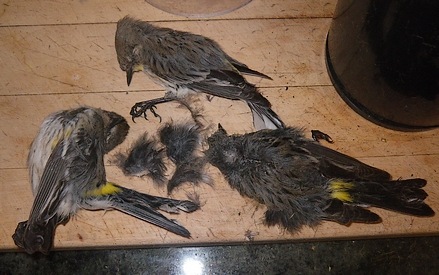
It_Was_A_Gift

I’d guess these are some form of finch or sparrow, as they have little in the way of color to identify them. As I often wander the owner’s field picking up turkey tails and flight feathers in the fall, my appetite for feathers is well known.

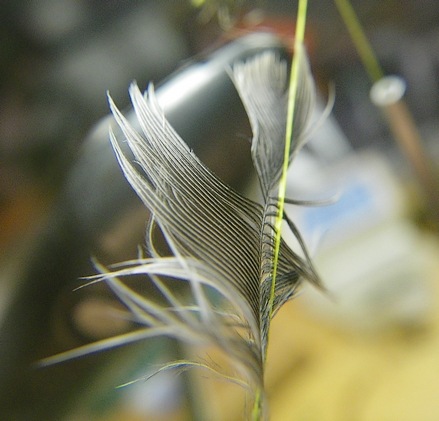
Small birds have small feathers, which is exactly what our traditional materials like Partridge and Grouse lack. Other than using a distribution wrap or something similar to reduce the flue length, soft hackles are often wildly disproportionate to hook size … which isn’t necessarily always a bad thing …

The issue is that small feathers can’t be wound or gripped by hackle pliers, as our hammy fingers lack the finesse to avoid breaking them.

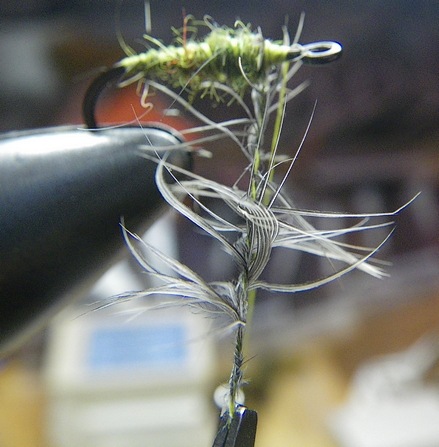
Tiny hackle inserted into dubbing loop

I use them by throwing a quick dubbing loop, inserting the hackle into the loop with my fingers, then spinning the loop to reinforce the stem with thread. As long as the hackle is not tied onto anything, either by its tip or its butt, it will not break.

We've created a tougher stem

As the feather spins with the thread it will shorten, which is why neither end can be attached to anything. The feather will spiral about the thread and consume some of its length in those wraps. Two lengths of thread give it a real “stem” and we can attach hackle pliers and wind the hackle (while brushing it backward).

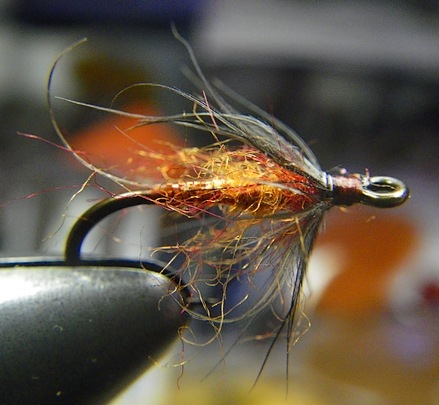
Olive Yellow Flymph

Note how the hackles are in proportion to the hook size. These are not stiff like Partridge fibers, they’re actually so soft and mobile that I’d characterize them as marabou with a hint of spine. Breathing on the fly will make all the hackle move to the far side, making them incredibly lively in the water – more so than the traditional soft hackles.

I’d recommend not using any head cement. Like marabou the fibers will soak any slop instantly, making them much less effective – and ruining the fly.

Where we pay a little homage to the cockroach of the Skies

At times I think even PETA hates starlings, universally reviled – it seems even little old ladies consider them cockroaches of the sky …

When I lived in the woods the local rice farmers would pay for your ammo, sending great groups of killers onto the paddies to blow hell out of yellow-hooded and redwing blackbirds. I tried desperately to come up with fly patterns that would allow for an orderly disposal of so many carcasses and failed miserably…

… something about black makes it an absolute must-have – but like licorice, you “must-have” in small doses …

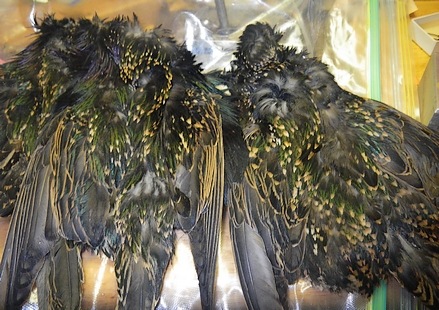
Having re-upped the half dozen skins I keep around, and flush with small, soft black hackle – I’m reminded of all the other uses it was put to back in the day…

Starling_Skins

Strangely enough outside of using it for black hackle on all forms of sinking flies, mostly I used it as Poor Man’s Jungle Cock …

Starling_Feather

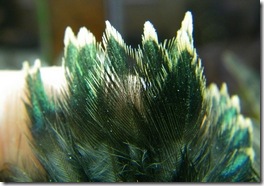
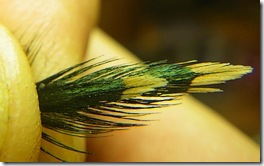
Most of the hackle feathers on the back and shoulders have a nicely defined yellow tip. Grab a pair of them and slide one down about a quarter inch …

starling_cocque A bit of wax or vinyl head cement (flexible) is all that’s needed to transform a tawdry little bird into something a rich kid that likes flutes is willing to steal for
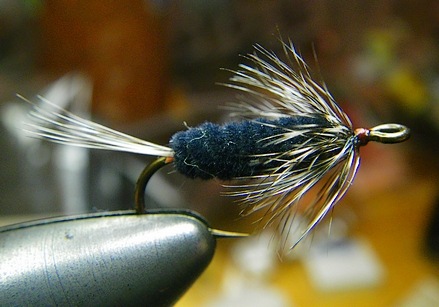
… knowing where he’s headed we’ll observe a brief moment of solemn knowing his fly tying is bound to suffer in the face of the sudden demand for his flautist skills …

The Faces of Genius: Reduced Bomber

This was a reduction of a Upper Sacramento classic, Ted Fay’s Black Bomber. Plenty can be said of Ted Fay flies, most would say “really heavy.” They weren’t graceful or slender, and I dreaded a big order as it was the only fly I had to tie holding my nose. Not that the flies were bad, they just required so much lead they were unstable.

You could spin the brown or black chenille body around the hook with ease.

Gary Warren was a longtime resident of Burney, California, and knew both Joe Kimsey and Ted Fay. In between guiding Hat Creek and Fall River, he’d fish the Upper Sacramento and adapted the fly to Hat Creek and the Pit River by removing the grizzly wings and the second and third layer of lead wire.

Thankfully, you could now throw the fly without fear of concussion or outright amputation.

He kept the “Bomber” moniker, but I altered the name to distinguish the original and its adaptation.

Gary Warren's Reduced Bomber

Grizzly hackle tail, tied short. Brown or Black chenille for the body, and three turns of undersized grizzly saddle at the head. Gary preferred ring eyed hooks – as shown above.

In looking at all these flies there’s little question that simplicity rules. They sit in your fly box all alone until you’ve tried all the sexy stuff, and when you finally succumb and lash it to your leader, you remember all the superlatives your buddy used when he handed them to you.

The Faces of Genius: Chartreuse Unknown

As much as we’d like it to warn us, great flies have no aura about them when removed from the vise, no halo to clue its creator to cease embellishment, as his creation will be the bane of local gamefish for the next couple of decades.

We’ve taken it for granted we can spot fishy potential and great colors, most of us have fly boxes bulging with imitation bug parts, gooey soft textures, and colors dripping with authenticity.

The fact we carry so many is clue that we really can’t tell what a fish thinks, likes, or eats.

To remind me that I know nothing of fish vision, let alone what stimulates taste, I would add special flies to my driver’s side sun visor. Flies that caught 20” fish and those whose consistent greatness had earned them a place in what would become a testimonial to what large wary fish preferred …

… and why gooey textures, feelers, and bug parts didn’t appear in any of the really successful flies, most of which didn’t even look buggy to my eye.

chartreuse_unknown

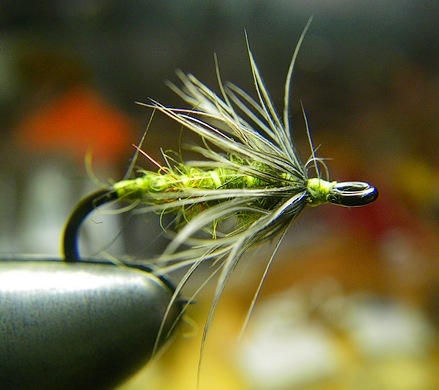
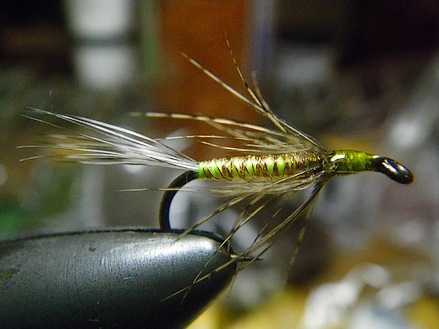
Chartreuse floss body overwrapped with fine copper wire, no particular pattern – just lay on forty turns until about half the chartreuse has been covered. Two turns of dark partridge hackle and a grizzly tail completes this unknown work.

… no eyeballs, no individual legs, and a primary color that you’d be hard pressed to find in Mother Nature…

No name that I can remember, given to me by a client that swore by it, and after my lip curled uncontrollably, I let him try it just so he’d stop fidgeting with his flies and start fishing all my better ideas.

… fortunately we didn’t need any of my flies.

Tied in sizes from #10 – #14, he mentioned how he’d assumed the fish ate it as a green caddis.

As I’ve recently unearthed the box of flies I removed from that visor, I figured to share some of the nameless patterns you’ll never see in any fly shop, just to give those that are struggling with invention a glimpse of pure death – and how little refinement and entomology is really needed.