Category Archives: Fly Tying

Cal Bird’s Modified distribution wrap, for Monty Montana

In last Monday’s post we described the distribution wrap, a method to make feathers that were oversized act as hackle on smaller hooks. That post described how a single segment of even flank feather could be spun around the shank as hackle.

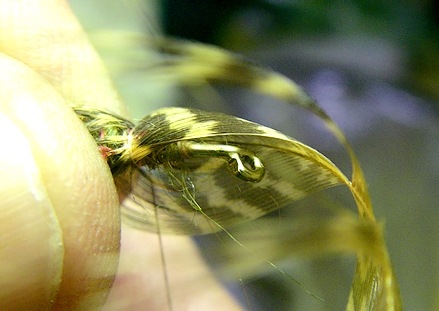
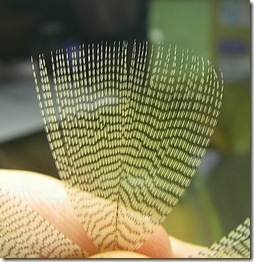
One of the more popular flies that Cal originated was the Bird’s Nest, where he’d use Tintex Maple Sugar dye to color heavily barred teal flank – and then use a modified distribution wrap to use feathers whose tips were crooked but whose sides were even.

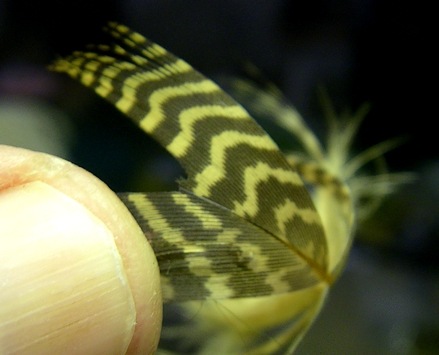
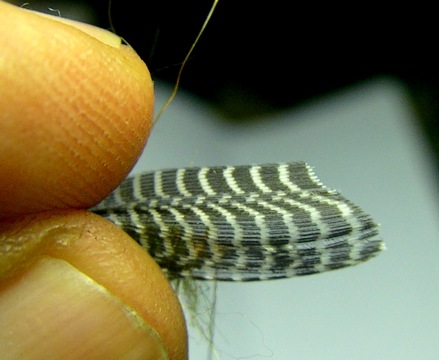
Tintex Maple Sugar dyed teal flank

The above is a reference color from a batch of teal flank that Cal dyed for me. Tintex “Maple Sugar” is no longer made but the color can be reproduced with a good warm amber or imitation wood duck dye.

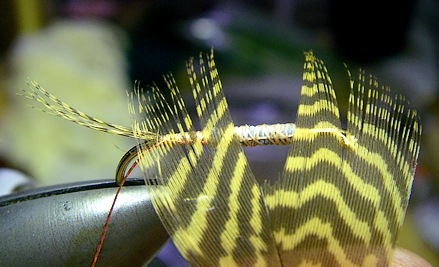
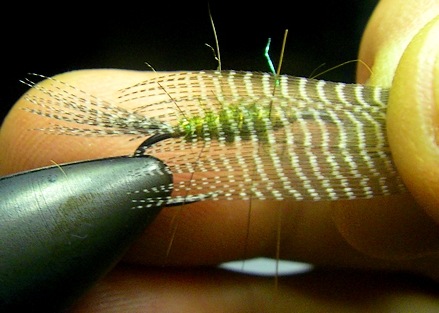
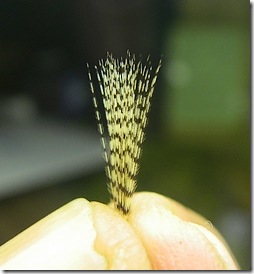
Tip clipped and used for the tail

Clip the tip and center stem of the feather and mount that fragment as the tail. The width of the sides sections determine whether the fly is lightly or heavily hackled. For the hook shown (#8) you will need about 3/8” segments on either side – about half of what’s shown.

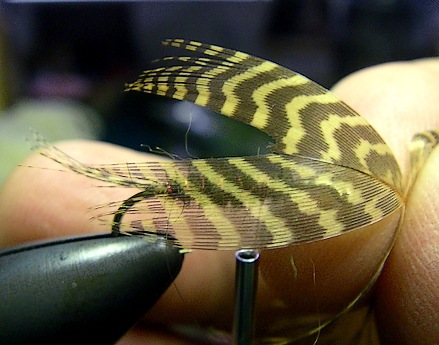
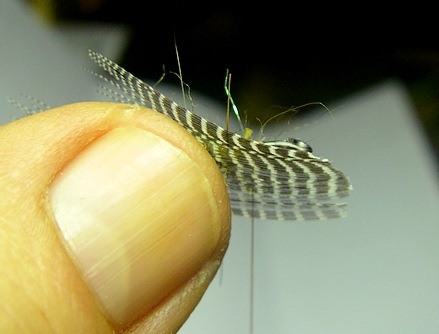
Measure the teal against the tail

The front hackle should extend half way down the tail. This is a reference measurement before clamping the near side of the feather to the hook shank with my thumb (to freeze the movement).

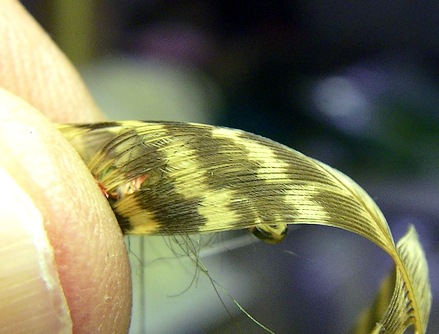
Near side clamped to shank with left thumb

Left thumb clamps the fibers to the hook shank to prevent movement. The left forefinger will come down on the far side clump and pinch it to the far side of the fly.

The forefinger squeezes the other segment to the far side of the fly

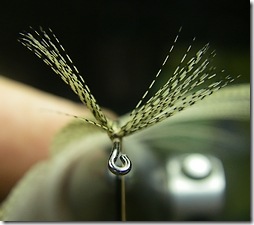
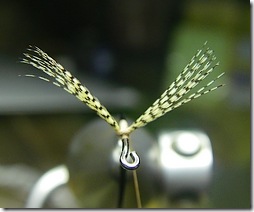
Now that both segments are measured and secured with finger pressure, bring the thread up to roll them around the shank and even out the fibers.

Near side has thread, far side is coming around the belly of the fly

The thread is shown distributing the feathers. The near side clump becomes the top half of the fly, the far side clump wraps the fibers around the belly of the fly.

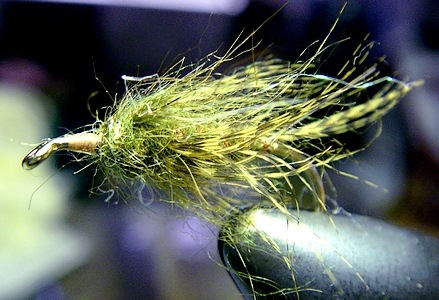
hackle collar complete

The hackle collar is anchored. Like the original distribution wrap you can wind back towards the body to redistribute the fibers any way you like. Clip off the remainder of the feather once you’ve finalized the hackle placement.

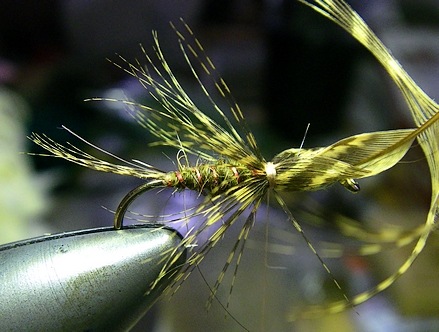
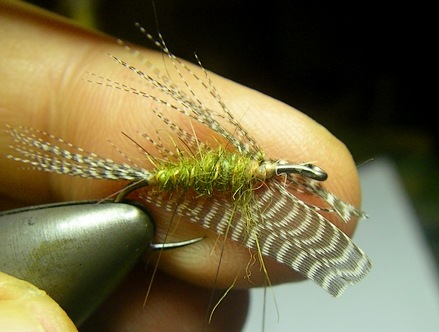
Completed Olive Bird's Nest

The completed #8 Olive Bird’s Nest. Cal preferred the old Mustad 7957BX hook which was 1X long, 1X heavy, forged model Perfect bend.

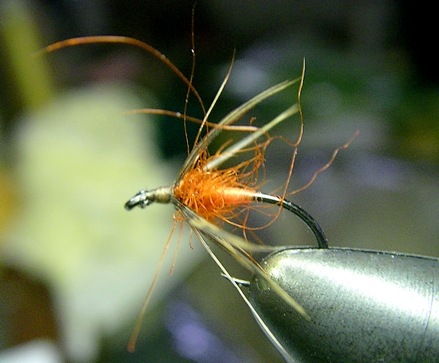
Woodcock & Orange

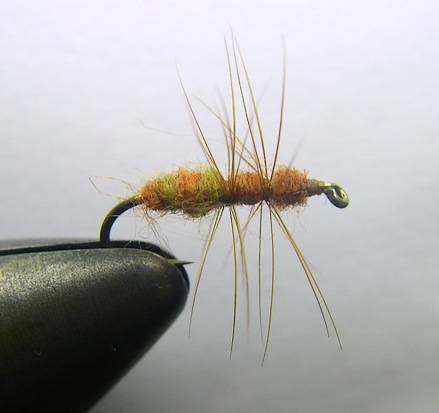
Here’s the same wrap done on a #14 Woodcock & Orange. A collaborative effort; seal provided by [Unknown], Woodcock arrived at Christmas – compliments of the Roughfisher – and glue lump assisted by a holiday sugar rush coupled with unsteady hands.

For Monty Montana.

Tags: Woodcock, seal fur, maple sugar Tintex, teal flank, Cal Bird, Bird’s Nest, soft hackle, Roughfisher.com, Christmas sugar rush, distribution wrap

In the rare case when “inmate” coffee is an asset

It was a cup of coffee that fixed my issues with upland birds and waterfowl feathers. Cal Bird had a taste for strong brew and the shop’s pot was always bubbling ..

I was usually the first person at the store and figured that if one of those neatly trimmed Styrofoam cups made the brownish “ick” we drank yesterday, three or four of them should make real coffee, the kind that explodes a sleepy employee into a dynamo…

… like Popeye and spinach, only warmer.

Cal would show on Saturdays with a wreath cake and watch me struggling with some small bit of dander, and in between my fits of childlike petulance would show me the better way of doing things.

Cal was inordinately fond of upland birds and waterfowl as they possessed the most desirable color schemes and mottle effects, yet  Mother Nature never saw fit to size them to suit our needs. All the best markings and coloration tend to be on the larger flank feathers which are much too long for small flies. Breast feathers are smaller, but small being synonymous with fragile – and markings are much lighter and can be indistinct.

I’d be struggling trying to fit a #6 partridge hackle on a #14 hook, with him smiling and offering encouragement, and as I mangled the feather into a semblance of functionality he’d point out how I could do so with less cursing. Part and parcel of the Consummate Gentleman, as he always had a kind word for everyone.

On one such Saturday he showed me what he called a “distribution wrap” – making no claim to its invention, but making my use of upland birds and waterfowl feathers much less formidable…

Single Segment: If you’ve got a feather with only a single side that has roughly equal length, you can trim that segment from the feather to make your hackle.

Single segment of feather trimmed from the stem

Just measure the length you want the body hackle and press the segment against the hook shank with your left thumb. See below.

Fibers pressed against the shank, thread poised to move them

The thread will be our instrument to move the fibers around the shank. We’ve a tenuous hold on them and will allow the thread to take them completely around the shank. If we using the three-turn anchor, we can wrap those turns loosely, and position fibers to cover the bare spots before securing the material tightly.

I've dropped the forefinger onto the material to guide it

I’ve dropped the forefinger on the top to start the material curling around the shank. Take a slow loose turn with the thread to complete.

Wrapping the back side, thread moving around to the front

The thread has trapped fibers at the top and is moving around the far side to populate the hackle. My fingers are there only to stop the motion and hold everything for the camera.

Three turn anchor holds everything, but you can still move it around

Once the fibers are mounted and anchored, if you take additional slow turns in the direction of the body, you can redistribute the hackle with each turn. Once the coverage is to your liking, wind only toward the eye.

Additional wraps towards the body has moved the fibers around

After taking additional wraps towards the body (and redistributing the material) I have the hackle to my liking. Now I’ll dub the thorax and finish the fly.

The finished fly

The finished teal hackle. Mother Nature doesn’t always assist us with small hackles, sometimes we have to get “medieval” on the raw materials to yield what’s useful.

This same technique can be used on most upland bird hackles and all species of waterfowl, but a lot also depends on the kind of hackle you’re attempting. The above fly has the luxury of a dubbed head which hides all my thread. I’d be much more precise with my thread if the hackle was the last thing on the fly.

Tags: Cal Bird, distribution wrap, teal hackle, soft hackle, strong coffee, wreath cake, fly tying, fly tying materials, teal flank

From the mouths of Babes comes Thread Wisdom

With the casting club some four miles distant the round trip on a stingray was reserved for weekends. Weekdays it was the bathtub as trout stream surrogate.

A young lad learning to tie flies has to make due. Each time the UPS truck squealed to a stop out front it disgorged some new material from Dan Bailey’s or Kaufmann’s Streamborne, and I’d start the bathtub going to see why marabou was such a big deal, or determine whether a fly tied of polypropylene could survive the eddy between spigot and drain.

In those days everything was tied with Size A Black Nymo unless I was feeling gaudy and opted for white.

Six feet of monofilament tippet and a handful of experimentals tugged through the water using “hand-twist” retrieve. I learned which materials caused flies to ride sideways, upside down, and how stiff materials assisted by head cement spun the fly uncontrollably …

… but most importantly I learned what not to do, and how to make a shortcoming an asset.

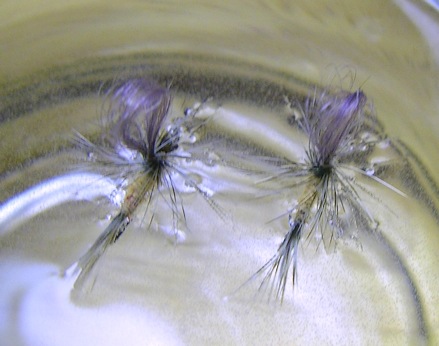
Upper_Sac_Parachute

… above are a couple Creamy-Orange Paraduns that I attribute to the Gary Warren – Chuck Stranahan – Hat Creek brain trust. Are the two shown the same?

Wet_Creamy_Orange_Top

The “Bath Tub” test shows the same two flies riding nicely. The left fly is starting to show it’s true colors …

Upper_Sac_Creamy_bottom

The underwater view of the left fly shows a pronounced orange-red butt section by the tail. It’s revealed to be the Upper Sacramento variant of the Creamy-Orange with a butt of blood red thread underneath the dubbing.

Thread choice isn’t pronounced on the dry version of the fly, but all my “wet testing” of years ago confirmed that Black Nymo overwhelmed every color of dry fly dubbing tested.

Now I knew why Art Flick, Roy Steenrod, and Walt Dette, as well as every other past master of the dry fly used neutral gray thread.

The ensuing month saw me delivering papers frantically, husbanding tips while looking predaciously at the UPS truck and the inevitable squeal that would announce a gleaming 12-pack of gray 3/0 Monocord.

Thread can be many things – a boon as well as a detractor. It acts as a hidden color layer influencing the body color of the fly. In this case, the Upper Sacramento is home to a dusky red-bodied mayfly whose abdomen fades into a creamy orange color up by the wing roots.

Wrapping red thread under a lightly dubbed body gives me precise control over how that color bleeds through the dubbing, and how much it influences the body color of the fly. A light dusting of dubbing will bleed red, a little more dubbing will bleed less (dusky red).

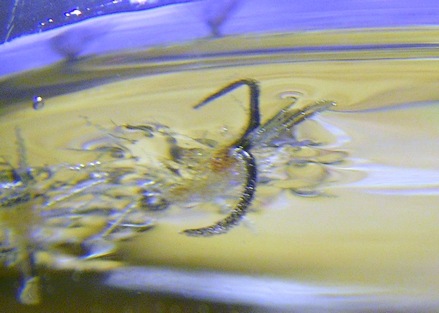
Creamy Orange Damp Underbody

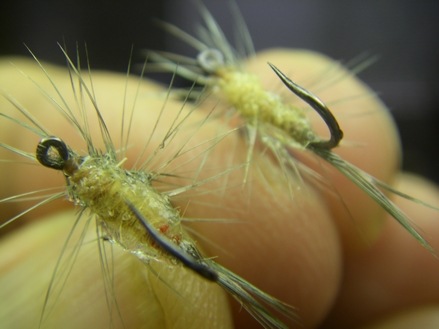
Here’s the same two flies removed from the glass; the left fly shows a pronounced red butt, and the fly on the right has none. Both flies were tied with a neutral tan thread so as not to influence the dubbing color on the remainder of the fly.

Fish never see a dry fly, they only see floating flies that are wet.

Water has a tendency to darken every color one or two shades, and rather than spend all your efforts matching the natural with dry dubbing – doesn’t it make more sense to test the colors wet?

It may well have been the only wisdom learned in the ensuing couple of decades, if you believe my parents …

Tags: dry fly, thread as color, dubbing techniques, upper Sacramento river, Monocord, Nymo thread, butt section, Chuck Stranahan, Gary Warren, Roy Steenrod, Art Flick, Walt Dette, Catskill dry fly, hand twist retrieve, Dan bailey’s, Kaufmann’s Streamborne fly shop

Singlebarbed Reviews the Ultimate Stocking Stuffer: The New Scientific Angling, Trout and Ultraviolet Vision

With our faddish nature I’m always surprised fishermen aren’t more fashion conscious. Our weakness has always revolved around something new as a wholesale fix for all our fishing ailments.

In the Eighties it was Polypropylene – lighter than air and a couple of turns on a hook shank would make a fly float all day. The Nineties were typified by gummy latex and a veritable flotilla of eye catching synthetics.

The last decade was dominated by pearlescent, opalescent, and oily duck’s arse – and the renewed promise that only a couple strands would make a fly unsinkable.

Now it’s the Ultraviolet spectrum and every vendor is hell-bent on squirting chemicals we can’t detect (and of dubious UV qualities) on everything from salmon eggs to dry fly hackle, claiming the “fish killing qualities of the ultraviolet are virtually infinite.”

… and in all this frenzy, Reed F. Curry’s book –  “The New Scientific Angling, Trout and Ultraviolet Vision” makes it’s debut.
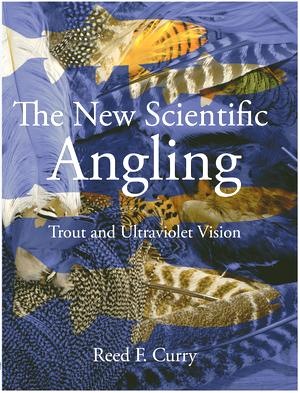
FrontCover3in

Reed’s task is Herculean. Bring the stuffy lab-coated world of ocular physics out of its chaste mathematical surroundings, remove the obfuscation of scientific jargon, and adapt the material for fishermen, then drop the polished treatise onto the coffee table – there to compete with Playboy, People, and Guns N’ Ammo.

It’s a singular work, and his timing is impeccable.

Those of you familiar with The Contemplative Angler recognize that Reed’s quiet and biting humor is a common thread throughout his work; how he could remain stiff-lipped and scholarly was surely going to be a trial … and I was pleased he failed … miserably.

The book is reminiscent of a High School science text with the salient points highlighted by color in the margins. In this case, Reed spills both wit and angling reality into the colored boxes, a clear demark between the Science and Angler-humorist.

Fly tiers will read it like Playboy. Pictures first and text second – and the concepts of UVA (Ultraviolet absorption), UVR (Ultraviolet refection), and VIS (visible light) are featured in multiple pictures per page – which keeps the scholarly segments easy to absorb and engaging.

There is an enormous amount of real meat for the angler, and the segment of greatest interest to me was the discussion of “pattern matching” that answers that most elemental of all questions, “Why do fish think this is food?”

As the Quill Gordon floats within the trout’s range of vision – and here I am going to avoid the complex issues of Snel’s Circle, reflection and refraction and simply assume that the visual sensory input is very detailed and complete – the trout’s brain receives input of the fly exactly as it appears from below, in the full trout spectrum. VIS and UVR. The trout brain now gathers the elements that are attached to each other – hackle, body, wings, tail – ignoring floating particles of foam nearby, and assumes that it forms the whole unit. Against this gestalt the trout brain uses pattern matching, just as we would. The order of conditions is presumably the same:

  • First, check for danger. Is the object a known threat? “No.”
  • Next , check for food. Is the object a food item? “Yes,” “No,” “Maybe.”

And that is the crux of it. If as anglers we can establish “Maybe,” we have won the first part of the game. “Maybe” can indicate insufficient information which may lead to further investigation through other trout senses – Taste and Touch. In order for the fish to touch and taste, he takes an object in his mouth, hands being in short supply.

The section on “the composite insect” and how it fits into a fish’s pattern recognition “database” is enough to send any fly tyer into a reproductive frenzy.

Schweibert, Flick, and Swisher & Richards all gave us wonderful tomes about mayflies, most with wings intact and inviolate. Reed suggests that the all important “Maybe” that spurs trout to eat – may lie in the thousands of images of mayflies (caddis, etc) stored in memory.

Crippled, in the water and out, half in, struggling, fluttering, landing – double the images to account for the broadside view, quadruple that to take in the fore and aft of all the above, and you quickly get to millions of possible watery lumps that “maybe” food.

Which is why those old archaic flies we know don’t work like the McGinty, the Royal Coachman, and the Trude – all non-scientific flies, get eaten, and often.

“The trout’s pattern for mayfly wings, therefore, must be quite vague, perhaps simply a small extension from the body, light in color and displaying a hint of UVR. A trout that only eats mayflies with perfectly formed wings is missing a lot of food.”

As humans we view insects and their imitations with only the visible spectrum (VIS). Fish can use both visible and UV light to recognize prey, and at depth or during low light conditions where both are active, a mixed image is likely.

“Through UVR in combination with VIS, trout have an opportunity to see fine details of the chitin, the outer surface of an insect’s body and wings. How deep this vision goes depends, of course, on the individual trout, the conditions, and the insect.

… (trimmed by KB)

So, surface texture is significant because, despite what we see with our more limited vision, the trout can detect in the UV that natural flies are not perfectly smooth.”

The book’s photography covers the full gamut of angling gear as well as specific sections dealing with insects, fly tying materials, and the UV signature of colors in general.

Baitfish get some UV love as well. Rather than pile on more UV materials onto a hook shank – knowing which components of smaller fish are most visible in the UV spectrum suggests a thoughtful placement of materials – versus the “more is better” broad paintbrush.

… and while Reed answers more questions than he poses, it’s plain that both vision and perception suggest there is a great deal of unexplored territory left in the classic stalk and seduction of trout – and any other UV equipped gamefish.

This is a wonderful reference work for all anglers, likely to turn some of your notions about fly fishing on their ear. Careful study of the colors and their qualities under UV will assist in fly selection, clothing choice, and fishing qualities like retrieve and how depth may play into fly selection.

… and for the fly tier the color plates alone justify inclusion into your reference library. An essential book if you’re attempting to navigate the vendor offerings and add UV aids in insect imitations.

Me? My next fishing vest will be Bright Yellow … waders painted with a similar retina scorching disjointed color pattern – a not so subtle mix of the Bismarck and Elvis.

Pikeminnow rolling lazily between my feet as I’m completely invisible …

Amazon lists the book at $27.95, with only two copies left. Jump on it.

Full Disclosure: Singlebarbed did trade two (2) pairs of Sixth Finger Scissors to Messr. Curry for the privilege of owning such a superb reference work. Tears were involved … his mostly.

Tags: Reed Curry, The New Scientific Angling Trout and Ultraviolet Vision, Overmywaders.com, The Contemplative Angler, trout vision, ultraviolet spectrum, visible light, baitfish, insects, fly tying materials,
Big on Yarn but even bigger on frugal

I see one of those “coat of many colors” yarns and I can’t dig the pocketbook out fast enough. The Good News is these mixed-color yarns are all the rage, the Bad News is fashion is capable of turning on its heel quicker than we can respond.

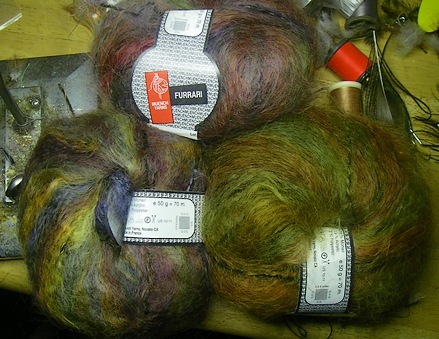
Furrari Mohair

I use a lot of mohair because it’s a cheap and plentiful “filler” for dubbing blends. Lots of sparkle and plenty of spike –  important qualities for big nymphs and steelhead flies, and especially Spey flies – which translate “scruffy” and long fibered into fly movement.

Detail view It’s the Poor Man’s Seal substitute, offering the same loft and spike yet absent the transparency and guilt associated with clubbed orphans.

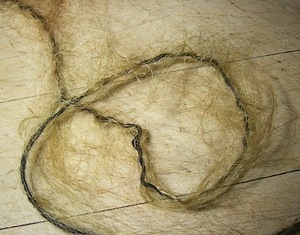
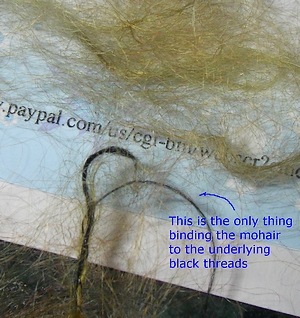
This is Muench “Furrari” (France) and each skein is a blend of a dozen colors. It also boasts an extremely loose weave; two strands of black thread are the core, with a single strand of black spiraled around the mohair to keep it tight to the center threads.

It can be transformed into loose fur by yanking out the black threads and sliding the fibers off the center element. The mohair will collapse into loose fur that can be dubbed or added into something else.

Mohair Thread View The range of colors is the real bargain. Each color is about a foot long before transitioning to the next, plenty to wind a large fly body or yank off as a handful of dubbing.

If left intact the black threads offer the ability to wind it as a coarse, spiky yarn – with much of the black obscured by the trailing fibers. It’s perfect for the Jay Fair nymphs or anything else using mohair as a wound yarn.

It retails at nearly eight dollars a skein, but I got it off of eBay for five dollars. There’s quite a selection of colors offered by yarn stores selling their stock on eBay, most have priced it at six bucks per 80 meter skein.

Having a dozen colors in all the right Olives and Browns is a real boon for the frugal. It beats buying those three yard cards (x12) to realize the same color palette.

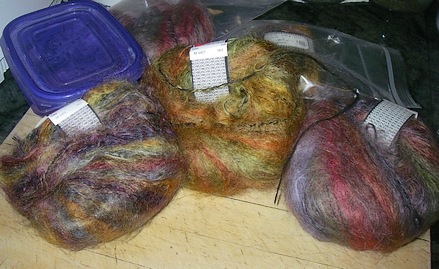
Colors shown below: Left (Purple, Green, Blue, Yellow) #4401, Center (Olive and Browns) #4407, Right (Grey, Brown, Claret,Green) #4401.

Furrari under incandescent light

The same colors shown under natural light. Makes a big difference.

Tags: Muench Furrari mohair, dubbing blend, filler for dubbing, eBay, J Fair Wiggletail, spey fly, combed fur, mohair, fly tying materials. mohair yarn

It’s like mascara, color can enhance and detract

My first commercial order was for two dozen Adams. I was 16 at the time, and quality control was letting the glue dry and giving it a couple of half hearted tugs – followed by a rigorous review of proportions.

By the time I’d completed 24 flies that passed muster I’d actually tied about 60 – and suffering through 60 flies of the same size and pattern was pure torture to a fellow that tied something different everytime he sat down.

It would be the better part of a decade before I could face the Adams without cringing, which is why the Mosquito figured so prominently in my angling development.

Hackle tip wings were my undoing. Grizzly specifically, and the lessons learned on that first order apply to the many flies since. Thousands of patterns pair materials for wings, cheeks, or body components – and attention has to be paid to the coloration of the pair chosen, as their mottling and coloration can make a perfect fly look less so.

Color can visually deceive the eye into thinking your proportions are wrong.

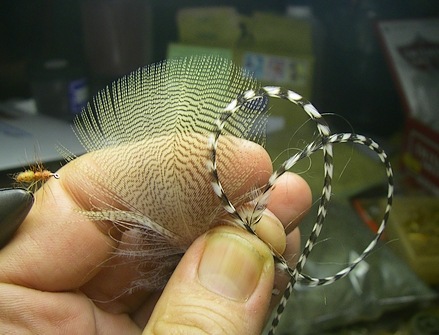
A bad pair for an Adams wing

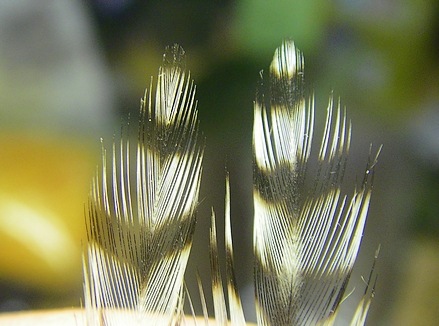
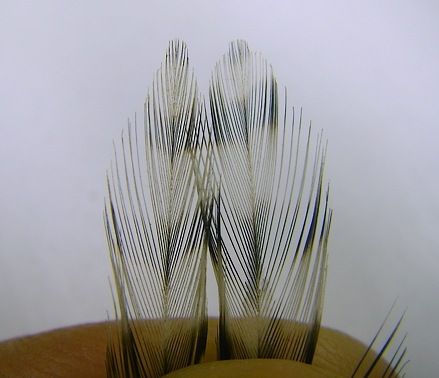
The above picture shows us a “bad pairing.” The hackles themselves are fine – their coloration is good, but using the above pair will make the fly’s left wing appear shorter than the right.

It’s the tips of the feather that cause the issue. The left feather is tipped in black, the right feather is tipped in white; using the two together will make the left wing appear shorter. Add in the hackle in front of the wings – a mixture of brown and grizzly that will bust up the barring of the wing segments and exaggerate the color difference further.

Proper pairing

Here’s another pairing that will eliminate this simple problem. This “right” feather was next to the other “righty” above, yet has a black tip. Note how the bars are matched exactly with the left feather. This pairing will yield an Adams where the colors don’t upset the balance.

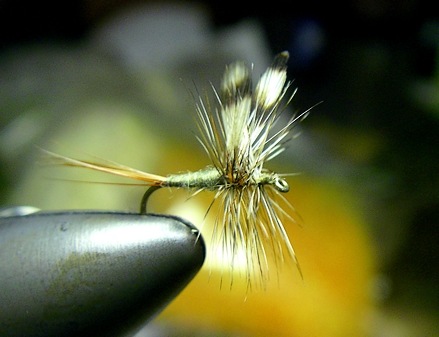
Side View of the finished Adams

From the quarter view above, nothing really looks amiss. Wings are cocked and extend above the hackle, both look equal length, and proportions look solid.

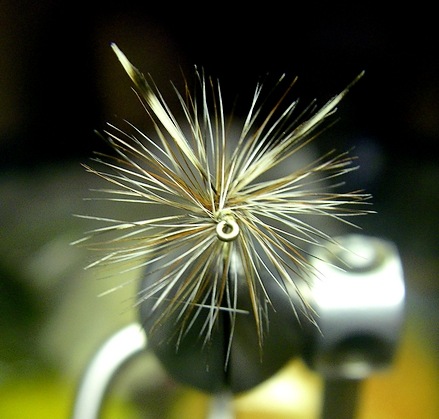
Front view of the poor feather pairing

Here is where the problem displays itself nicely. The black tipped wing (right) vanishes leaving only the last white segment visible. The white tipped wing (left) is strident and obvious, making the left look much too short.

Color. Normally it’s your friend but occasionally it can diminish or enhance a feature and throw your nicely tied fly into a tizzy. It’s the last thing to check before wrenching those precious hackles off the hide.

Tags: Adams, dry fly wing, grizzly hackle, fly tying tips, dry fly proportion, Mosquito,

The next Great Fingernail Removal System

My lampooning of dry fly fishermen is well documented, so I thought I’d take my comeuppance like a Man…

I’ve got a half dozen experimental colors of “Dubbing X” made, about an ounce of each, all hand made at the cost of most of my fingernails, lots of swearing, and the skin of both forefingers…

Dubbing "X"

A medium gray (Adam’s), a Blue Wing Olive, Pale Morning Dun, Upper Sacramento Pink, and an Ocher. The above are the California colors for those insects and may not be correct for your local watershed.

An “accidental color” is one that occurs while learning an unfamiliar dye process, where you’ve written the material off thinking nothing good could come of it – didn’t write down the formula, so you can’t reliably make it again … and it turned out pretty darn good – which was a complete shock.

… and then you destroy both fingernails and flesh in a series of ill advised attempts to render it to base fur before finding some process that partially works.

I could use a little feedback on the next Great Dry Fly Dubbing, drop me a note and I’ll toss some in the mail.

This is only for dry fly use. The material floats without assistance (specific gravity less than 1), and is a micro-filament – or “Nano-dubbing” as OldTrout58 calls it.

… while supplies last – I’ll need time to regrow some fingernails before the next batch.

Tags: Dubbing X, dry fly dubbing, Blue Wing Olive, gray, Pale Morning Dun, fly tying materials, Upper Sacramento pink,
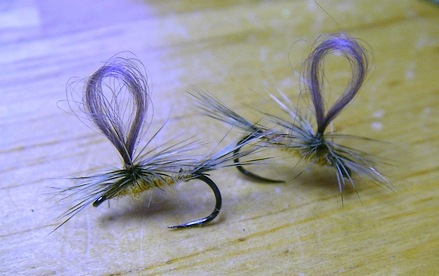
Steely resolve in the face of the Perfect Feather

Per request I’ll continue to post additional fly beautification tips in a weekly format. These will comprise hardscrabble lessons learned somewhere after beginner and before complete mastery.

Most tiers that tiptoe around the craft use their fishing instincts when no instructor or book is available. Most of us started as dry fly fishermen and it’s not surprising that most new fly tiers attempt the dry fly more often than nymphs.

… which is too bad. Tying nymphs is far more forgiving than the delicate and strictly proportioned Catskill dry. A novice tier can hold up some lumpy looking stonefly and if critiqued can respond with “ … well, all the stoneflies in _____ Creek are fat.”

… and if I had been the unfortunate to task the fellow – I’d blush like hell and backpedal in a hurry – never having fished over “fatty” Plecoptera …

The Catskill dry is completely unforgiving. It’s territory and techniques have been practiced for more than a hundred years – and artistic license must be defended, even for expert tiers.

One of those oft-mentioned-quickly-forgotten principles is made more difficult in the presence of the Perfect Feather …

Beware the Perfect Feather

Above are two examples of the Perfect Feather; a foot long #16 grizzly saddle hackle, and a well marked (lefty) Wood duck flank feather with perfect tips. Both are treated with awe by the owning fly tier – and both can cause your fly to suffer cruelly if you’re not diligent…

Wooduck flank prepped

You’re a kid in a candy store, all those precious tips are in a straight line and unbroken. Giddy, you fail to clip the center stem because it’s perfect too.

You forgot that all feathers are either a left or a right, even foot long saddles and untouched Wood duck flank.

The wood duck will be your undoing twice. In the first case the stem will cock one wing to the left, and in the second, the stem center will retain 9 or 10 fibers attached and you’ll have to compensate by yanking fibers from the far wing to the near side to equalize that natural bulk.

Stem does not appear to affect the wing, everything is straight

The picture at right shows the Perfect feather now clumped together with the center stem included. Note how all’s well – there’s no clue that anything is other than perfectly straight.

You’re thinking of dumping all your “lemon-dyed mallard” – as the sight of the wood duck with its pristine coloration, fine markings, and perfect tips – make it so much more pleasurable to work with – even justifying the hideous cost to lay in a goodly supply.

Unfortunately like Ulysses and the Sirens – their song is so beautiful, you’re ignoring the approaching rocks …

Now you're undone

Now you can see why you remove the center stem. The left side is thin and has a different angle than the right wing.

The cause is simple. You had to pull the loose fibers over to the right side to balance the two clumps – leaving the left, just the stem section. It’s thin because the fibers are attached to the center spine and have no “give” to move around.

We were lured onto those rocks consciously …

Same clump stem removed

The picture at right shows the same wing as before. I’ve removed the wing from the shank, clipped out the center stem and retied it back on.

Note the difference with the picture above. the left wing is  relaxed, the right wing is less dense and tighter – as you didn’t have to pull everything to that side to compensate for the stem on the left.

That foot-long Grizzly saddle is just as bad. You’re used to applying six or eight turns of hackle to your dry flies, but the lure of virtually unlimited hackle means you add four or five extra wraps and crowd the head. Crowding means fibers trapped in the knot that’ll wick the head cement right into the eye.

It’s the lure of the Perfect Feather. You won’t find it mentioned in any tome or DVD, and only your steely resolve to overcome it’s sweet song …

Tags: wood duck flank, grizzly saddle, upright and divided wing, center stem, lure of the Perfect Feather, steely resolve, fly tying

Perhaps we can covet an invasive enroute to exploiting it

rasberrycraz Screw the gnashing of teeth, mock concern, and “woe is me” populist reaction, we’re being assaulted by air, land, and sea – and it’s about time we exploited the little SOB’s …

… and it could be my new-found bravado comes from the quarter-pound of the perfectly colored dubbing dyed this weekend using leftover cranberry sauce and rust Tintex. I call it “Upper Sacramento Pink” – which I may rethink in light of this burgeoning commercial opportunity.

Think “Rasberry Pink” – the new hotness …

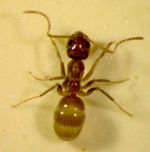
It’s the latest import into the South compliments of container ships in the Gulf of Mexico. The “Rasberry Ant” which goes through stinging Fire Ants akin to crap through a goose, eats bees, and anything else that it doesn’t like.

This is a species that we do not know much about. Presumably the ant came from the Caribbean through the Port of Houston,” Cook said. “We know the ant is in the Paratrechina genus and is capable of growing a population of billions and they need to eat. They especially like other bugs, like fire ants and honey bees.”

We’ve never shirked from the addition of more Latin in our cocktail conversations, and you can be sure we’ll be singing Mr. Rasberry’s praises once we land a couple dozen fish.

It’s about time we got a robust invasive that offered to improve the fishing rather than coat rocks with slime, mucous, or snail tracks.

The Port Houston McGinty

Meet the “Port Houston McGinty”

Washing waders may be the height of manliness for some, but I’d rather giggle while watching hordes of voracious trout food spill over the creek banks – sending the available fish into a bloody feeding frenzy…

Tags: Rasberry ant, invasive terrestrials, trout food, fire ants, ant pattern,

A Fly Tying Thanksgiving

The old days of lopping the head off a gobbler in your backyard are antiquity. Gentrification assured by CC & R’s that prevent live poultry on your acreage and expressly prohibits the stalking and slaying of same.

“Green” got the better of me, and I circumvented emasculating rules by getting most of a bumper and part of a steel belted radial on a goodly sized hen just down the road from my house.

Which makes me question whether there isn’t an innate conflict of interest for us Renaissance Men that’s triggered by the holiday and ensuing food debauch…

As “Chief Cook and Bottle-washer” I enjoy rarified standing among the drunken participants. The sumptuous sprawl of Turkey and fixings being my responsibility – while others tip-toe around my frantic boiling and chopping and fetch beer.

As “Resident fly tyer Extraordinaire” – I resent the imposition of a crowd of fat-arsed layabouts whose sole responsibility is to swill my liquor, contribute to global warming and get to watch football – something I’m denied by Role #1 above.

Cooking ritual is a complete mystery to the couch crowd – who are oblivious to culinary detail, and are making a comfortable dent in furniture yelling at some awesome play I missed while sweating over the hot stove.

“Dude, Bro … you look kind of hot in that apron.”

Like the millions of other cooks I’m short of pots early on – and forced to boil the neck and gizzards in pink fiber-reactive dye. With only four burners, a turkey, seven other side dishes, and a couple pounds of fur to color, expediency is the hallmark of the Great Chefs of Fly Tying.

… whose dual roles often conflict with one another, adding complexity to the proceedings.

The real trick is pairing natural foods and the colors that won’t leave incriminating evidence. “Fiber-Reactive” dye will only stain plant fiber and cannot be used with Brussel Sprouts, Yams, or Sweet ‘Tater – and “Acid” dyes stain protein so avoid Turkey, gravy, or stuffing.

…stuffing is best cooked conventionally as all the best recipes contain both meat and plant components.

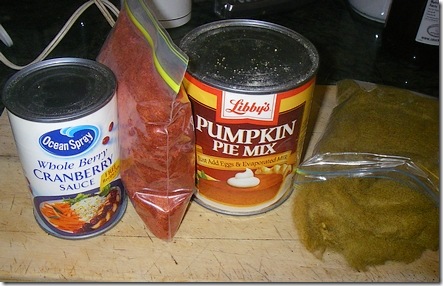
Pick complimentary colors if you're short on pots

Pots and burners are in short supply and it’s important to pick complimentary colors so you don’t let an oversight give artistry away. Olive Pumpkin pie is an eye-opener … but Ocher is merely “too much cinnamon.”

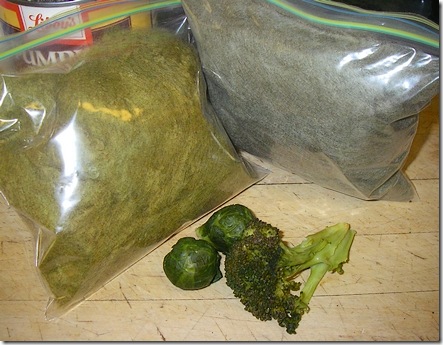
Brussel Sprouts paired with Blue Wing Olive

My family’s ancestral recipes include Broccoli ala Blue Wing Olive, and for that important “been in the refrigerator overnight” look – a good neutral gray is tough to beat.

Keep in mind that RIT uses huge amounts of salt as fixative. If you’re boiling or steaming either plant or meat protein, no additional seasoning is warranted.

By my quick count there are nearly 11,300 patterns that use turkey feathers in all or part of their dressing, it seems a shame that we don’t leave the feathers on the bird, drop it into a oak dye bath and give both feathers and skin that warm, fresh-roasted coloration.

… it’ll guarantee enough dark meat for everyone.

Tags: Thanksgiving, fly tying humor, dyeing materials, acid dye, fiber reactive dye, steel belted radial season, Walmart, Black Friday shoppers, fly fishing