Category Archives: current events

Nothing like having a chalkstream in your backyard

We've got plenty of structure in the streambed, now add water The ringtone belonged to “Deep Walnut”, the Yolo county landowner I’d turned to the side of righteousness. The pleasantries were brief, and I was informed that the annual “crop report” outlining the sins of watery tomatoes had been secreted on the grounds of my residence.

Sure it’s a touch over the top, but in a smallish town when it’s raining – what else is there to do.

Actually “Deep Walnut” is a double agent – as the document merely outlines the crap I waded through last season, and how far over the state approved environmental standards the pollutants have climbed.

I figure his handlers are slapping each other heartily knowing no sane person would wade through known carcinogens and medical waste – but sanity has never been a strong suit, so I just hand the list to the physician while he readies an armada of large gauge needles with which to violate my posterior.

… and yes, this report was an eye opener. Outlining enough naturally occurring Boron that I’d consider wedging a mandrel in the substrate just to see if I’d have a functioning six weight after a sustained downpour.

… a steady rise in the salinity of the water, as well as a pH of 9.0 – both exceeding state guidelines. It’s a comfort that with all the decline in quality waters that I’ve got a chalkstream being deposited on my doorstep, which should recoup last year’s 50% decline in home value.

Unfortunately most of the wells near my house have been closed due to nitrate contamination. Both Woodland and Davis get much of their drinking water from groundwater, and at least four (those near my house) have already been closed.

… so I’m looking to close escrow with a fly fisherman. Civilians will not appreciate the view from my veranda, nor those contaminated sparkling waters anytime this century, and most of the next.

I’d petition to rename the street “Love Canal” but most of the water managers are too young to get the joke …

I suppose the biologists took one look at the local creek and skipped over the mayflies and stoneflies, choosing Cerodaphnia Dubia (water fleas) to measure toxicity.

Didn’t help, they died screaming …

But the good news has to be the toxic algae bloom and the increase in eColi found. Proof that the local creek is capable of hosting a diverse ecosystem containing predators and killer bio-toxins.

… and with all the microscopic nasty entering the food chain, and slurped gleefully by the young-of-the-year fry, the fish should be virile, aggressive and subdued with nothing less than a single-jack.

… and all it’ll take to realize this angling paradise, this lone speck of quality amidst the dust bowl of the Central Valley?  Just add water.

Tags: Brownlining, Little Stinking, Deep Walnut, Yolo County Farm Bureau, cerodaphnia dubia, ecoli, boron, selenium, fly fishing, Woodland, Davis, groundwater contamination
Now you can do the honorable thing, forget it in your car

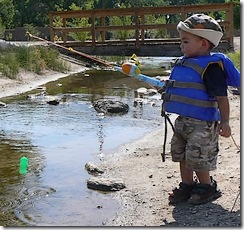
The Next Generation Something I missed from earlier this year. For 2010, the Department of Fish & Game no longer requires California anglers to have their fishing license in plain sight.

Initially it was a good idea, but the advent of licenses purchased over the Internet and printed by home computer eliminated the brightly colored paper – which allowed them to verify ownership from a distance.

Once again you can put your license in your wallet, leave that in the car, then do the “panic slap” of your pockets while the warden starts writing your ticket…

Tags: California license regulations, Department of Fish & Game, changes for 2010

Asian Carp spawns massive litigation orgy

Green_Law_Firms It appears the much promised Armageddon over water rights will be showcased as a result of the Asian Carp migration, and the respective legal teams will include eight or nine US states and at least one foreign government.

The New York Times is running a short piece describing the long list of participants, and the longer list of injunctions…

In an urgent effort to close down Chicago-area passages that could allow the unwanted fish to reach Lake Michigan, the State of Michigan is suing the State of Illinois and other entities that govern the waterways here. Minnesota, Ohio and Wisconsin have filed documents in recent days supporting Michigan’s move, and Indiana says it will soon do the same. 

… and the experts claimed it was the Colorado River that would touch off the festivities, only their predictions didn’t include a voracious bottom scavenging silver missile that maimed water skiers.

Mr. Cox, a Republican who is running for governor of Michigan this year, said hundreds of thousands of jobs in his state depended on Lake Michigan, and in December he filed a lawsuit.

… and a gubernatorial race hanging in the balance would lend a sense of urgency. Nothing quite like accusing the other fellow of liking fish – then somehow linking it all to Al Qaeda.

“Dammit, Bob. How can you look these good citizens in the face when your daughter keeps Goldfish by her bed?”

“… but …”

“… and you knew they were Carp when you bought them, didn’t you?”

I’d keep a weather eye on this case where possible. The courts will act much too slow to effect real change. The Carp will scream into the Great Lakes like biscuits love butter, and we’ll be treated to a decade or two of legal fallout.

Tags: Great Lakes carp invasion, bighead carp, Asian silver carp, fishing, gubernatorial election, Army Corp of Engineers, Colorado River, water rights

It might’ve been called the Day of Best Intentions

Stay sober and drive safely It’s always been a Singlebarbed trait to delight in the suffering of others. We cackle and point fingers, toss barbs quicker than most – yet lack the social niceties that defines the true prima donna.
No, my good lord: banish Peto, banish Bardolph, banish Poins; but for sweet Jack Falstaff, kind Jack Falstaff, true Jack Falstaff, valiant Jack Falstaff, and therefore more valiant, being as he is old Jack Falstaff, banish not him thy Harry’s company: banish plump Jack and banish all the world.
Henry IV.
Pt. I. Act II. Sc. 4. L. 520.

Our soiled punctuation linen is never far from public display. Some might sulk or nurse an imagined hurt, instead we’re giggling at our foibles with the rest of the crowd.

My New Year’s Resolutions

1. Accuse dry fly fishermen of unimaginable crimes.

Fish are wet, the river’s wet – you’re moaning over a leak in your waders, and being rained on – yet insist your fly remain dry?

2. Fish more often.

The press of Mankind on a finite resource is taking its toll. Salt or fresh, gamefish or no, the only certainty is that next year there will be less. These are the Good Old Days – don’t lose sight of it.

3. Embrace the Smart Phone format.

Now that people can (and will), read novels on their cell phones, the writers craft will have to undergo a revolution comparable to that engendered by the Gutenberg press.  While this doesn’t mean a generational change from Shakespeare to Doonesbury, you get the general idea.  “Less is more.” 

As eloquent as I’ve seen it phrased …

4. Share with the “young guns” (who’ll be carrying the banner the next half century) and imbue them with what was passed to you.

The good stuff.  Rare materials gifted by the prior generation – the reels  no longer made yet still purr after a century of use, and the knowledge that came after a lifetime of doing things the hard way.

The issues they’ll face will be more onerous than anything we’ve endured.

5. Fire Weather permitting, make that trip to Montana this year.

6. (you can fill in those I missed)

Tags: Good Old Days, New Year’s resolutions, fly fishing, smart phone, fly fishing, fish more often, them as inherits,

Hexagenia Mayfly responsible for polluting the Great Lakes, Asian Carp rush to the rescue

Hex_Hatch In an interesting turn of events it appears the Hexagenia mayflies of Lake Erie may be blamed for polluting the lake.

… nasty little buggers, those …

In a similar experiment, Chaffin found that a burrowing mayfly can kick up buried phosphorus. Once that phosphorus is back in the water, it can fuel more algae blooms.

“There is an effect,” Chaffin said “I don’t know if it’s just a drop in a bucket, or if it is a main reason why we’d be seeing these blooms come back since mayflies have come back.”

Even if the return of the mayflies has contributed to the resurgence of algae blooms and low oxygen, it’s not a sign that Lake Erie managers need to kick the bugs back out.

“It’s not necessarily the mayflies’ fault that there’s so much phosphorus in the sediment,” Chaffin said. “The mayflies are going to do their thing if there’s a lot of phosphorus or not.”

Water managers are less than concerned as they know the arrival of the Asian carp will ensure those pesky mayflies get their comeuppance in spades.

… it’s the cheaper alternative to dismantling the electric fish barrier, boosting the voltage and dragging it along the bottom to zap hidden mayfly terrorist cells.

“I grew up on the shores of Lake Erie, so I remember there being no mayflies,” he said. “So every time I’m wiping mayfly guts off my feet, I don’t get too upset about it.”

Tags: Great Lakes, Asian Carp, Hexagenia Limbata, algae bloom, phosphorus sediment, mayfly burrow, fly fishing humor

The Privatization of Fish will be a by product

Keep your big hammy feet out I’ve been keenly watching water policy over the last couple of years. Much of that ground plowed to find compelling items for posting – yet has me brushing up against water usage and the building water crisis facing every state.
… and it’s going to be every lawyer’s wet dream …

Using EPA estimates, communities will need an estimated $300 billion to $1 trillion over the next 20 years to repair, replace, or upgrade aging drinking water and wastewater facilities; accommodate a growing population; and meet new water quality standards.[5] EPA projects a $650 billion shortfall between current spending levels and money that will be needed over the next 15 years. The Water Infrastructure Network claims spending will need to increase by $23 billion a year for the next 20 years in order to meet the growing water/wastewater treatment needs. Also, in May 2002, the Congressional Budget Office estimated that the cost of drinking water and wastewater infrastructure over the next 20 years would be $492 billion under a low-cost scenario and $820 billion under a high-cost scenario.

Charles Duhigg’s six-part series on drinking water for the New York Times is the latest in a series of exposes on how large farming and industrial interests get to operate with impunity, ignoring The Clean Water Act, as most states are strapped for staff or lack the desire to enforce clean water standards.

Fresh potable water is going to be as expensive as gold, and that puts you and I squarely in the cross-hairs of those same powerful lobbies – and with our puny conservation efforts and tiny organizations, we’re going to suffer considerably more than the rest of the population.

It’s likely we’ll be barred from fishing in public water – as it won’t be public much longer.

The root issue is infrastructure. Cities and states both lack the billions of dollars to address burgeoning populations concentrated in cities. Drinking water isn’t close by – so billions must be spent to ditch, pipe, and canal water from where it “lives” to where it’s needed.

Politicians are reluctant to raise taxes (albeit not at all reluctant to blow the proceeds) and privatization of the water supply is thought as a method to remove local government’s responsibility for pipes and infrastructure onto a for-profit company with deep pockets.

Naturally your rates will climb as the new owner recoups the millions spent on replacing earthen dikes, rotting pipes, Quagga mussel infested pumps, and the brick canals built in the 1800’s that are still supplying critical freshwater to our expanding cities.

You can expect “No Trespassing” as a result. Boaters and anglers are know vectors for invasives that damage the water infrastructure – and felt soles be damned – they’ll bar you from the waterway entirely.

… ditto for duck hunters and ski barges …

Atlanta tried it, now Chicago is thinking about it.

Considering that all of the hallowed Catskill streams of fly fishing fame are sent through mountains and brick-lined tunnels to slake New York City’s thirst, if you’re thinking those geographic barriers will save you – they won’t.

If you’re lucky you live near the coast, making desalinization an option. Eventually someone will figure out how to dispose of the salt, so toxic it rivals nuclear waste, but some canny fellow will figure out a way to cleanse it and sell it to you at the supermarket.

The lawsuits that result from Spanish Land Grants, international treaties with both Canada and Mexico, imminent domain, and all the cities dependent on the same river – yet further downstream, will likely bottle up significant movement for the next couple of decades.

In the meantime about all that’s left is investing in the next conglomerate that will own Southern California’s water supply – hoping that the proceeds will allow you to retire somewhere’s else.

Just one of the reasons why the brown water is so compelling. Little crappy creeks that no one drinks (yet) with inferior-mouthed fish that no one protects (yet) – that may afford you a spot to teach your kids to fly fish.

Tags: Chicago’s water supply, privatizing drinking water, desalination, Spanish land grant, agribusiness lobby, Charles Duhigg, New York Times, No trespassing, brownlining

Red with Beef, White with Fish, Ripple with a Twinkie

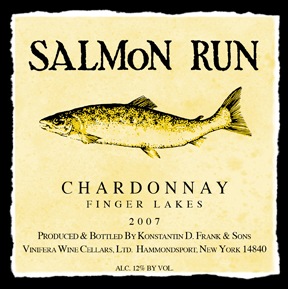
Salmon and Chardonnay It’s the spark that ignited open warfare in my household. Pots and Pans hurled with much force and even greater accuracy – while I backpedal giving the kitchen door a couple of measured three second bursts …
I always figured our relationship would end bloody. She’d discover her favorite dish towels dyed florescent Puce, wadded under the sink out of sight … or the carpet would yield another 3/0 O’Shaughnessy  – buried to the bend in either her hindquarter or big toe.

Fishermen can’t help but strain the boundaries of domesticity with our early morning departures, bleeding gut-stomped prey, or the many sharp accessories we toss around while unpacking.

… toss around and fail to pick up …

We wept during the highly charged, romantic segments of “Rivers of a Lost Coast” – up until they mentioned the Russian River was depopulated compliments of the wine industry. I could feel her stiffen in protest – but took her mind off of “those obscene lies” with chocolate.

… wine being her most favorite thing, more favorite than me …

Then I had the audacity to perpetuate “another heinous liberal myth, like Global Warming” – by posting this piece, and ever since only the fourth kind of sex is available, where you pass each other in the hallway and say “f**k you.”

Unfortunately the Santa Rosa Press Democrat made mention of the phenom, so I’m duty-bound to pass it on.

“We’re here to protect fish as well, but it can’t be done by eliminating the viticulture industry in Mendocino and Sonoma County,” said Devon Jones, executive director of the Mendocino County Farm Bureau.”

To which I’d reply, “Nuts.”

The Napa wineries have spilled over a couple of valleys and into a half dozen watersheds – and all the jug wines are now grown in the Central Valley proper. Many thousands of acres of tomatoes and almonds uprooted to mass produce cheap Chardonnay, Burgundy, and lesser grapes.

I’ve enjoyed wine (jug or otherwise) for many years – but this talk of “absolutes” is starting to become overly burdensome.

… perhaps you’ll have to keep 20,000 acres fallow – to ensure a half dozen sickly Salmon can gasp their way to former haunts – there to expire. Keeping those fish will not extinct the Napa Valley or anything close to it – vintners are objecting at having to share.

“It is really critical that all growers get involved with this,” said Nick Frey, president of the 1,800-member Sonoma County Wine Grape Commission.

This spring “there’s a risk of not everyone having water for frost protection,” Frey said.”

I’ll make you a deal. As some of the founding fathers and “Johnny-come-lately’s” will have to surrender some of the most fertile soil (to ensure salmon survive) …

… we’ll allow you to grow dope in Mendocino.

As you’d have money coming out of your ears – and a lock on the medical marijuana market, you can uproot your restored turn-of-the-century farmhouse – complete with clinking glassware and Marin-gentrified lifestyle – and move North.

As pure sewage can only improve your end product (and may even improve its taste) we’ll let you have an equivalent amount of lukewarm brown water from whatever impoundment is nearby.

… you won’t need to worry about frost, as you’ll harvest all that bud in September …

… and your spendthrift wastrel kids will have the chance to appreciate the richness of your Chardonnay, as they’ll have something to eat with it besides a Twinkie …

Tags: Santa Rosa Press Democrat, Rivers of a Lost Coast, domestic bliss, Napa Valley wineries, Russian River, salmon, medical marijuana, open warfare, think outside the box

The Mayfly that moves mountains

FireDownBelow I’m the doubting kind and figure insects had nothing to do with it.

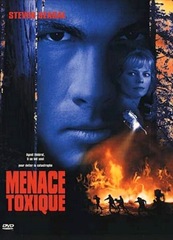
The truth is the EPA was so afraid that Steven Seagal would portray another of their employees – by filming a sequel to his “one line of speech then look angry “ 1997 action epic, that they’re about to deny access to 3 Billion dollars worth of Coal.

The mayfly, so irresistible to trout that anglers use it for bait and model lures after it, may become Appalachia’s spotted owl. Efforts to save old-growth forests in the Pacific Northwest, where the owls nest, led to federal protection in 1990 that restricted logging.

Mountaintop mining produces millions of tons of crushed shale and sandstone dumped in valleys and streams. Rainwater flowing though the debris carries dissolved metals into waters below, a lethal stew for mayflies, the EPA says.

Southern California thwarted by Delta Smelt, and the savior of Virginia trout a lowly mayfly?

Does size matter?

It appears so. Humans growing unsightly tumors or expiring prematurely doesn’t appear to concern our respective legislatures – we’re big enough to move if we don’t like it. Affect something small and defenseless – and get the full wrath of the Federal government on your head …

Perhaps our conservation organizations might want to rethink their game plan. Instead of defending trout, which are far too big and taste good, defend some tiny family of Caddisfly – one that’s hardly visible and largely unpronounceable…

… and then we can act surprised when the trout are the incidental beneficiary.

Tags: Virginia coal mines, mayfly, Steven seagal, EPA, Delta Smelt, old growth forests, spotted owl, trout protection, size matters

A Fly Tying Thanksgiving

The old days of lopping the head off a gobbler in your backyard are antiquity. Gentrification assured by CC & R’s that prevent live poultry on your acreage and expressly prohibits the stalking and slaying of same.

“Green” got the better of me, and I circumvented emasculating rules by getting most of a bumper and part of a steel belted radial on a goodly sized hen just down the road from my house.

Which makes me question whether there isn’t an innate conflict of interest for us Renaissance Men that’s triggered by the holiday and ensuing food debauch…

As “Chief Cook and Bottle-washer” I enjoy rarified standing among the drunken participants. The sumptuous sprawl of Turkey and fixings being my responsibility – while others tip-toe around my frantic boiling and chopping and fetch beer.

As “Resident fly tyer Extraordinaire” – I resent the imposition of a crowd of fat-arsed layabouts whose sole responsibility is to swill my liquor, contribute to global warming and get to watch football – something I’m denied by Role #1 above.

Cooking ritual is a complete mystery to the couch crowd – who are oblivious to culinary detail, and are making a comfortable dent in furniture yelling at some awesome play I missed while sweating over the hot stove.

“Dude, Bro … you look kind of hot in that apron.”

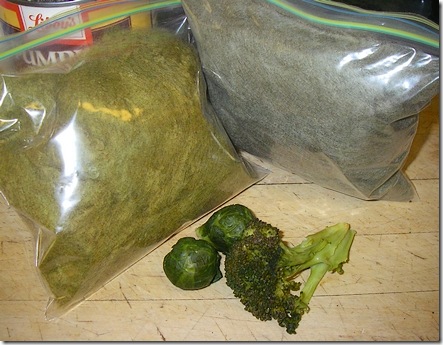
Like the millions of other cooks I’m short of pots early on – and forced to boil the neck and gizzards in pink fiber-reactive dye. With only four burners, a turkey, seven other side dishes, and a couple pounds of fur to color, expediency is the hallmark of the Great Chefs of Fly Tying.

… whose dual roles often conflict with one another, adding complexity to the proceedings.

The real trick is pairing natural foods and the colors that won’t leave incriminating evidence. “Fiber-Reactive” dye will only stain plant fiber and cannot be used with Brussel Sprouts, Yams, or Sweet ‘Tater – and “Acid” dyes stain protein so avoid Turkey, gravy, or stuffing.

…stuffing is best cooked conventionally as all the best recipes contain both meat and plant components.

Pick complimentary colors if you're short on pots

Pots and burners are in short supply and it’s important to pick complimentary colors so you don’t let an oversight give artistry away. Olive Pumpkin pie is an eye-opener … but Ocher is merely “too much cinnamon.”

Brussel Sprouts paired with Blue Wing Olive

My family’s ancestral recipes include Broccoli ala Blue Wing Olive, and for that important “been in the refrigerator overnight” look – a good neutral gray is tough to beat.

Keep in mind that RIT uses huge amounts of salt as fixative. If you’re boiling or steaming either plant or meat protein, no additional seasoning is warranted.

By my quick count there are nearly 11,300 patterns that use turkey feathers in all or part of their dressing, it seems a shame that we don’t leave the feathers on the bird, drop it into a oak dye bath and give both feathers and skin that warm, fresh-roasted coloration.

… it’ll guarantee enough dark meat for everyone.

Tags: Thanksgiving, fly tying humor, dyeing materials, acid dye, fiber reactive dye, steel belted radial season, Walmart, Black Friday shoppers, fly fishing

At least the supply of farmed Turkeys is assured

Enjoy it while you can Despite two years of closure the count of returning salmon at the Coleman National Fish Hatchery is down 60% compared to last year.

Scott Hamelberg, the hatchery’s manager, said Thursday that only 8,000 Chinook salmon have returned to the Battle Creek hatchery so far this year, down from 14,000 the year before, one of the lowest-ever returns since the hatchery was built to offset the loss of breeding habitat caused by the Shasta and Keswick dams.

In light of 480,000 returnees in 2002, Salmon populations in the Sacramento now cannot even provide enough eggs and milt to fill the incubation trays.

I suppose it’s a relief to Cemex – as they’ll be getting the contract to line the bothersome ditch with cement – smoothing out all the bends so the water can be carried south faster.

I’m reminded of the scene in “Rivers of a Lost Coast” where the fisheries biologist mentions, “it won’t be the fisheries that will change things, it’ll be the need for clean water that’ll arouse the public..”

I think the fisheries lobby has missed the boat. It’s plain there’s not enough anglers to make the demise of a noble river an issue, we need to bring the issue to the masses in a way that’ll deprive someone of something.

… like rationing Fillet O’ Fish sandwiches, or closing a half dozen Hollywood sushi venues.

Some suburban mom outraged that she can’t slow her child’s wail of anguish with a sugar-fish with bun – some minor celebrity pouting over his Tekka Maki being made with canned tuna …

Hell hath no greater fury.

Tags: Coleman National Fish Hatchery, Sacramento River Salmon