 If you’ve ever supervised others you understand how closely work resembles high school. Inkwells replaced by cubicles and communal refrigerators, pigtails a thing of the past, but the guy that dries his shoes in the microwave, or thumbs the donuts is a worthy substitute.
Come lunch I’d like to be in a happy place, tossing all the responsibility, and with brown bagging the new frugal, take my tasteful little repast into a unused conference room or break room along with a small sack of fly tying materials.
There to repel vegans and animal lovers, answer the questions of the curious, amaze onlookers, and dispense fly fishing doctrine to all those whose dad or grandfather did it years ago, who were always interested, yet never picked it up permanently.
Most tiers would be a tad reluctant, and with good cause, but I find the exercise both relaxing and productive, more focused than the casual version done at home. Time and space are constraints, but the tinkle of the brook and vision of soaring pine trees can make a marginal stress-filled afternoon seem less so, so I keep doing it.
Every couple of weeks I empty out my kit and the flybox and find seven or ten dozen more flies to add to my already cramped vest.
But with all the perils and restraint due the workplace, you should always be low on the radar, alert to avoid complaint or fur-induced adverse action.
The Sacred Tenets of Workplace Fishing
Practice casting or instruction in the parking lot is fine, just make sure you have an old line that can take the abrasion, and don’t mind the labels “Creep” or “Weirdo.”
Nobody likes being seen as a beginner, especially the well tanned, coifed, and fit. Start the lesson after most of the folks have left for lunch.
Recognize the evangelical before you’re in a discussion you can’t win. Animal freaks and Vegans disguise themselves well, they could be your Boss, or even your Boss’s Boss. Their zeal gives them away quickly, so point out that nearly all your materials are synthetic – even when there’s hide visible or whiskers attached.
Despite their beliefs, most have little knowledge of animals outside the freezer section of the store, or their cat – and having never turned either inside out, they’ll be fairly clueless.
If the Office Babe shows an interest, everyone at the table will be as talented and interested as you are. Loosen the reins and let the suitors trip over their shoelaces, it’s like guiding – with the clients ignoring your advice, and always a great show.
“Timmy” the obnoxious kid from High School is now Tim, but if one of the gals shows fear when shown a pheasant skin, or is repelled that it’s a dead-anything, Mr. Tim will chase her around the office with it. Keep the dead stuff close to you – even closer if an eyeball is visible.
Find a quiet corner so you can avoid most of the traffic, even the most hardened fly tier will tire of answering the same question over and over.
Yes, that’s a dead thing, yes, fish eat this, no, I don’t always keep them, yes, that hook is sharp …
Your most interested spectator will be the guy that never brings donuts, the lunchroom Ghost. By feigning interest, he can keep an eye on unattended sandwiches, unwanted chips, and what few donuts remain.
Only bring enough materials to tie a single pattern. At most you’ll finish five or six flies, and few materials is fast to gather if you’re summoned for an impromptu meeting or calamity.
An occasional dust mote or loose feather won’t cause alarm, but a fish hook will be an issue. Only lay out a half dozen hooks at a time and return the box to the carrying bag, that way you won’t spill any and can account for strays.
… and resist the urge to imbed a couple in the remaining donut to settle scores with the Ghost. Just restore the donut’s luster with a generous dollop of fast drying head cement. It’s difficult to be sneaky when the entire pink box comes with the prey ..
Don’t be surprised if you unearth a kindred spirit, or a classic rod last used by someone’s grandfather. While most work sites promote sterility and conformity, fearing litigation, what you do to put money on the table is not who you are, and demonstrating same can have occasional benefits.
Just be real vague about key dates like the Trout Season Opener, so you can be sick again.

 Now it all fits. We can’t lure young folks into the sport as we’re using the wrong bait, and the entire “X-treme” movement is fostered by old guys wishing they could flash gang sign – but can’t knowing white boys from Vermont only get laughed at …
 According to my jaundiced perspective, three hundred and fifty bucks is a fair price for a fly rod expected to last me a lifetime.
 The War against Invasives takes a bloody turn this week compliments of weapons that assist the socially responsible angler maintain his squeaky clean.


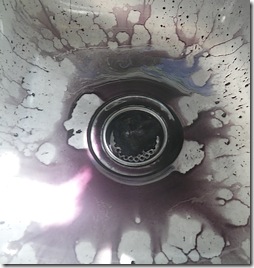 Ask anyone who’s ever fiddled with materials and you’ll see the involuntary shudder when Black is mentioned. While it enjoys status of being a must-have color among fly fishermen, getting a good permanent black will drive both professional and hobbyist to tears.

 Many things can interfere with the coloring process, including natural colors (we assume the black will cover them up), dirt, grease, and oil, and the blend of dye itself. Dyes are made from rare earths and minerals, all of which activate at different times and temperatures – and if the bath doesn’t get hot enough, or is too hot – it’s possible to have a color misfire.
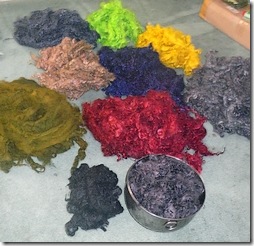 Guard hairs and stiff shiny materials are quite hard compared to loose fur or marabou. A rich deep black in Marabou may not be the same shade when dyeing a slab of Polar Bear, or similar tough material. Over dyeing a second time may fix a dark gray, and it may be enough to over dye it with a deep purple, or dark brown, rather than black.