 On my way back from Fresno I was surprised to see California poppies spreading their bright orange petals amid the litter and grit of the center divider.
Poppies being an April phenomenon and suggests this is likely to be a season full of the unexpected.
Not that any season is ever predictable, but this one appears uncharacteristically so.
Should the bugs take their cue from the wildflowers, then our much beloved Stonefly Grab will be finished long before the Opener, and we’ll be vying over the Doldrums of August, versus the traditional cornucopia that is Opening Day.
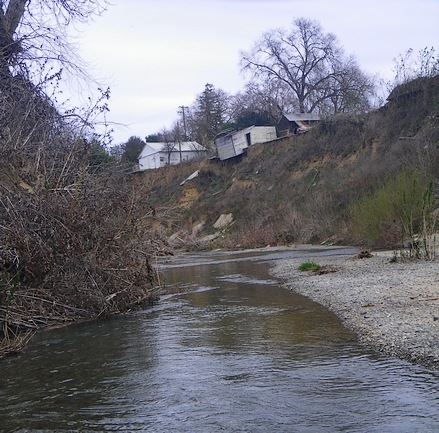
What little rain we’ve had coupled with morning’s chill has the local fish on the run, so I’m stumping through newer and drier sections of the creek while the weather remains unseasonably warm. I’m unwilling to venture into the “Burning Sands of Death” areas, between Capay Valley and Hwy 505, during the Summer as the reflected heat off the sand and cobble makes trespass a real agony, regardless of how much water is carried.
As I feared, all the springtime fare are out, along with the few “Early Black” stoneflies only seen during Spring. Many are the larger bugs, #14’s and 16’s, that only come out of the underbrush when early morning gives way to midday warmth.
There are 55 miles of the Little Stinking between Clear Lake and the Sacramento marshes, and with my latest trek I’ve covered almost 20 miles via public access, landowner invitation, or outright sneak-age.
While heat keeps me out of this area most of the year, the water is simply too shallow to support anything but frogs. I did find the occasional scour pool, but most of the drainage is host to a wide and shallow trickle, making the creek 4 inches deep and a hundred yards wide.
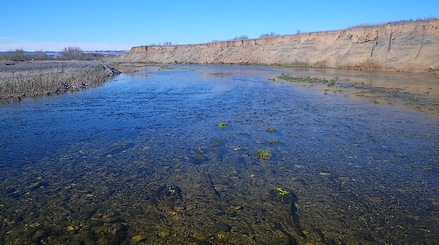
One such pool was nearly nine feet deep, crystal clear, and had a welcome chill, and given that I was already beginning to perspire profusely I contemplated stopping and shucking off them duds to make like a beached whale …
… it was one small moment of weakness, it would have been miles from any known human habitation, out of sight of any sputtering land owner, or open-mouthed old biddy blinded by my vast expanse of alabaster …
I figured my pear shaped frame could do with a little sunshine and my exposure to agricultural toxins would be short-lived and assist me in building a robust immune system.
 Everyone knows it’s those big fish that live in the ocean for years that have all the Mercury, and like the Corvair, are unsafe regardless of helping size. Tasty little sardines that only live long enough to get their fins damp, and then seek the safety of tins, being safe as all hell …
I set the rod down and glanced downstream … then upstream, and blinked in disbelief at some ill mannered dog in the middle of the river grunting in the Pose Unmistakable.
A well placed rock revealed the interloper to be a coyote, who took flight in a panic …
Yet it cooled my ardor enough. All those manmade toxins just made the story worth the retelling, simply keep your mouth closed and splash about in the coolness of the deep water.
Yet as I splashed a little cool water on my brow, I reflected that if Wile E. Coyote equipped with a nose thousands of times more sensitive than mine own – paused in mid crossing to unleash last night’s dinner, I’d be well advised to remain chaste in my waders.
 Louis L’Amour, prolific writer of cheap Westerns, described them as, “ …women to ride the ridges with – the kind of gal that walks beside her Man instead of behind him …”