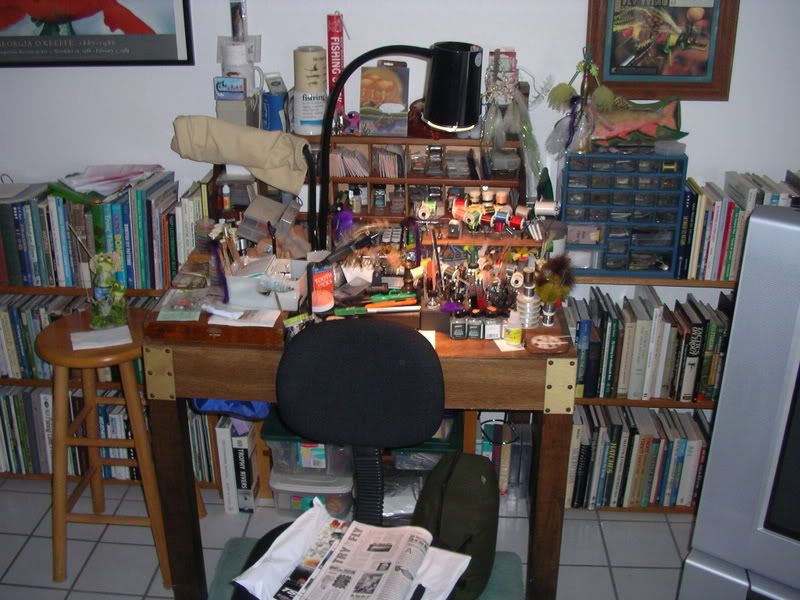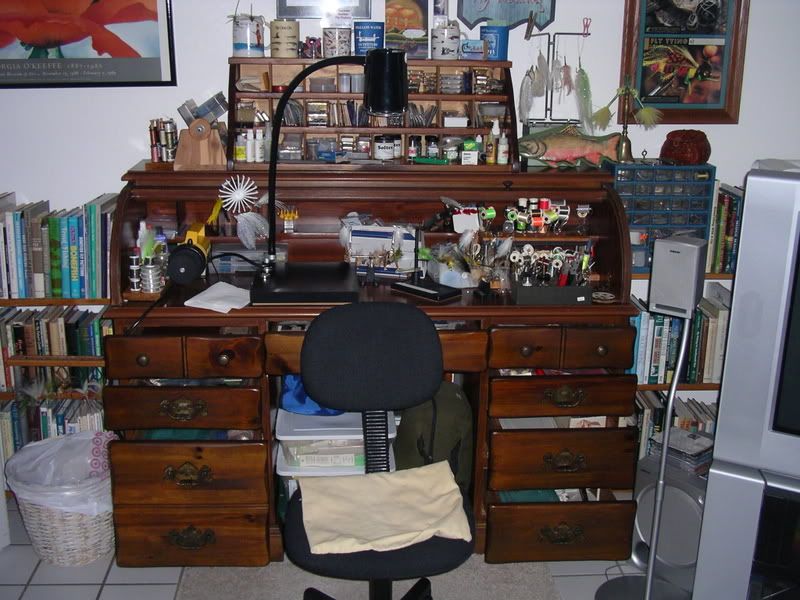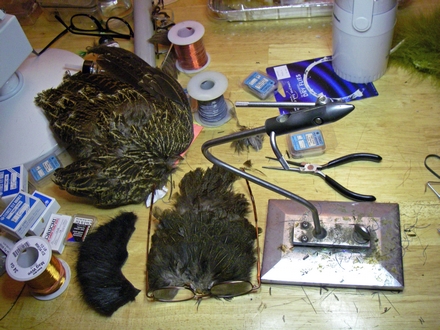
In the prior installment I described a “professional” tyer as “someone who ties flies an hour per day”, fun or profit being immaterial. This is the start of flytying season, complete with area closures, holiday madness, Egg Nog obsession, and bitter cold. Lots of folks will fit this category for the next six months, applying the lessons of last season to their arsenal of flies for next.
They’ll do so in cramped quarters, using whatever table or flat spot is available, hoping not to earn the wrath of their equally housebound spouse. Some have their own room, others attempt to remain inconspicuous in an overlooked corner in their apartment – all share the same issue; “real” jobs that limit tying to evenings where lighting, table height, and chair dictate how long they can tie without fatigue.
Storage and the actual tying infrastructure are as overlooked as scissor choice. Materials are expensive and they always seem to get first crack at the budget. Trying to keep an accumulation of materials bug free, out of reach of children or an inquisitive pooch, usually has your collection moving vertical. For them as are apartment bound, either dating or married, you’re in worse shape – as there are no out-of-the-way locations.
Gals do not appreciate dead stuff, you don’t want to explain why a rancid “bunny’s face” is featured prominently on the coffee table – not on the first date, as there will never be a second. If married, your spouse is a reluctant participant in your hobby, while tolerant – few things can strain a relationship more than a significant moth infestation, or the family pooch burping up a hairball of orange bucktail.
Bulk storage needs to address three issues; insects, space, and ease of use. It must proof you against insect loss, be attractive enough so that your spouse permits guests to see it, offer enough space to be effective, and it must be close enough to the tying area to make it functional.
Storage is two parts, the space available in or on your tying table, and extended space available in boxes, a chest, or closet.
 When a fly tyer is learning, he goes the cardboard box route; he’s tying on the kitchen table, so both he and his storage needs to be portable. After his first serious bug infestation the cardboard box is abandoned – he learns that if everything is in one box, it all gets eaten.
Next comes the “chemical” phase, where he pours mothballs into his storage area figuring his troubles are over. Armed insurrection results, as the spouse hates the odor, you hate the odor, and the family dog is now barfing up a potent chemical brew onto the rug.
Materials in contact with Mothballs or Crystals will retain the chemical on their surface, you’re tying at night and brush your eyes with the back of your hand, and now you are blinking toxic waste. Applied liberally, mothball odor will dominate an entire room and for an apartment dweller that’s not a recipe for domestic bliss.
After tying for 35 years, I haven’t figured it out either, the solution I have is multi-faceted and appears to have kept an uneasy peace on the domestic front.
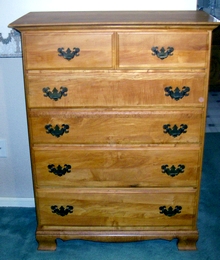
I always have an eye open for old chests of drawers at garage sales, most are made of pine or better, and will refinish into something fairly attractive. Almost all of them are stained or painted, a quick glance at the interior of the drawer will identify the wood and its original color. The older the construction, the easier the finish comes off – as old lacquers become brittle and flake easily.
Line all the drawers with red cedar slats, available at any hardware store, sold as closet lining. Red cedar repels all the bugs, has a wonderful smell, and can be touched up with a belt sander every couple of years to restore the protection and aroma. Lay them loose on the bottom of each drawer, or you can tack them down with a little contact cement.
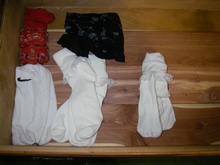 Apparently Madam approves as the frilly socks shown are not mine. This isn’t proof against a domestic dispute, she’ll question your sanity when you bring in the garage sale item – after it’s refinished, she’ll insist you promised it to her for her unmentionables.
Gals love the smell of cedar and you’ll have to defend your space aggressively. A smart fellow will realize this argument may be winnable, the “moth crystal eviction” argument is not.
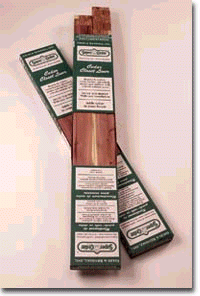 Always keep your materials in sealed bags. Incense (Red) cedar will ensure that nothing is disturbed, but why take the chance – especially with extended storage, where you’re not in it everyday to notice an issue. Bagging ensures all infestations are localized to a single bag rather than the entire drawer.
Fly shops have moths, lots of them. Quarantine all newly purchased items in a separate drawer for a couple of weeks. During the quarantine period avoid mixing them on top of other materials on your bench surface, moth eggs are tiny and they’ll shower onto anything like salt out of a salt shaker.
If you’re done for the year take your fly boxes out of your vest and add them to the bug protection, it’ll be six months before you wear the vest again, you don’t want any rude surprises on the eve of the season opener.
Scorched earth is the only policy on unbagged loose material, if the bugs get in the entire drawer should be thrown away. Synthetic materials will not be damaged, they’ll just harbor the eggs safely so that the infestation can be transmitted to other places. Dry your tears, and toss the entire supply.
The seams in the drawers will contain live eggs even when the drawer is empty, treat it as a quarantine area, and add only sealed bagged materials to that drawer initially. Give the cedar lining time to ferret out all the critters and cleanse the unseen areas.
Like I’ve said, I don’t have the answer – your storage needs are as big as your appetite, you can make do with a couple nicely refinished furniture items, it’ll keep you in Madam’s good graces (after she claims them), and will allow you to increase your addiction in a socially acceptable manner.
Technorati Tags: red cedar, fly tying storage, fly tying, domestic bliss

 Guilty. I am a devotee of fantasy football, usually my fantasy ends on draft night and becomes a horrid reality the following Sunday.
 That’s a helluva question, the kind that gnaws at a fellow for most of the day. I stumbled on a story of
  There are times when I wonder, I suppose it’s proof that I still have a spark of optimism left, at this late stage I assumed it’d been stomped out of me. Surfing in the Arizona desert gives me pause, but so does adding cream and sugar to black coffee…
 Cooperation the key to financial reward? Makes sense for any other industry other than fishing, as getting two fishermen to agree on anything is an exercise in futility.
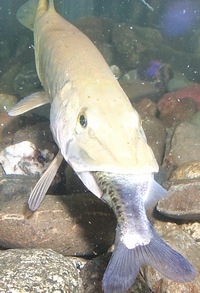 Thin the prey to benefit the predator? Somehow it sounds all wrong, but
  The debate continues about Global Warming, whether it’s a gradual warming of the Earth’s crust due to natural cyclic reasons, or whether cow farts and muscle cars are the root of all evil.
 Ever sensitive to how the fisheries will be apportioned out, what with the advent of sanctuaries, lotteries, and moratoriums,
  “Madam” is expiring on her couch and I’m hustling about accommodating all the “last wishes” of the soon departed. No, it’s not serious – it’s that rarified moment that anglers leverage to the hilt.